
By: Seth Heeter
AI and Automation Drive Manufacturing Forward.
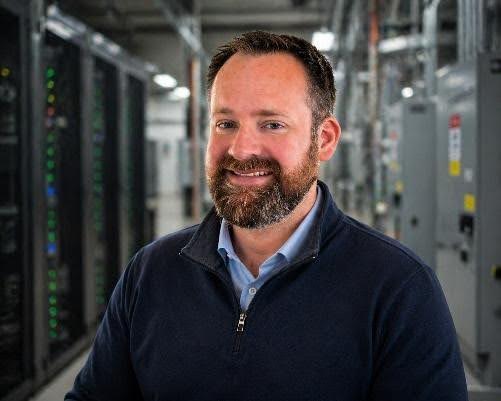
President, Access
Chair, Wisconsin AI Infrastructure Initiative
Recently, I had the opportunity to attend the Wisconsin Drives Manufacturing Summit at Lambeau Field in Green Bay. While the venue itself was impressive, what stood out most were the conversations taking place throughout the event.
One theme consistently rose to the top:
Wisconsin’s workforce challenges are no longer a future concern. They’re a current reality.
Manufacturing remains one of Wisconsin’s greatest strengths, employing hundreds of thousands of people across the state and contributing significantly to our economy. Yet many manufacturers are facing the same question:
“Where will the next generation of workers come from?”
Several presenters highlighted a sobering reality. Wisconsin’s population is aging, workforce participation has declined, and the pipeline of skilled labor is becoming increasingly constrained. At the same time, manufacturers are being asked to produce more, respond faster, and remain globally competitive.
For years, many organizations viewed automation as a way to reduce labor. Increasingly, that mindset is shifting.
The discussion at the summit focused less on replacing people and more on helping existing teams accomplish more with the resources available. Artificial intelligence, automation, advanced analytics, robotics, and digital technologies are becoming workforce multipliers that allow experienced employees to focus on higher-value work while repetitive tasks are handled automatically.
The question manufacturers should be asking is no longer whether AI will impact their operations.
The question is how quickly.
The Infrastructure Side of AI
When most people hear “AI,” they think about software.
What often gets overlooked is the physical infrastructure required to support it.
Whether AI workloads run inside your facility or in a remote cloud environment, the computing power behind those applications requires reliable electrical systems, cooling infrastructure, network connectivity, and continuous monitoring.
The rapid growth of AI is one reason we continue to see significant investment in data centers, semiconductor manufacturing, and digital infrastructure across the country.
Those facilities consume enormous amounts of power and generate substantial heat, creating new demands on electrical and mechanical systems.
Even manufacturers that never build their own data center will feel the impact.
AI-driven production systems, machine vision, predictive maintenance platforms, digital twins, advanced automation, and real-time analytics all increase dependence on reliable technology infrastructure. A power disturbance that once affected a few computers may now impact production data, automation systems, quality processes, and business operations simultaneously.
Reliability Becomes a Competitive Advantage
As manufacturers continue investing in digital transformation, reliability becomes more important than ever.
The organizations that successfully leverage AI and automation will not simply be those with the newest software. They will be the companies that build resilient infrastructure capable of supporting these technologies year after year.
That means paying closer attention to:
- Electrical system reliability
- Cooling capacity and efficiency
- Network resilience
- Environmental monitoring
- Backup power systems
- Predictive maintenance programs
These aren’t just facility concerns anymore. They are business continuity concerns.
As manufacturers continue evaluating AI, automation, and digital transformation initiatives, one question is becoming increasingly important:
Is your facility infrastructure prepared to support what’s coming next?
The answer often starts with understanding your existing power, cooling, and monitoring capabilities before capacity, reliability, or uptime become concerns.
Looking Ahead
One message from the summit stood out to me.
The future of manufacturing will be shaped through collaboration between industry, education, technology providers, and manufacturers themselves. Wisconsin’s manufacturing community has always found ways to adapt, innovate, and compete.
The labor challenges we face are real. But so are the opportunities.
Artificial intelligence and automation are not replacing Wisconsin manufacturing. They are helping manufacturers accomplish more with the talented people they already have.
AI may be the headline.
But reliable power, cooling, monitoring, and infrastructure resilience are what will make that future possible.
Seth Heeter
President, Access
Access helps manufacturers, healthcare organizations, utilities, and mission-critical facilities improve reliability through power, cooling, monitoring, and infrastructure engineering solutions across Wisconsin and throughout the world.