Manufacturers rely on accurate weight measurement to maintain product quality, reduce waste, and improve process control. For years, many facilities used nuclear or radiometric gauging systems to monitor material weight. While these systems provided valuable data, they also created operational challenges that are becoming harder to justify.
Today, ultrasonic weight measurement offers a modern alternative. By eliminating radioactive sources and providing high-resolution measurements, ultrasonic technology helps manufacturers improve reliability while reducing long-term costs.
The Limitations of Legacy Gauging Systems
Traditional gauging systems often use radioactive sources to measure material weight. While effective, these systems come with ongoing responsibilities and expenses.
Common challenges include:
- Regulatory compliance and licensing requirements
- Special handling and storage procedures
- Periodic inspections and documentation
- Costs associated with source replacement
- Additional safety training for personnel
As equipment ages, maintenance can become more difficult. Replacement parts may be harder to obtain, and older systems may not provide the level of measurement accuracy required by modern manufacturing processes.
For many manufacturers, these limitations have created interest in alternative non-destructive testing methods. These technologies provide the same measurement capabilities without the operational burden of radioactive materials.
Why Ultrasonic Weight Measurement Is Gaining Adoption
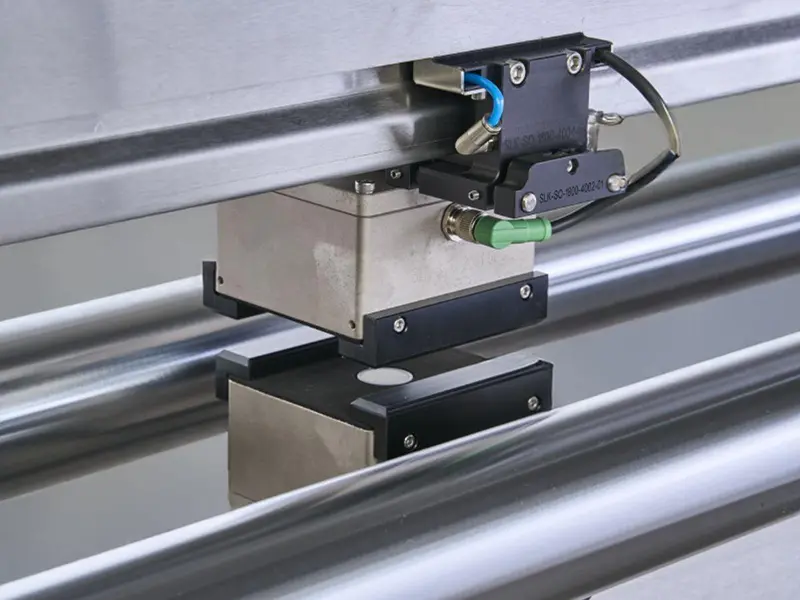
Ultrasonic weight measurement uses high-frequency sound waves to determine material weight. Because the technology measures weight without damaging the product, it has become a valuable tool for industrial non-destructive testing applications.
One of the primary advantages of ultrasonic testing is its ability to provide accurate measurements without requiring radioactive sources. This simplifies compliance requirements while improving workplace safety.
Modern ultrasonic weight measurement systems also offer several performance benefits:
- High measurement accuracy and repeatability
- Continuous real-time monitoring
- Greater insight into weight variation across the production line
- Reduced maintenance requirements
- Faster response to product variations
Faster measurement updates allow operators to identify weight variations sooner. This helps prevent excessive scrap and supports tighter process control.
Many manufacturers are also replacing aging gauges with integrated ultrasonic weight measurement tool platforms that support automated quality control and production optimization.
Operational Benefits Beyond Weight Measurement
The benefits of ultrasonic technology extend beyond measurement accuracy alone. When combined with modern process control strategies and advanced web gauging systems, ultrasonic technology can help manufacturers:
- Reduce material waste
- Improve product consistency
- Detect process variations earlier
- Lower maintenance costs
- Increase overall equipment reliability
These advantages make ultrasonic measurement an attractive option for facilities upgrading legacy gauging systems. Manufacturers can improve performance without adding regulatory complexity.
As manufacturers continue to reduce regulatory burden while improving process performance, ultrasonic weight measurement is becoming a preferred solution for many weight-monitoring applications.
Future-Proofing Measurement Systems
Many manufacturers are delaying major equipment upgrades due to budget constraints and production demands. However, aging measurement systems can create risks beyond maintenance costs. Obsolete components and limited vendor support can make it difficult to maintain consistent product quality. Upgrading to ultrasonic weight measurement allows facilities to modernize a critical quality control function without a complete process overhaul.
For facilities evaluating aging equipment, the decision often involves more than just replacing a measurement device. It is an opportunity to improve process visibility and support data-driven manufacturing initiatives. These improvements can also help position operations for future production demands.
To learn more about ultrasonic weight measurement and modern gauging technologies, contact Adam Kahler at akahler@quadplus.com or call (815) 210-9885.