Electrical systems rarely fail without warning. Components begin to heat unevenly, connections loosen, and loads shift long before any visible symptoms appear. An infrared electrical inspection enables maintenance teams to detect these early indicators and intervene before small issues grow into costly failures. Thermal imaging has become a core tool for strengthening reliability and reducing operational risk.
Thermal Imaging Methodology for Electrical Systems
Infrared technology converts surface temperatures into visible images. When a component shows abnormal heat, it often signals resistance, imbalance, or deteriorating insulation. These conditions may not be obvious during a standard electrical inspection, yet they can lead to outages, damaged equipment, or unsafe operating conditions. Because infrared imaging is noncontact and performed while equipment remains energized, facilities can gain meaningful insight without interrupting production.
Advantages of Electrical Infrared Inspections
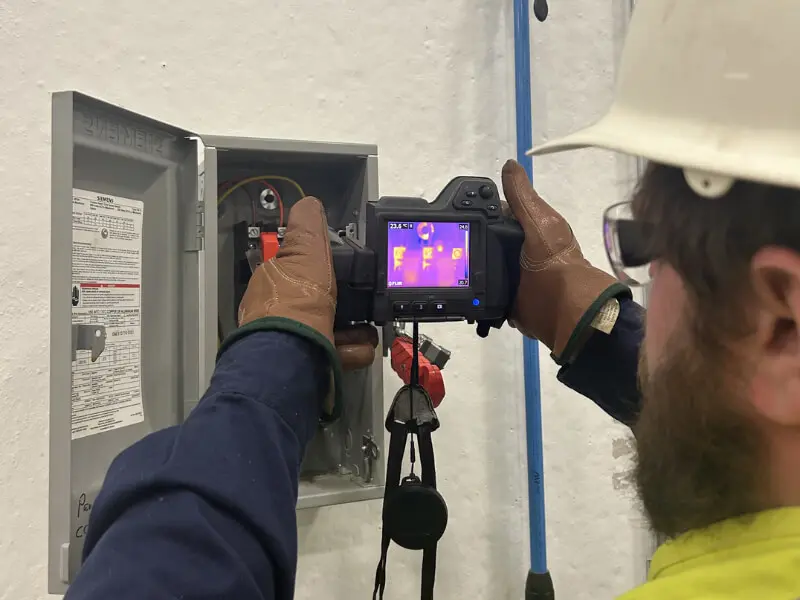
Infrared imaging is most effective when it is tied to specific maintenance outcomes rather than treated as a standalone test. In practice, facilities rely on it for several key advantages:
- Early Detection. Loose terminations, overloaded circuits, relay issues, worn motor components, and failing breakers often display characteristic heat patterns long before failure occurs. Detecting anomalies at this stage allows teams to schedule repairs during planned downtime rather than reacting to unplanned outages.
- Workplace Safety. Electrical faults can escalate rapidly, especially when resistance builds inside enclosed equipment. Hot spots can indicate the early stages of insulation breakdown or mechanical wear that could lead to arcing or equipment damage. By pinpointing areas of concern, infrared electrical inspection services help organizations reduce exposure to hazardous conditions while ensuring that corrective actions are taken before safety risks increase.
- Energy Efficiency. Unbalanced loads and poorly performing components often draw excess power. Identifying these issues through imaging allows facilities to correct inefficiencies and optimize system performance. Over time, this can reduce energy consumption and extend the service life of key electrical assets.
- Load Imbalance and Component Degradation Analysis. Infrared scans reveal patterns that point to underlying electrical imbalances rather than isolated hot spots. Uneven temperature distribution across bus bars or breaker poles often indicates phase imbalance, deteriorated contact surfaces, or spring-mechanism fatigue within switching devices. Identifying these conditions helps verify whether load distribution, torque settings, or protective device calibration need adjustment. Thermal trends can also indicate when components are nearing the end of their mechanical or thermal life, allowing replacements to be planned rather than relying on time-based maintenance intervals.
- Compliance & Documentation. Many maintenance programs and facility standards recommend periodic imaging as part of a broader reliability strategy. Thermal reports provide clear visual records that track equipment conditions over time. When combined with other testing methods, the data helps create a comprehensive view of system health and informs long-term planning decisions.
Condition-Based Maintenance Through Infrared Analysis
When performed by trained specialists, such as the Quad Plus NETA-accredited engineers who hold Level I & II Thermography certifications, infrared imaging provides a practical and reliable way to enhance electrical maintenance programs. It gives teams the information needed to make targeted repairs, reduce downtime, and improve overall system integrity. Facilities gain a proactive approach that strengthens reliability across daily operations.
To learn more about how infrared electrical inspection can support your reliability goals, connect with Adam Kahler at akahler@quadplus.com or (815) 210-9885