Green Bay Innovation Group
GBIG News

PFAS Impact on Our Planet and Our Health

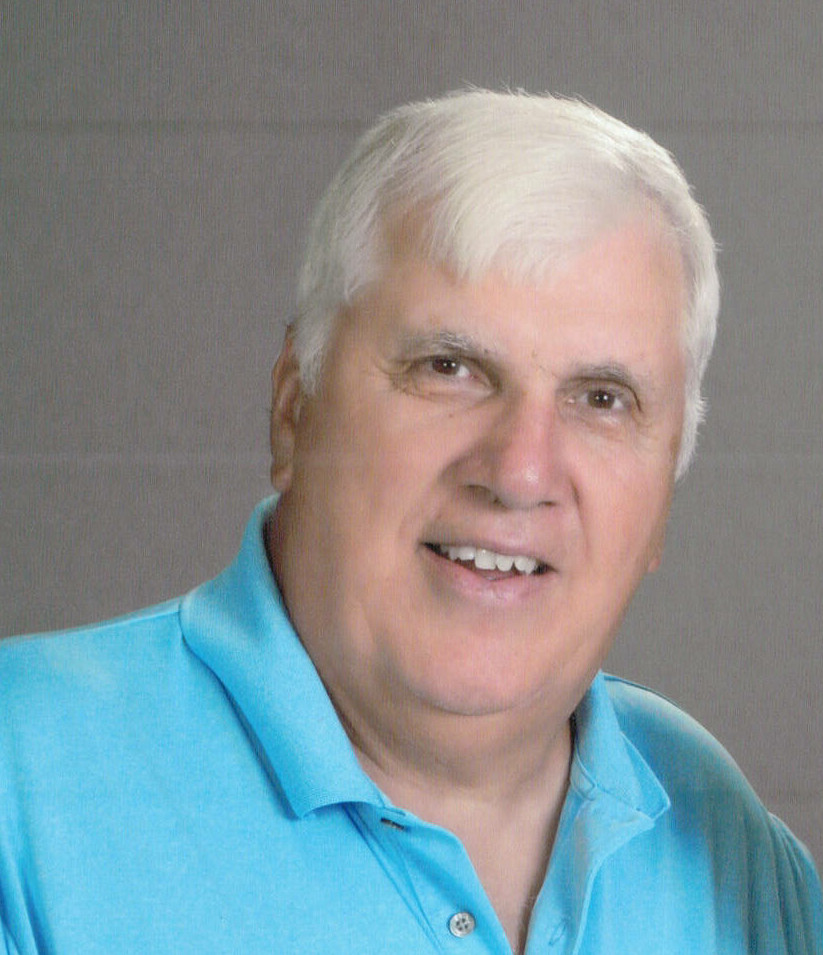
Marty Ochs

PFAS are a group of thousands of synthetic chemicals developed in the 1940’s that do not break down easily in the environment or in the human body. These chemicals are used to make items resistant to water, grease, and stains, and are often present in non-stick cookware, fast food packaging, and firefighting foams. They are accumulating in the environment, water resources, and the human blood. They are primary exposed to drinking contaminated water, eating food packaged in PFAS, eating fish/crops grown in contaminated areas, etc. The studies have linked exposure to increased cholesterol, immune system suppression, liver enzyme changes, reduced, reproductive issues, development delays in children, and increased risks of kidney and testicular cancer.

We have seen regulatory agencies like the EPA setting limits on drinking water due to their health risks. Recently, the State of Wisconsin passed new regulations aligning state drinking water standards with strict federal limits for PFAS. Wisconsin has faced problems in multiple cities because of firefighting foam!

The Green Bay Innovation Group is heading up events with the University of Wisconsin-Madison and the University of Wisconsin-Milwaukee – Fresh Water Collaborative to address the issues of PFAS to educate industries and the people of Wisconsin to look for solutions impacting all of us.

Join us for a PFAS conference on April 15, 2026, in Stevens Point. The conference will foster innovative conversations among experts in industry, academia, government, and nonprofits about research and development of alternative materials as well as PFAS remediation and filtration methods.

The Green Bay Innovation Group, in collaboration with UW-Madison, will host a distinguished featured speaker and a panel of industry experts on PFAS at Lambeau Field on June 2, 2026. The speakers include:

  • Graham Peaslee, Professor at the University of Notre Dame, discusses packaging and PFAS.
  • Dave Garlie of Cross Plains Solution mission is to help eliminate PFAS in firefighting foam.
  • Christy Remucal of UW Madison College of Engineering Aquatic Chemistry
  • Lane Ruhland Lobbyist representing the Wisconsin Paper Council on PFAS regulations.

Registration discount for our one-day PFAS conference; deadline to register is April 5

Freshwater Collaborative of Wisconsin

The Freshwater Collaborative of Wisconsin and the Green Bay Innovation Group (GBIG) invite you to Solving PFAS Together: Academia + Industry, a one-day mini conference on Wednesday, April 15, in Stevens Point.

This one-day event is a pre-conference option at the Wisconsin Lakes and Rivers Convention. Thanks to sponsorships, you can register for the workshop plus lunch for $50 (a $65 discount). Deadline is April 5.

The conference will foster innovative conversations among experts from industry, academia, government and nonprofits about research and development of alternative materials as well as PFAS remediation and filtration methods. This will be a highly interactive day! Come prepared to participate and meet new potential collaborators.

See detailed agenda below.

WHEN: April 15, 9 a.m.-4 p.m.

WHERE: Holiday Inn Convention Center, Stevens Point

COST: A discounted rate of $50 for the full-day workshop and lunch

Attendees are invited to stay for the welcome reception for the annual Wisconsin Lakes and Rivers Convention at no additional cost.

Who Should Attend

  • Manufacturers or developers of alternative materials to replace PFAS
  • University faculty and staff researching alternative materials to replace PFAS
  • Environmental consultants who clean up PFAS and manufacturers of products used to identify and clean up PFAS
  • University faculty and staff researching products to identify and clean up PFAS
  • Government and nonprofit staff who are working on Wisconsin’s PFAS priorities
  • A maximum of 56 attendees.

Agenda

  • Shared goal: LISTEN to LEARN to COLLABORATE
  • Keynote Speaker: Dr. Erin Bulson, geologist and environmental engineer in disposal operations support at Waste Management, will present an interactive session on a proven collaborative model
  • Small group work: Share strengths/weaknesses of current collaborations and brainstorms ways to take action
  • Small group work: Create new collaborations with colleagues across industry/academia/government/non-profit through facilitated discovery and discussions

Registration Steps

Follow the steps below to register using the discount code:

  • Go to registration site.
  • Sign Up as a New User (unless you’ve attended the Lakes and Rivers Convention in the past two years).
  • Enter your personal information. Select the registration type “Attendee: In-person.”
  • If you will only attend the PFAS workshop, select “I will not be attending the Convention, only the add-on workshops and/or Thursday evening banquet.” (unless you plan to attend Thursday and Friday, which we welcome you to do!).
  • Select one of the PFAS workshops (Academia or Industry) AND the Wednesday lunch. Lunch is covered by a sponsorship from the Green Bay Innovation Group. You must select “I will not attend” in the remaining sections. Note: The PFAS workshop will still show the cost of $100. You will enter a promo code on the last step to get a discount.
  • Skip by selecting Next or select books if you’d like to order any.
  • Skip by selecting Next or support a scholarship.
  • Enter promo code PFAS and click Apply. This promo code should remove the cost of lunch ($15) and half of the cost of the workshop ($50) for a $65 discount total.
  • Finish by paying with credit card and submitting your registration.
  • QUESTIONS? Email freshwater-collab@uwm.edu.

Great Lakes Timber Professionals Association: Will Wisconsin Manufacturing Survive?

Greetings,

Great Lakes Timber Professionals Association logo

In late January the Great Lakes Timber Professionals Association (GLTPA) testified before the Assembly Committee on the Environment on Assembly Bills 130 and 131, legislation addressing contamination caused by per- and polyfluoroalkyl substances, commonly known as PFAS. GLTPA participated in the hearing at the request of the Wisconsin Paper Council and because we are deeply concerned that, as currently drafted, these bills could further destabilize Wisconsin’s already fragile timber and forest products industry.

Let me be clear from the start: PFAS contamination is real, and it needs to be addressed. Families whose drinking water has been affected deserve help, and Wisconsin should play a strong role in fixing those problems. GLTPA supports practical, science-based solutions that protect water quality and public health.

But how those solutions are designed matters—especially for industries that did not create the problem.

As explained at the hearing, the concern for paper mills is that under the legislation as amended, mills are effectively treated as PFAS “users,” even when PFAS enters their systems passively and unavoidably—through recycled fiber, municipal wastewater, or landfill-derived materials. Paper mills do not manufacture PFAS and often have no practical way to control what comes in from upstream sources that date back decades or originate outside Wisconsin.

More simply put, the bills treat mills as responsible for PFAS simply because it passes through their systems. At the same time, many other parties involved in those same material streams are shielded from responsibility. That imbalance puts paper mills squarely in the crosshairs and creates real financial risk for facilities that are already operating in a challenging environment.

We see a similar contradiction in global energy policy. Manufacturers are told they must build solar panels, wind turbines, and massive battery systems to fight climate change. Yet when turbine blades can’t be recycled or solar panels are destroyed by hail and end up in landfills, those same manufacturers are suddenly told they alone are responsible for the environmental consequences. They are forced to comply or risk losing financing and then forced again to shoulder responsibility for outcomes they neither intended nor fully controlled.

That is exactly the position paper mills are being placed in today. Mills are required—by law, rule, or permit—to use recycled fiber, to manage biosolids, and to operate under state-approved processes. Recycled materials may contain PFAS through no fault of the mill, yet mills are now being targeted as if they caused the problem.

This is not just a paper industry issue—it is a Wisconsin timber and forest products industry issue.

Wisconsin’s paper mills are the backbone of our timber markets. When mills struggle or shut down, the impacts ripple quickly and painfully through our communities. We have seen it firsthand with the closures in Wisconsin Rapids and Park Falls, as well as Duluth just across the border. Those closures didn’t just eliminate mill jobs; they reduced demand for wood, disrupted hauling networks, and put pressure on logging businesses, truckers, and forest landowners across the region.

When mills close or pull back, harvesting slows. When harvesting slows, forest management suffers. Landowners delay thinning and regeneration. Natural mortality increases. Forest health declines. A strong paper sector is essential not only for jobs and rural economies, but for keeping Wisconsin’s forests actively managed, resilient, and productive.

The PFAS provisions in Assembly Bill 131 risk adding another layer of uncertainty at a time when the industry can least afford it. If mills are exposed to open-ended cleanup responsibility for PFAS they did not create and cannot control, investment decisions will be delayed or canceled. That uncertainty sends a signal—one that makes Wisconsin a harder place to do business.

We have seen how this plays out elsewhere. Companies rarely leave overnight. Chevron’s recent decision to relocate major operations out of California, citing an increasingly adversarial business climate, was years in the making. Other manufacturers have quietly made similar decisions. When policies become unpredictable and responsibility is shifted onto businesses for issues beyond their control, companies eventually look elsewhere.

The same question must be asked here: if manufacturers in Wisconsin are held responsible for problems they became part of inadvertently, how long will they stay? And just as importantly, why would a new manufacturer ever choose to locate here?

It is also worth remembering that Wisconsin has already set aside significant funding to address PFAS contamination. The challenge is not whether to act, but how to act in a way that solves real problems without creating new ones.

GLTPA’s message to lawmakers is straightforward: Wisconsin can protect water quality and still protect its forest products industry. The focus should be on fixing contamination not shifting responsibility onto businesses that followed the rules and used approved materials. Passive participants in the supply chain should not be treated as polluters.

I appreciated the opportunity to testify and remain committed to working with legislators, state agencies, the Wisconsin Paper Council, and other stakeholders to find a balanced solution. The long-term health of Wisconsin’s manufacturing base, rural communities, and forests depends on getting this right.

Until next month.

PFAS Hearing: Marty’s Testimony

TO: The State Assembly Committee on Environment
FROM: Marty Ochs, President of Green Bay Innovation Group (GBIG)
DATE: January 21, 2026
RE: Oral Testimony Regarding Assembly Substitute Amendment 1, to Assembly Bill 131


Marty Ochs

Good morning, Chair Goeben, Ranking Member Palmeri, and members of the Committee. My name is Marty Orchs, and I am the President of the Green Bay Innovation Group (GBIG). GBIG is a Northeast Wisconsin–based coalition of businesses representing the paper, packaging, printing, converting, plastics, petroleum-related, and other manufacturing sectors, often grouped together as the 5P industries. Our members include manufacturers, suppliers, and service providers that support thousands of jobs and form a critical part of Wisconsin’s manufacturing and economic base. These industries are deeply interconnected, capital-intensive, and rooted in local communities across the state. GBIG’s mission is to strengthen collaboration, innovation, and long-term competitiveness across these sectors.

I appreciate the opportunity to share our perspective today on Assembly Substitute Amendment 1 to Assembly Bill 131, particularly as it relates to how the PFAS spills-law provisions added in this Substitute Amendment could affect manufacturers and the broader industrial ecosystem in Wisconsin. PFAS are everywhere. They exist broadly in modern commerce, consumer products, recycled feedstocks, municipal systems, and historical industrial processes. In many cases, PFAS were used decades ago, lawfully and intentionally, before risks were fully understood. In other cases, facilities received PFAS unintentionally through recycled materials or municipal wastewater, without any ability to control or prevent that exposure.

This is where our concern lies. When legacy or passive exposure becomes the basis for open-ended liability, without regard to intent, control, or current practices, it creates significant uncertainty. Facilities that are operating responsibly today may face liability for conditions created long ago, or for PFAS they never introduced. That uncertainty discourages reinvestment, redevelopment, and innovation, and can make companies reluctant to acquire or modernize sites with any historical connection to PFAS.

We have seen similar challenges emerge with other complex, emerging issues such as microplastics. These are systemic problems involving many industries and society as a whole. Assigning disproportionate responsibility to one party in this case manufacturing does not solve the problem; it risks fragmenting responsibility and slowing progress.

Wisconsin’s manufacturers want to be part of the solution. Industry brings technical expertise,
operational knowledge, and innovation capacity that can help address PFAS challenges effectively. Rather than relying primarily on expanded liability frameworks, we believe Wisconsin would benefit from approaches that encourage collaboration, including industry-academic partnerships, research hubs, and open dialogue among regulators, universities, and manufacturers.

To move forward sustainably, policy must be sensitive to legacy conditions, current compliance realities, and the interconnected nature of modern manufacturing. A balanced approach that supports remediation, protects communities, and keeps Wisconsin competitive will best serve the long-term interests of the state.

In closing, the PFAS spills-law provisions added in Assembly Substitute Amendment 1 would affect far more than a single sector. Exposing interconnected 5P industries to expanded liability, despite lawful operations and, in many cases, no intentional PFAS use, risks creating uncertainty that could hinder investment, innovation, and economic stability statewide.

Thank you for the opportunity to testify today. I would be happy to provide additional information or discuss potential modifications that help Wisconsin move forward responsibly and sustainably.

Respectfully,

Marty Ochs
Executive Director
Green Bay Innovation Group

PFAS: Urgent Public Policy Alert!

GBIG logo
Wisconsin Paper Council logo

The Green Bay Innovation Group (GBIG) and the Wisconsin Paper Council (WPC) are currently working with a coalition of manufacturing organizations who are opposing PFAS enforcement legislation which is rapidly making its way through the Legislature. Our coalition is UNITED against the current substitute language in the bills (Assembly Bill 131 and Senate Bill 128) which exempts government entities and targets Wisconsin’s manufacturing industries.

In its current form, this legislation being offered by Senator Eric Wimberger (R-Green Bay) and Representative Jeff Mursau (R-Crivitz) unfairly targets manufacturers throughout our state even if those companies did not cause, control or intentionally use PFAS compounds. And, as you may know, there are over 10,000 PFAS compounds and this bill does not distinguish between those deemed harmful and those which do not pose a proven risk to human health.

How does this legislation target Wisconsin’s manufacturing industry?

  • Manufacturers could be held responsible for PFAS pollution they did not cause, control, or intentionally use. This includes PFAS that may come from recycled materials, wastewater, or everyday consumer products.
  • Manufacturers could also be blamed for PFAS used ANYTIME in the past, even at a time when the health risks of PFAS were not yet known.
  • The bill could hold manufacturers responsible simply because they have used PFAS – any form of PFAS – at some point, even if they were unaware of potential PFAS risks. This means manufacturers could be made liable and subject to DNR enforcement for past or incidental exposure.
  • Most of the responsibility for any PFAS contamination (even unintentional) is placed on manufacturers, while many others, such as cities, landowners, airports, fire departments, and landfills, are exempted from liability. This means manufacturers are treated differently even when doing the very same activities.
  • The bill protects municipalities that hire contractors to spread materials on land but does not protect manufacturers who do the same thing. This creates unfair and inconsistent rules, thus picking winners and losers in terms of liability protection.
  • The bill treats all PFAS chemicals the same, even though many PFAS compounds have not been shown to be harmful and do not have regulatory limits. This could require cleanup for chemicals that do not pose a proven risk.
  • The bill creates an unfair “liability funnel”. It narrows the universe of parties who can be considered “responsible” for PFAS contamination and leaves manufacturers as the only category NOT eligible for exemption. That means that companies could be held legally responsible for PFAS contamination they did not create, did not discharge and did not control simply because other contributors have been provided liability exemption in the bill. Assigning liability at the last stop in the chain does not reduce PFAS, it simply creates a liability funnel which is squarely aimed at industry.
  • Even more disturbing is response from environmental groups such as Greenfire which, when asked if it is fair to single out manufacturers who do not control, cause or contribute PFAS in their operations, the response to Legislators was “Well, someone has to pay for it.”

When legacy or passive exposure becomes the basis for open-ended liability, without regard to intent, control, or current practices, it creates significant uncertainty. Manufacturers that are operating responsibly today may face liability for conditions created long ago, or for PFAS they never introduced. That uncertainty discourages reinvestment, redevelopment, and innovation, and can make companies reluctant to acquire or modernize sites with any historical connection to PFAS.

Wisconsin’s manufacturers want to be part of the solution. Industry brings technical expertise, operational knowledge, and innovation capacity that can help address PFAS challenges effectively. Rather than relying primarily on expanded liability frameworks, we believe Wisconsin would benefit from approaches that encourage collaboration, including industry-academic partnerships, research hubs, and open dialogue among regulators, universities, and manufacturers.

To move forward sustainably, policy must be sensitive to legacy conditions, current compliance realities, and the interconnected nature of modern manufacturing. A balanced approach that supports remediation, protects communities, and keeps Wisconsin competitive will best serve the long-term interests of the state.

Exposing interconnected 5P industries to expanded liability, despite lawful operations and, in many cases, no intentional PFAS use, risks creating uncertainty that could hinder investment, innovation, and economic stability statewide.

Time after time, our coalition has developed and proposed common sense reforms to this legislation which would both provide the necessary resources to those areas suffering from PFAS contamination and, at the same time, treat industry fairly rather than making manufacturers a liability target.

To be perfectly clear, our coalition does not oppose the PFAS funding, well testing, community assistance, or airport support provisions. We agree that these programs will help Wisconsin communities, and we support efforts to address PFAS in a responsible way.

Unfortunately, our coalition has now reached an impasse with Senator Wimberger and Representative Mursau. The authors are working hand in hand with the Department of Natural Resources and are currently unwilling to amend their bill to provide adequate protections for the manufacturing industry.

That’s why we need YOUR help!

What can you do?

Call or email your local Legislators! Legislators pay attention to constituent calls. If you are willing to stand up for manufacturers, please consider reaching out to your local Legislators TODAY.

We can assist you in identifying your representatives and their contact numbers. In addition, we will be happy to provide you with talking points or any other information that you might require in order to get your point across to elected officials.

Please don’t hesitate to contact either of us should you need any assistance in making these contacts.

THANK YOU for joining us in this fight to ensure that industry is treated fairly and equitably in this legislation!

Sincerely,

Marty Ochs, Founder, Executive Director GBIG
Scott Suder, President WPC

Federal and State Regulation in Food Packaging Presentation With Tom Lee

State and Federal Regulation of PFAS in Food Packaging

Attorney Tom Lee spoke at the March 20 GBIG event, PFAS in Food Packaging: State by State Regulations. In the absence of comprehensive federal regulations of PFAS in food packaging, states are dishing out their own laws. View Tom Lee’s presentation to learn more.

View Full PResentation

March 6th, 2024 Newsletter

GBIG logo

Read the March 6th, 2024 Green Bay Innovation Group Newsletter here.

Read newsletter

GBIG NEWS | PFAS Stories and Links on the Internet 3/06/2024

GBIG News

Get links to the latest news, events, stories, and interviews from our 5P news members. Our goal is to remind the decision-makers in Wisconsin of the importance of our industry both historically, and more importantly, into the future.

Read the latest PFAS Stories and Links on the Internet below.

GBIG News Banner

PFAS

PFAS Litigation is on the Rise: How Can Businesses Prevent Themselves from Being the Target?

By Aaron Benz

What are PFAS and Where are They Found?

“Per- and Polyfluoroalkyl Substances” (“PFAS”) are a group of approximately 15,000 chemicals found in thousands of products ranging from consumer products like food packaging, non-stick cooking materials, and cosmetics to commercial firefighting foams. PFAS are commonly referred to as “forever chemicals” because they do not easily break down in the human body and can exist in the environment for hundreds of years.

Aaron Benz
Aaron Benz

Companies began the widespread use of PFAS in various products in the late 1940s. Since then, research on the adverse effects of PFAS exposure has continued to advance. This research has linked PFAS exposure to adverse health effects including, cancers, fertility issues, diabetes, developmental issues, and immune disorders.

PFAS Litigation

Early PFAS litigation was focused on contamination of the environment surrounding major PFAS manufacturing locations. Major manufacturers faced thousands of lawsuits over the past several decades related to their products contaminating the water supply and allegedly harming residents in the surrounding areas.

Since 2020, there has been a significant rise in PFAS litigation. There are several factors driving this increase. As more time has passed since the widespread use of PFAS, researchers have been able to complete more studies on the long-term health effects of PFAS exposure. As such, there is now more data to directly connect PFAS exposure to adverse health effects. This is a critical component to any personal injury case because without medical studies, causation is nearly impossible to prove.

The increased awareness of the risks and adverse health effects of PFAS exposure has also led to increased governmental intervention to curb the use of PFAS. In 2021, the Environmental Protection Agency (“EPA”) rolled out a “Strategic Roadmap” that set future timelines for additional regulations on PFAS in drinking water and reporting requirements on PFAS. On a state level, legislatures are passing laws to regarding PFAS use and many state attorneys general are bringing lawsuits against PFAS manufacturers to protect the public from PFAS exposure.

Further, there have recently been several multibillion dollar settlements reached in PFAS litigation. Any time plaintiffs are seeing substantial settlements like this, the likelihood of similar lawsuits increases.

Recently, Kimberly-Clark has been the target of a proposed class action PFAS lawsuit. That suit, filed in Connecticut federal court, accuses Kimberly-Clark of negligence for failing to warn near its Kleenex facility that the facility’s smokestacks were emitting PFAS. Kimberly-Clark has denied that it uses PFAS in its U.S. consumer products.

Protect Your Business

Historically, PFAS litigation has been focused on the manufacturers of PFAS products. Recently, however, companies further down the chain of commerce have been targeted. Companies who have PFAS in their finished products- including food packaging, personal hygiene products, and clothing – are now becoming the targets of regulations and litigation.

In anticipation of new regulations and potential litigation, prudent businesses will want to consult counsel regarding new laws and regulations unique to their business and state to ensure their compliance, and may consider hiring outside consultants to audit their business to determine whether PFAS are used in their manufacturing process and/or the materials received from suppliers.

Aaron Benz is an attorney in Amundsen Davis’s Business Litigation Service Group where he focuses his practice on commercial litigation matters. Contact: abenz@amundsendavislaw.com

Pfas In Food Packaging And The Impact On Our Planet – March 20th, 2024

GBIG logo

The Green Bay Innovation Group has put together an outstanding group of speakers on March 20, 2024, at Butte Morts Country Club in Appleton from 8:00 a.m. to 2:00 p.m. To register go to: www.greenbayinnovationgroup.com/events. The cost is: $50.00 per person which includes a buffet lunch.
Our Featured speaker is Tom Lee a Partner at Bryan, Cave, Leighton, Paisner LLP. Tom, an industry expert, will speak on PFAS in Food Packaging: State by State Regulations. In the absence of comprehensive federal regulations of PFAS in food packaging, states are dishing out their own laws. These laws are intended to address concerns that storing food in Food Packaging which contain PFAS Compounds may result in increased ingestion of those PFAS compounds. Historically, Food Packaging contained PFAS which include some grease-resistant paper, food fast containers/wrappers, microwave popcorn bags, pizza boxes, candy wrappers, plastics, and a host of other substrates.

Other Speakers Include:

  • Martin Shafer PhD. Wisconsin State Laboratory of Hygiene and Water. He is a Research Scientist Geo/Environmental Chemistry. His PFAS projects primarily address atmospheric cycling (e.g., PFAS levels/deposition in precipitation) and cycling of PFAS in wastewater treatment facilities.
  • Dr. Marissia Jablonski PhD. – Executive Director of the Freshwater Collaborative of Wisconsin. She is an accomplished Water Engineer, Environmental Advisor and Plastics-Reduction Expert who has worked in more than forty-five countries.
  • Kevin Nelson Senior Fellow at Amcor, AMIC Advisory Board and UW Madison College of Engineering alum. He will discuss the material science behind packaging and various challenges the industry faces.
  • Brad Hartong – Primient – Applications Development Scientist in the Chemical and Paper Industries working with barrier coatings trying to replace fluorochemicals in various products.
  • Betsy Metzger – Product Development Manager for Glenroy, Inc. Glenroy is a flexible packaging company specializing in Food Packaging.
Green Bay Innovation Group

Bringing Green Bay Companies Together. Green Bay Innovation Group is committed to building an authentic networking experience where innovation can thrive.

Contact Information

Phone: 608-698-3333 
martinpochs@gmail.com
Subscribe to Newsletter


© 2021 Green Bay Innovation Group

LinkedIn
Share