Wrightstown, Wisconsin is a charming village located halfway between Green Bay and Appleton that offers visitors a taste of small-charm and natural beauty of the Fox River. Whether you are looking for a peaceful day on the water, a delicious meal, or explore the outdoors, Wrightstown has something for everyone.
Wrightstown acts as a regional hub for flexible packaging, printing services, engineering, construction, and plastics.
The major employers are:
Alliance Construction
Drexel Building Supply
Print Pro, Inc.
ProAmpac
Retroflex, Inc.
Wrightstown Manufacturing
Zeta Engineering Group
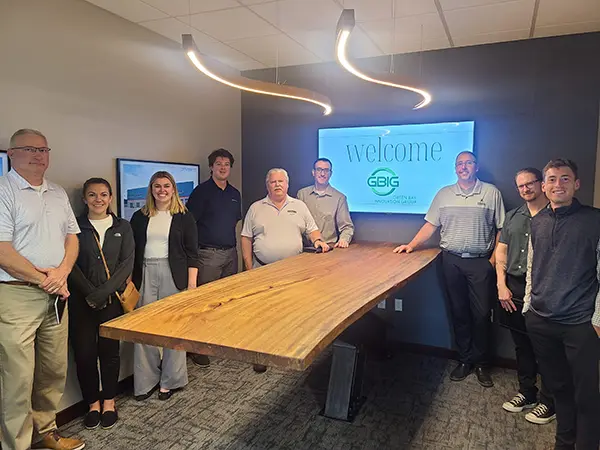
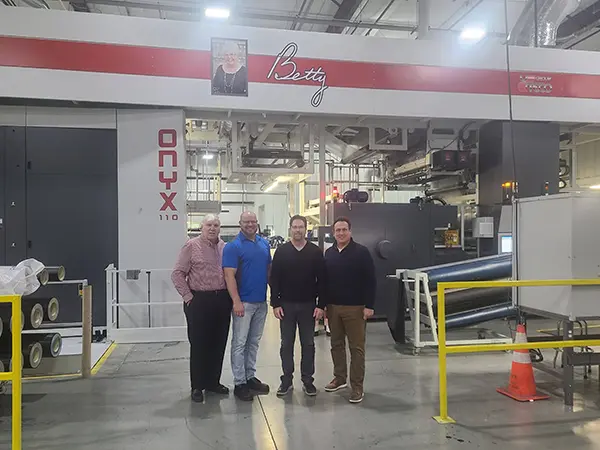
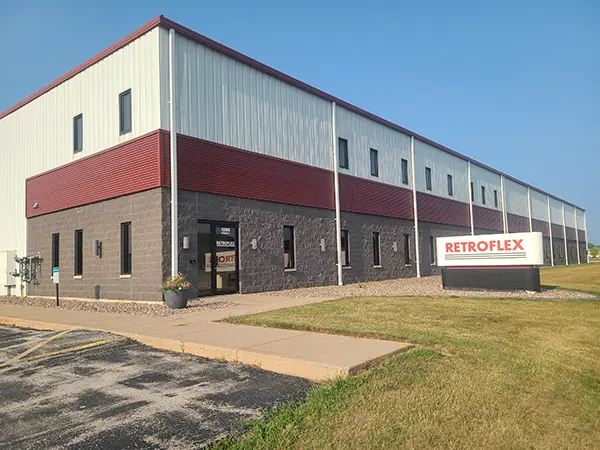
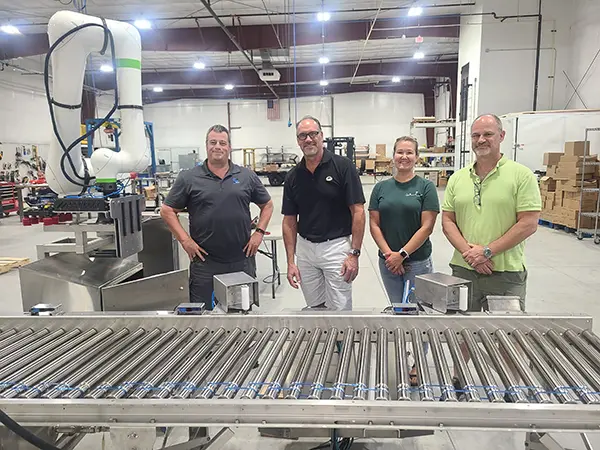
Caity Wilhelm and Marty Ochs would like to thank Print Pro, Inc., Retroflex, Inc., and Zeta Engineering Group for providing tours of their facilities. The companies are very impressive with outstanding facilities.
AI and database integration are transforming sales by helping teams spend less time on administrative tasks and more time on building relationships. In the paper packaging, printing, pulp, and converting industries, this integration is especially valuable because purchasing cycles are often long and expensive. The new integrated databases use AI to keep contact information and related details current.
Effective ways to use AI in sales include:
The ability to find new prospects, new markets, and identify companies that are most likely to need your products and services.
The ability to prioritize leads based on the company profile with their possibility to buy!
Developing personalized leads and AI can draft emails, sales messages, integrate Google, LinkedIn, providing messages, and proposals for follow up communications.
AI can quickly summarize a company’s business, recent investments, sustainability initiatives, and packaging needs before a sales call.
AI analyzes a pipeline to predict future revenue and identify that the company can and should be adding additional equipment and services.
AI can enhance Customer Service with chatboxs to answer frequent questions and qualify leads 24/7 to save time and deliver the correct response!
AL can provide competitive intelligence, new products, expansions, technology investments, and provide an understanding of their business.
For the Wisconsin 5P and Converting Industries, AI can also identify:
Companies Investing in new converting and printing equipment.
Manufacturers expanding corrugated and packaging equipment capacity.
Opportunities created by reshoring
Better decision-making tools to identify trends and business opportunities.
Improved customer service and customer relationships
Higher sales performance
Greater operational efficiency
More accurate forecasting
Enhance innovation.
Stronger completive advantage
Track raw material cost and the supply chain risks!
Monitor sustainability trends and opportunities.
For a sales organization, AI can improve productivity, speed up responses, support better decisions, strengthen customer engagement, shorten sales cycles, and uncover new growth opportunities. Integrating data management with AI is one of the most important competitive advantages a company can build. AI is only as effective as the quality of the data it can access. Accurate, well-managed, and connected data enables AI to generate reliable insights and support better business decisions.
Organizations that invest in strong data management today will be best to benefit from AI tomorrow. Clean data is the foundation for accurate insights, stronger customer service, greater sales efficiency, and long-term growth. To get the best results from AI, ask five specific questions focused on one topic at a time. The key is to make each question clear, simple, accurate, and direct.
Marty Ochs Executive Director Green Bay Innovation Group
Ten years ago, many manufacturing leaders viewed infrastructure reliability as a cost center — something to be minimized, deferred, or pushed to the back of the budget queue. Today, that thinking is shifting. For manufacturers competing in a labor-constrained environment with higher automation dependency and tighter margins, infrastructure reliability has become one of the clearest competitive advantages available.
The Landscape Has Changed
Wisconsin manufacturers face four simultaneous pressures. First, the labor shortage is real. Skilled workers are harder to find and retain. The plants that survive are the ones that make existing workers more productive, not the ones asking for more headcount.
Second, automation dependency keeps rising. Machines, controls, variable frequency drives, and data systems are no longer optional — they’re core to production. And every automated system depends on reliable power, cooling, and network infrastructure.
Third, scheduling is tighter. Customers expect faster turnarounds, smaller batch sizes, and on-time delivery. An unplanned outage that once cost a day now costs a week of missed commitments.
Fourth, infrastructure is aging. Many facilities operate 30+ year-old electrical and mechanical systems. Some of that equipment is reliable, but reliability by accident is not a strategy.
How Reliability Becomes Competitive
In this environment, a facility with predictable uptime is a facility with real advantage.
Uptime means productivity. Downtime means waste — not just lost production, but inefficiency across the entire system. Workers idle. Orders delayed. Capacity unused. When labor is scarce and expensive, downtime becomes exponentially more painful.
Uptime means customer confidence. A manufacturer that consistently meets delivery commitments wins repeat business and higher margins. A manufacturer known for surprises and delays does not.
Uptime means the ability to invest in growth without fear. A plant with aging but well-maintained infrastructure can confidently add new production lines or automation. A plant with failing systems cannot — it’s chasing fires instead of building the future.
Uptime also means operational resilience. When labor is tight, the plants that keep running smoothly can retain people. Plants that shut down unexpectedly or run inefficiently lose workers to competitors who offer stability.
AI and Automation Amplify Reliability Needs
This is where AI and advanced automation change the equation.
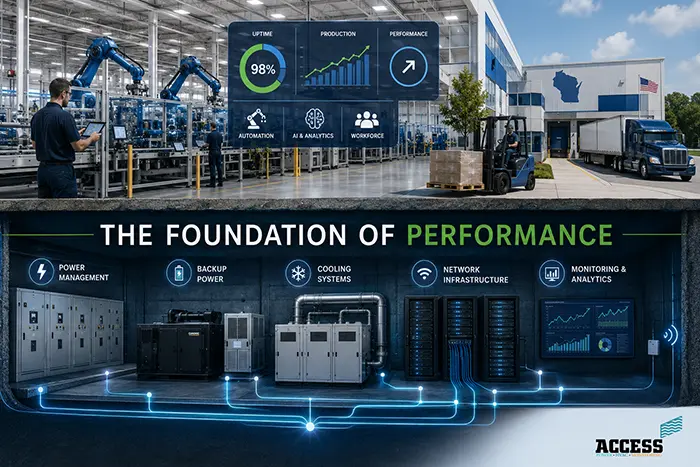
As manufacturers invest in AI-driven production systems, machine vision, predictive maintenance platforms, and real-time analytics, they become more dependent on infrastructure. A power disturbance that once affected a few computers now impacts automation systems, production data, quality processes, and business operations simultaneously.
The plants getting the most value from AI are the ones that have clean, reliable power and cooling infrastructure to support it. Conversely, unreliable infrastructure limits how much AI a facility can actually deploy — because the infrastructure itself becomes the bottleneck.
This creates a strategic insight: Reliable infrastructure is not an obstacle to digital transformation. It’s a prerequisite.
What Competitive Advantage Looks Like in Practice
We work with 5P manufacturers that have deliberately invested in infrastructure reliability. The results are measurable:
Facilities with condition-based maintenance programs and real-time monitoring experience fewer unplanned outages. That means tighter production schedules, higher capacity utilization, and lower cost per unit.
Facilities with documented electrical systems and thermal imaging can onboard automation and AI faster because they understand their power and cooling constraints upfront.
Facilities with strong infrastructure visibility can respond to customer demands faster — adding new production lines, scaling up capacity, or pivoting to new products without worrying about infrastructure limits.
Facilities with predictable operations retain employees better. Workers prefer working at plants that run smoothly.
From Cost Center to Competitive Asset
The shift from viewing infrastructure as a cost to viewing it as a competitive advantage requires a change in mindset. It’s not about spending more money. It’s about spending money strategically — on visibility, preventive maintenance, condition assessment, and planning.
The question manufacturers should ask is not “How do we minimize infrastructure costs?” but “What infrastructure investments unlock the most productivity, flexibility, and growth?”
For many Wisconsin facilities, that answer starts with understanding their current power, cooling, and operational constraints. From there, the path forward becomes clear.
Bottom Line
In a labor-constrained manufacturing environment with rising automation dependency and tighter margins, reliable infrastructure is no longer a nice-to-have. It’s a strategic business advantage. The manufacturers that recognize this — and invest accordingly — will be the ones that compete effectively in the next decade.
If you’d like to discuss how infrastructure reliability could unlock competitive advantage at your facility, reach out. We help manufacturers think strategically about power, cooling, monitoring, and operational continuity.
Access helps manufacturers, healthcare organizations, utilities, and mission-critical facilities improve reliability through power, cooling, monitoring, and infrastructure engineering solutions across Wisconsin and throughout the world.
Located in Oshkosh, Wisconsin, Oshkosh Converting is entering its fifth year in business as a flexible packaging converting company built around responsiveness, quality, and customer service. Founders Jeff Slusarski and Rick Tesch started the company with a willingness to take a chance on an industry that is demanding, competitive, and often operates behind the scenes. Investing their own resources into the business, they saw an opportunity to build a converting company that could offer customers something different: flexibility, responsiveness, and a genuine commitment to service.
The name Oshkosh Converting was chosen with purpose. Rick, Jeff, and the entire team take great pride in the Oshkosh community and want the company to represent the place they work. Carrying the Oshkosh name means something to the team, and they strive to represent it through their work ethic, quality, and the relationships they build with customers.
A Team Built Around the Customer
One of Oshkosh Converting’s greatest strengths is its ability to remain flexible and accommodating. The company specializes in low- to-medium quantity production runs, providing an option for customers whose needs may not fit the traditional high-volume converting model.
The team takes particular pride in fast turnaround times and consistent customer communication. Rather than allowing customers to wonder where an order or project stands, the Oshkosh Converting team emphasizes regular correspondence throughout the process. Questions are answered quickly, challenges are communicated openly, and the team works hard to find solutions when customer needs change.
Quality at the Forefront
Quality and food safety are also central to the operation. Oshkosh Converting’s SQF certification demonstrates the company’s commitment to maintaining strong food safety, quality, and manufacturing standards. The certification is more than a credential—it reflects the processes and accountability the team works to maintain every day.
Growing With Customers
As Oshkosh Converting continues to grow, the focus is not simply on becoming a larger company. The goal is to grow alongside its customers and build long-term partnerships.
When an opportunity requires additional capabilities, equipment, processes, or a different approach, the team is willing to listen and evaluate what it will take to support the customer. That can mean investing when needed, adapting operations, accommodating unique requests, or simply finding a way to get the job done.
Nearly five years into the company’s journey, Oshkosh Converting continues to operate around a straightforward philosophy: respond quickly, communicate consistently, remain flexible, deliver quality work, and never lose sight of the customer.
Oshkosh Converting Proudly based in Oshkosh, Wisconsin. Built to adapt. Ready to grow.
Compliance in Practice: Fall ACA Compliance Seminar
Join M3’s Employee Benefits Compliance team on September 23 from 12:45 p.m. to 3:30 p.m. at Titletown, Rockwood Terrace, 1065 Lombardi Ave., Green Bay, WI, for an in-person educational seminar designed to help HR, benefits, payroll, and finance professionals strengthen their understanding of Affordable Care Act (ACA) requirements. Attendees will receive a practical review of ACA fundamentals, including Employer Shared Responsibility, measurement methods, offers of coverage and affordability, 1094-C/1095-C reporting, and other key compliance obligations. Whether you are new to ACA administration or looking for a refresher, this session will provide valuable insights, practical resources, and guidance for addressing common compliance challenges in your day-to-day responsibilities.
Employers acquiring a business with a unionized workforce may soon have more flexibility to challenge the incumbent union’s status than they have had for decades. On July 21, the D.C. Circuit held in Hospital Menonita de Guayama, Inc. v. NLRB that the National Relations Labor Board (NLRB ) never had the authority to impose its “successor bar” doctrine, a rule that generally requires a successor employer to continue bargaining with an existing union for up to a year after an acquisition. As one of the first appellate decisions to reject an NLRB doctrine since the U.S. Supreme Court ended automatic deference to federal agencies, other doctrines built on similarly thin statutory footing may be next.
For now, however, employers should not assume their obligations have changed. The NLRB continues to apply the successor bar and employers that withdraw recognition based solely on this decision could still face unfair labor practice charges while the issue continues to be litigated.
D.C. Circuit Rejects the NLRB’s Successor Bar Doctrine
The NLRB’s successor bar doctrine prevents a new owner of a unionized business from challenging the incumbent union. The employer must continue bargaining with it for up to one year no matter what employees are saying.
In Hospital Menonita, a hospital acquired a unionized facility and later received evidence that employees in every one of its bargaining units no longer supported the union. It withdrew recognition. The Board, applying the successor bar, found a violation. The D.C. Circuit disagreed. Compelling an employer to bargain with a union that may lack majority support, it held, collides with sections 7 and 9 of the National Labor Relations Act, the provisions that protect employees’ right to choose their own representative.
Importantly, the successor bar is still the law at the Board and it stays that way until the Board abandons it or the Supreme Court weighs in. An employer that withdraws recognition today on the strength of this ruling is volunteering to be the test case.
The Broader Impact on NLRB Doctrine
For years, courts reviewing Board doctrine gave the agency the benefit of the doubt. The Supreme Court ended that in 2024 with Loper Bright Enterprises v. Raimondo, holding that courts—not agencies—are responsible for determining the best reading of federal statutes.
Hospital Menonita highlights the impact Loper Bright has made. The D.C. Circuit previously upheld the successor bar, but after the Supreme Court vacated that decision and sent the case back to be reconsidered under Loper Bright, the successor bar did not survive.
Every reviewable Board order can be appealed to the D.C. Circuit. As a result, this decision may provide a roadmap for future challenges to Board-created doctrines. Change will come one case at a time, but it has started.
What This Means for Employers
Nothing changes today. But if an acquisition involving a unionized workforce is on the horizon, put the successor bar into your deal timing and strategy now. Document what employees actually say about the union instead of relying on impressions, and do not withdraw recognition without counsel. This is a development to watch, not a green light.
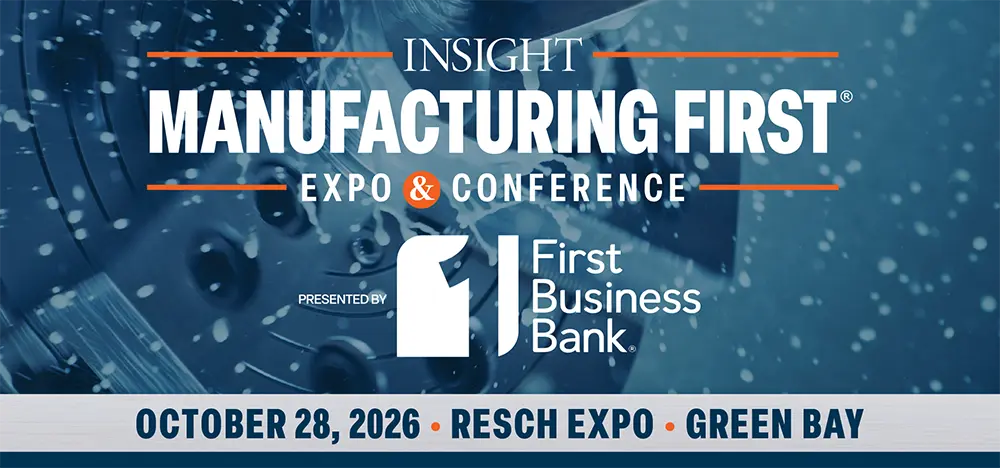
Manufacturing First is Northeast Wisconsin’s premier manufacturing conference and expo, bringing together manufacturers, suppliers, educators, workforce partners and industry leaders for a day of learning, networking and business growth.
Whether you’re looking to gain insights from industry experts, discover innovative solutions, make valuable connections, or showcase your organization, Manufacturing First provides opportunities to help you and your business succeed.
Your Manufacturing First Experience Includes an Exclusive Bonus Opportunity
Attendees and exhibitors who register by September 30, 2026 will receive an exclusive invitation to a live recording of the NEW Manufacturing Insights podcast at Robinson, Inc. on October 1, helping kick off Manufacturing Month in Northeast Wisconsin.
This special event will feature Jeff Engelbrecht, Training & Development Manager at Robinson, Inc., and provide attendees with a unique opportunity to be part of a live podcast audience alongside fellow manufacturing professionals.
Don’t miss the region’s leading manufacturing event and the chance to take advantage of this exclusive bonus experience.
Register today or reserve your exhibitor booth before September 30 to secure your invitation.
North American trade show debut offers commercial printers and label converters a new, accessible path into digital label printing
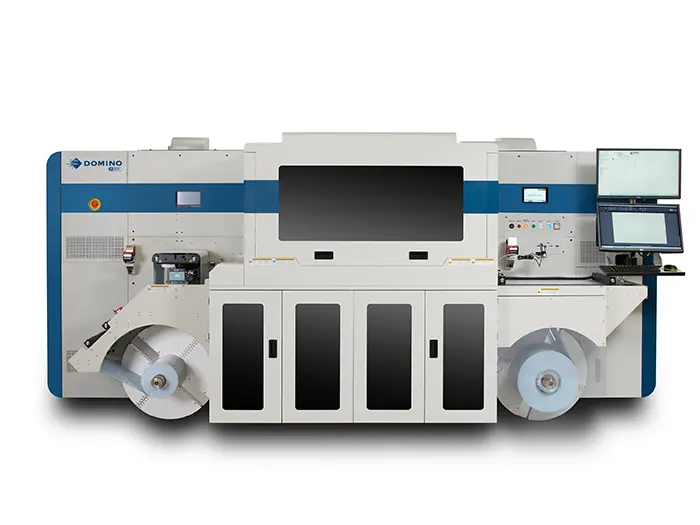
Domino Digital Printing Americas will showcase the brand-new Domino N410 digital LED inkjet label press at PRINTING United Expo 2026, taking place September 23–25 at the Las Vegas Convention Center in Las Vegas, Nevada. Attendees are invited to visit Domino booth C2673 for the first opportunity at a North American trade show to see the Domino N410.
The N410 represents the latest addition to Domino’s portfolio of digital printing solutions and provides an attractive entry point into digital printing for label converters and commercial printers looking to expand their capabilities, increase production flexibility, and capitalize on the continued growth of digital label production.
See the NEW Domino N410
Designed to make high-quality digital label printing more accessible, the Domino N410 combines the benefits of LED curing in a compact, efficient platform.
With a 13-inch web width and integrated control cabinets, the N410 has a small footprint designed to conserve valuable production floor space. Measuring H: 7.2 ft (2.2 m) / D: 6.5 ft (2 m) / L: 13.7 ft (4.2 m), N410 is 5-color CMYK+W, 600 dpi, prints up to 164 ft/min (50 m/m), energy-efficient LED, low power consumption, sustainable & cost-effective.
Its streamlined design also enables quick installation and setup, helping customers get up and running quickly. The N410 provides an entry-level, low-cost digital printing solution backed by Domino’s reputation for quality, reliability, and world-class service and support. For label converters considering their first digital press, as well as commercial printers looking to bring label production in-house or expand into the growing label market, the N410 provides a compelling path into digital printing.
“PRINTING United brings together such a diverse group of print providers, and that makes it an ideal venue to introduce the N410 to the North American market,” says Mike Barry, Commercial Director, Domino Digital Printing Americas. “We see a tremendous opportunity for commercial printers that are looking to diversify and enter the label market, as well as label converters that are ready to add digital printing to their business. The N410 was designed to make that step into digital easier. It offers the quality, flexibility and efficiency of digital inkjet in a compact, affordable platform, backed by the service and support customers expect from Domino.”
PRINTING United Expo 2026 will mark the first opportunity for North American trade show attendees to view the Domino N410, giving visitors the chance to experience Domino’s newest digital label printing technology up close and speak directly with Domino experts about how digital printing can complement their existing production capabilities.
Experience the Print Quality
In addition to seeing the N410, visitors to the Domino booth will be able to explore a variety of printed label samples illustrating the quality and capabilities of Domino digital printing technology.
Attendees are encouraged to take label samples home with them, providing an opportunity to see the print quality firsthand and share the results with colleagues following the show.
Domino In-House Leasing: Making Digital More Accessible
Also being promoted in their booth at PRINTING United Expo is the Domino In-House Leasing Program, featuring the message: “Starting at $6,995 per month, acquiring a Domino digital press has never been easier!” Domino’s In House Leasing Program provides customers with payment options to fit their budget while highlighting several key advantages including a predictable monthly cost, bundled package with service and more, and trade-in options to help customers plan ahead. These options are designed to give commercial printers and converters greater flexibility when investing in digital technology and provide a straightforward path to bring Domino digital printing capabilities into their operations.
Visit Domino at PRINTING United Expo
PRINTING United Expo brings together professionals from across the printing industry, making it an ideal environment for Domino to demonstrate how digital inkjet technology can help printers respond to changing customer demands, shorter run lengths, faster turnaround requirements, and new business opportunities.
Whether you are a commercial printer considering entering the label market or a label converter looking to add digital printing to your business, Domino invites you to visit booth C2673 at PRINTING United Expo, September 23–25, 2026, at the Las Vegas Convention Center in Las Vegas, Nevada, and be among the first in North America to see the brand-new Domino N410 digital LED inkjet label press at a trade show. And learn how the Domino In House Leasing Program makes acquiring a digital press more accessible with predictable costs and options designed around your needs. Can’t wait to see it? Here’s a sneak peek of the Domino N410 in a quick 1-minute video and 3-minute video.
Domino is a leading manufacturer and distributor of digital printing and product identification solutions. Celebrating its 48th year in business, Domino is a global organization with world headquarters in the UK, and North American headquarters in Gurnee, IL. Domino has 25 subsidiaries, representation in over 120 countries, and over 3,000 employees worldwide. As of June 2015, Domino is a Brother Group company. For more information on Domino, please visit dominodigitalprinting.com
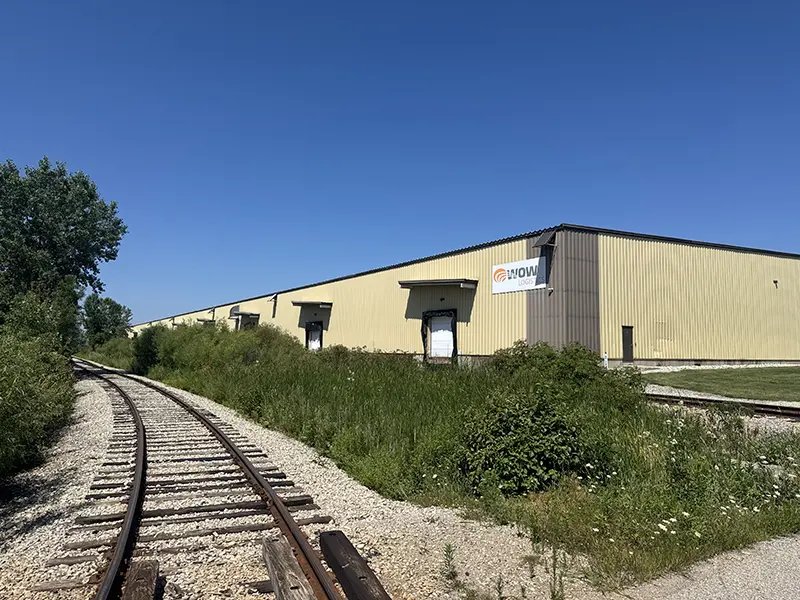
WOW Logistics is gearing up to celebrate its milestone 50th anniversary next year, and a recent tour of their Little Chute facility makes it easy to see why they remain a leader and have been around so long in this brutal industry. Boasting a nationwide footprint of food-grade, temperature-controlled storage space, the company has become a valued partner for the food, beverage, and manufacturing industries.
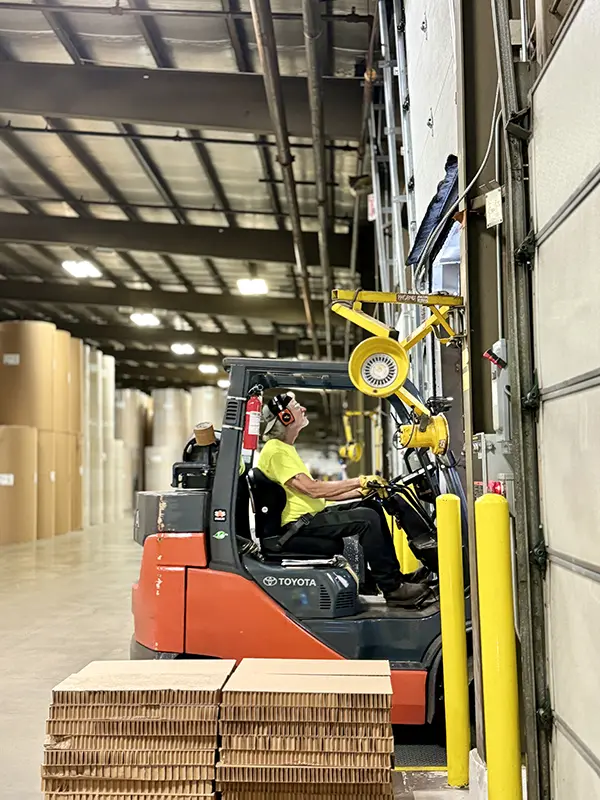
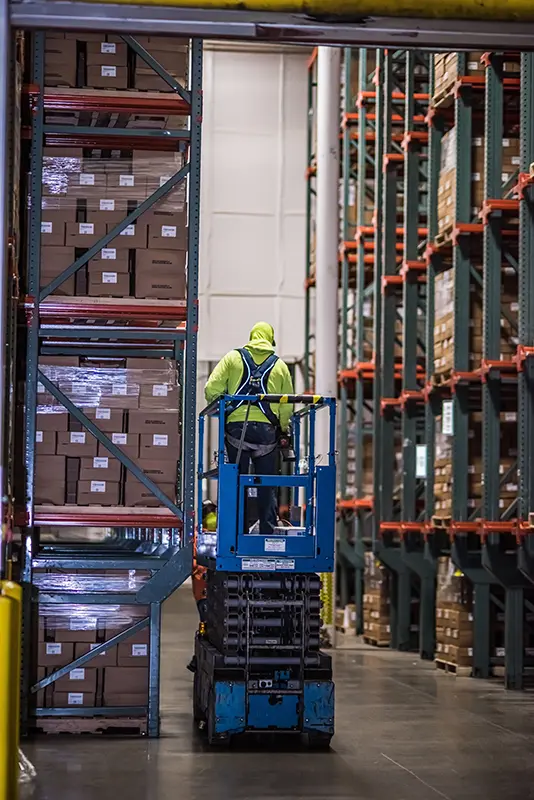
Walking through their 350,000-square-foot facility offers a stunning look at modern supply chain agility in action. The sheer variety of inventory coexisting under one roof is remarkable. On any given aisle, you might find everything from dairy and food products to packaging and machinery. The staggering volume of product safely housed, meticulously inventoried, and seamlessly mobilized for nationwide distribution is phenomenal.
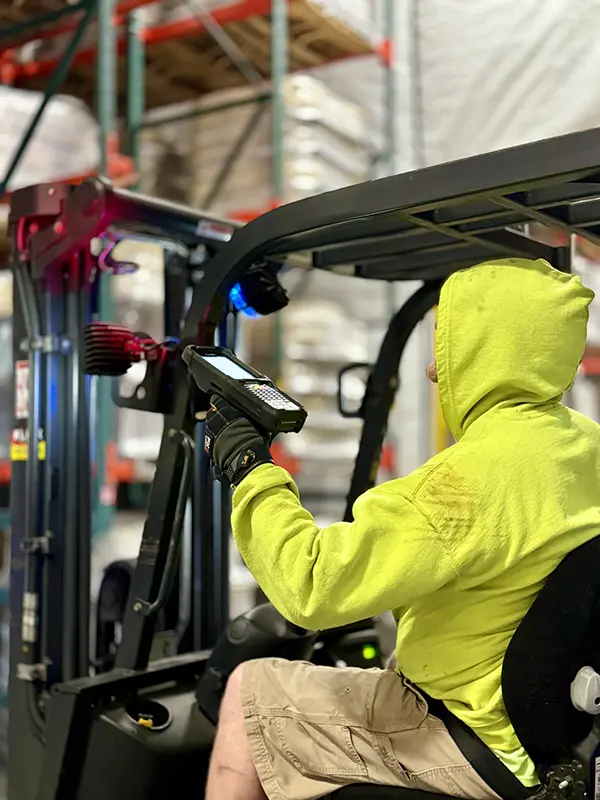
Beyond the impressive physical scale, WOW Logistics stands out through its technology infrastructure. Their advanced operating system serves as a digital lifeline for customers, offering live, real-time inventory tracking and the flexibility to route materials wherever market demands dictate at a moment’s notice. When observing the precision of the entire operation, it comes as no surprise that the company has earned the trust of its customers and maintained partnerships that span decades.
Green Bay Innovation Group
Bringing Green Bay Companies Together. Green Bay Innovation Group is committed to building an authentic networking experience where innovation can thrive.