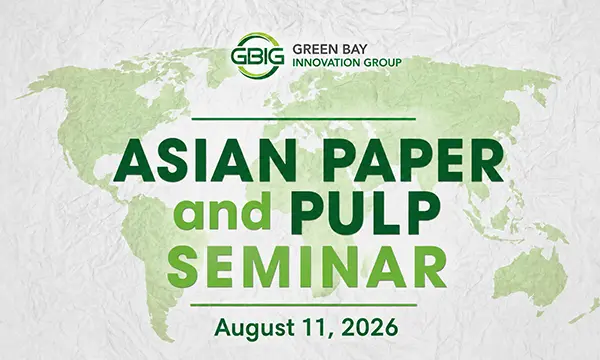
Sales Rewired: Turn AI into a Competitive Advantage

Find Out More Here
Green Bay Innovation Group
GBIG News

RPF: Repurposing Closed Wood Products Facilities for Bioenergy Development

U.S. Endowment for Forestry and Communities

Proposal and Review Timeline:

  • June 15, 2026 | RFP Posted
  • July 17, 2026 | Questions Due
  • July 24, 2026 | Responses Posted
  • August 6, 2026 | Proposals Due by 5:00 PM EST
  • September 2026 | Contracting and Project Initiation

Overview/Purpose:

Across the United States, numerous wood products manufacturing facilities—including pulp and paper mills—have ceased operations, leaving behind industrial infrastructure, utility connections, transportation assets, and skilled workforce capacity. At the same time, many forest-dependent regions face increasing challenges associated with declining markets for low-value wood fiber, and the need for new economic development opportunities.

The U.S. Endowment for Forestry and Communities (“The Endowment”) seeks proposals to evaluate the technical, economic, and community feasibility of repurposing closed wood products manufacturing facilities for bioenergy. Through this project, the Endowment aims to generate high-quality feasibility data that can inform future investment decisions and determine whether industrial site reuse can serve as a scalable model for biomass utilization, renewable energy production, and rural economic revitalization.

Through this Request for Proposals (RFP), the Endowment seeks to support one or two projects that will conduct comprehensive pre-development assessments of closed wood products facilities that can lead to redevelopment as biopower generation or biofuel production facilities.

Project Goal:

The primary goal of this initiative is to determine the feasibility of reusing closed wood products manufacturing sites for biopower generation or biofuel production.

Successful projects will produce analyses that address:

  • Site-level due diligence findings
  • Engineering and technical feasibility
  • Economic and financial viability
  • Project risks and mitigation strategies
  • Community and workforce considerations
  • Infrastructure requirements and constraints
  • Financing structures and investment readiness

These outcomes will inform both project-specific investment decisions and broader understanding of whether this approach can be replicated across additional sites and regions.

Project and Funding Details:

Eligibility: Eligible applicants include U.S.-based private companies or other organizations with demonstrated experience and a strong track record in energy project development, wood products manufacturing, data center development, or closely related infrastructure projects of similar scale and complexity.

Project Expectations: Selected projects will conduct a comprehensive pre-development assessment equivalent to a Front-End Loading Level 2 (FEL-2) analysis or comparable industry-standard feasibility study.

Projects should provide sufficient technical, economic, and market information to support future investment and development decisions.

The Endowment will work collaboratively with selected projects to establish final scopes of work, milestones, and reporting requirements.

Funding Available: The Endowment is making available up to $500,000 for this initiative.

The Endowment anticipates supporting:

  • One project of up to $500,000; or
  • Two projects of approximately $250,000 each

Funding will be provided as a Program Related Investment (PRI) or grant — repayable upon
the project proceeding to construction financing or forgiven as a grant if the project does
not advance.

Evaluation Criteria: Proposals will be evaluated using the following criteria:

  • I. Site Control and Access
    • a. Applicants must demonstrate:
      • i. Ownership of the site;
      • ii. Long-term leasehold interest;
      • iii. Purchase option; or
      • iv. Written authorization to conduct the proposed analysis.
    • b. Preference may be given to projects that demonstrate a clear path toward future site redevelopment.
  • II. Team Capability and Experience
    • a. Applicants should demonstrate:
      • i. Relevant project development experience,
      • ii. Technical expertise related to biomass utilization and energy systems,
      • iii. Experience with industrial facility redevelopment,
      • iv. Qualifications of key team members and consultants.
    • b. Applicants should identify all major project partners and their roles.
  • III. Financial Readiness and Project Advancement Potential
    • a. Preference will be given to projects that demonstrate:
      • i. Existing development efforts,
      • ii. Funding commitments or matching funds,
      • iii. Offtake agreements or letters of intent,
      • iv. Utility engagement,
      • v. Strategic partnership,
      • vi. A realistic pathway toward implementation.
  • IV. Community Alignment
    • a. Applicants should demonstrate alignment with:
      • i. Local economic development priorities,
      • ii. Community redevelopment goals,
      • iii. Workforce development opportunities,
      • iv. Regional forest industry strategies,
      • v. Community willingness, and
      • vi. Proposals should describe anticipated community benefits, potential impacts to land use and stakeholder engagement plans.

Data Access and Publication Rights

Awardees will be required to:

  • Provide the Endowment with confidential access to all reports, studies, models,
    analyses, and supporting materials developed through grant funding,
  • Participate in periodic project review and site visit meetings,
  • Provide final electronic copies of all deliverables.

The Endowment reserves the right to synthesize and publish aggregated findings, lessons learned, case studies, and implementation guidance developed through this initiative. The Endowment will work with project teams to ensure that proprietary business information, trade secrets, and other confidential information are appropriately protected.

Future Investment Considerations

Participation in this initiative does not guarantee future funding. However, projects demonstrating strong technical and economic potential may receive priority consideration for future engagement with the Endowment.

Application Instructions:

Proposals must be submitted via Endowment’s online application portal at https://usendowment.my.site.com/grants. Incomplete applications will not be considered. The proposal narrative should not exceed five pages and should focus on the following elements:

Project Description

Provide a concise description of:

  • The facility and its operating history
  • Current site conditions and ownership status
  • The proposed biopower redevelopment concept
  • Why the site is a strong candidate for development

Site Control and Access

Describe the applicant’s relationship to the site and provide evidence of:

  • Ownership,
  • Leasehold interest,
  • Purchase option, or
  • Authorization to access and evaluate the facility.

Must disclose any pending or recent litigation related to the site, current or former owners, occupants or any other entity affiliated with the project.

Proposed Approach and Methodology

Describe:

  • The scope of work to be completed
  • Key technical, financial, and market questions to be addressed
  • Proposed consultants or project partners
  • Major deliverables
  • Project schedule and milestones

Supporting Information and Data Room Access

Applicants are encouraged to provide access to a secure electronic data room containing supporting information relevant to the proposed site and project.
Examples of supporting materials may include:

Site Information

  • Site maps
  • Property descriptions
  • Facility layouts
  • Existing engineering drawings
  • Equipment inventories
  • Utility information

Environmental and Regulatory Information

  • Environmental reports
  • Permitting documentation
  • Previous assessments or studies
  • Regulatory correspondence

Technical and Development Information

  • Feasibility studies
  • Engineering evaluations
  • Resource assessments
  • Interconnection studies
  • Infrastructure assessments

Commercial and Financial Information

  • Project budgets
  • Financial analyses
  • Market studies
  • Offtake agreements
  • Letters of intent
  • Partnership agreements
  • Funding commitments

Community and Economic Development Information

  • Community support letters
  • Economic development plans
  • Workforce assessments
  • Stakeholder engagement materials

Applicants may provide either:

  • A secure data room link; or
  • Individual electronic files uploaded through the application portal. If using the portal please upload these in the proposal narrative upload field.

The Endowment recognizes that some materials may contain confidential or proprietary information. All information submitted will be treated as confidential to the extent permitted by law and consistent with the terms of the application process.

Selection Process

Following proposal review, the Endowment may request additional information, interviews, or access to supplemental materials before making final award decisions.

The Endowment reserves the right to conduct follow-up due diligence with applicants and project partners as part of the evaluation process.

/

For any portal/application issues please contact subawards@usendowment.org.
For proposal technical questions please contact Matt Krumenauer at matt@usendowment.org

To view or complete the application go to the Endowment’s grantee portal and click “Log in” at the top left corner: https://usendowment.my.site.com/grants. If you already have an account on the portal from a previous Endowment project, please use those login credentials.

If you are a new user, please click on “Not a member?” and follow the instructions to create an account. Once logged in, click on the “Opportunities for Funding” tab to view this RFP and apply.

See our guide “How to Complete a Competitive (RFP) Application” for step-by-step instructions on submitting a competitive application in our grantee portal.

Please use this budget template, also available in the portal. Match is not required for this RFP.

The U.S. Endowment for Forestry and Communities is an equal opportunity employer. All applicants will be considered without regard to race, color, religion, sex (including pregnancy, gender identity, and sexual orientation), national origin, age (40 or older), disability or genetic information or any other characteristic protected by applicable federal, state, or local law.

Sun Chemical – Navigating the Ink Dilemma: Should You Bring an In-House Ink Kitchen to Your Corrugation Plant?

dragonfly box of tissue

By Andrew Brooks, Water-based Inks and Coatings Product Manager at Sun Chemical

In today’s corrugated packaging industry, plant managers are pressed to deliver faster turnaround times and higher print quality. This challenge leads to a crucial operational decision: Should a plant mix its own inks with an in-house ink kitchen (a system for dispensing and blending base ink components), or continue purchasing finished, pre-mixed inks from ink suppliers? The right answer isn’t just about cost―it impacts labor, workspace, supplier relationships, and the plant’s future growth. To make the best choice, managers need to understand both the visible and hidden factors of each approach.

The In-House Ink Kitchen (Dispensing System)

Pros

A200 machine
  1. Cost Savings: Generally, due to high production volume, buying base ink components and extenders (materials used to make the finished ink) is usually less expensive than purchasing a finished ink, especially for custom colors or small batches. However, for high-volume colors like GCMI 75 Red (a standard red ink commonly used in corrugated packaging), large ink suppliers often achieve greater efficiency and lower costs by producing these in bulk.
  2. Inventory Control: Only the ink quantity that is needed is dispensed, minimizing “dead” inventory (unused ink). Suppliers typically sell inks in minimum quantities (such as 40–45 pounds), which can result in waste if the job requires less. In house dispensing allows for “fit for use lot” sizes―in other words, only enough ink for each job is prepared, which keeps ink waste at a minimum.
  3. Operational Flexibility: If a job runs out of a color during production, or a spill happens, a new batch can quickly be dispensed―reducing costly downtime while waiting for a replacement delivery.

Cons

  1. Capital Expenditure (CAPEX): Setting up an ink kitchen requires an upfront investment and ongoing maintenance. Some plants do not take this into consideration by signing long-term contracts with ink vendors who provide the ink dispenser as part of their service. Pro-tip: Evaluate the merits of the ink and service first, only then consider including the equipment as part of the overall package.
  2. Labor & Expertise: While modern dispensers are user-friendly, the best results come from having a dedicated ink room team. Maintaining consistency in color despite changes in pH, substrate, or anilox wear, for example, requires expertise. Pro-tip: consider the headcount for the dedicated expert support needed, or a backup for when that expert is not available.
  3. Reduced Vendor Consultancy: When a plant mixes their own ink, the “hands-on” engagement with the supplier who is intimately familiar with the daily runs can be lost. This “knowledge fog” may make it harder for vendors to offer productivity advice or training.

Buying Finished Ink (Pre-Mixed)

Pros

  1. Simplicity: For smaller plants or those with low color complexity, buying pre-mixed inks is straightforward. There’s no equipment to maintain and no manufacturing guesswork―just “buy and run.” An ink kitchen can always be added later if needed. Pro-tip: Don’t invest in a dispenser unless you plan to use it.)
  2. Batch Consistency: Most ink kitchen operations are built around producing one pail of finished ink at a time. Maintaining Quality Control (QC) pail-to-pail can be difficult with small in-house batches. Outside vendors mix in larger volumes with established QC standards, generally ensuring higher consistency across a long run.
  3. Space Requirements: Purchasing finished inks frees up valuable floor space, which would otherwise be needed for dispensing equipment, storage, and QC equipment. If an in-house kitchen isn’t located near the pressroom, any productivity gain is lost due to time spent moving ink.

Cons

  1. Premium Pricing: The cost of finished inks normally includes supplier labor, overhead, and shipping costs. Single-pail production, especially when custom color matching is involved, can be inefficient, resulting in higher prices―especially for small orders.
  2. Logistical Risks: A plant production schedule is entirely dependent on the supplier’s delivery window, which can be longer for custom colors. On the other hand, a plant that has the material (bases and vehicle) in-house to mix the finished ink can meet last-minute customer orders, and avoid delays due to supply chain or weather disruptions, not impacting the ability to meet production goals

Other Factors to Consider

  • Product Mix: If a plant mostly prints jobs using a single color, such as 75% GCMI 90 Black―a standard black ink for shipping boxes, there’s generally little benefit to in-house mixing. But if a plant regularly produces full-color jobs, for example, point-of-purchase displays needing 40–50 different colors monthly, in-house capabilities can be advantageous.
  • Dispenser Types: There are three major dispenser models in the corrugated industry, each offering different features and sizes. Choosing the right hardware, and features, is essential.

Decision Framework: Practical Checklist for Plant Managers

  • How many colors do jobs require monthly? If more than 20–30, consider in-house capabilities.
  • What percentage of jobs use standard inks (like GCMI 90 Black or GCMI 75 Red)? If over 75%, finished inks are likely more efficient.
  • Is the facility equipped with staff who can manage ink mixing and quality control? If not, finished inks may be easier.
  • Is there enough floor space near the pressroom for an ink kitchen?
  • Consider cost of the initial investment and ongoing maintenance for dispensing equipment.
  • How critical is immediate color adjustment during production? If high, in-house mixing is beneficial.
  • Are there frequent supplier deliveries delays? If high, in-house mixing is beneficial.
Most jobs use standard colors

Buy finished ink

Staff expertise and space are available

In-house kitchen is feasible
Frequent color changes or custom jobs

Consider in-house kitchen

Unsure or limited resources

Start with finished inks, reassess later

The Bottom Line

There’s no universal answer to the ink kitchen dilemma. Finished inks provide simplicity, minimal overhead, and standard QC―ideal for smaller plants or those with low color diversity. For plants needing quick color changes and high specialty color turnover, an in-house ink kitchen offers cost savings and flexibility. Conduct a pressroom audit to evaluate waste, labor, and color needs before deciding. The choice made will shape the plant’s operations for years to come―so it needs to be approached thoughtfully and objectively.

For additional information, visit: www.sunchemical.com/flexible-packaging-solutions/

A Process Control Graduate Certificate Webinar

Presented by:

Wisconsin Paper Council logo
UW Stevens Point

A free webinar hosted by the Wisconsin Paper Council in partnership with UW–Stevens Point introducing a graduate-level credential designed to upskill today’s manufacturing workforce.

WEBINAR DETAILS:

  • Date: Tuesday, July 28, 2026
  • Time: 12:00 pm-1:00 pm (CDT)
  • Location: Virtual – MS Teams

WHAT YOU WILL LEARN

  • How process control impacts safety, efficiency, and operations
  • How the 15-credit online certificate is structured for working professionals
  • Master traditional and advanced process control technologies for modern industrial manufacturing
  • Learn how to enroll in the Process Control Engineering Graduate Certificate
  • How this certificate can fit into employer-supported professional development

ABOUT THE CERTIFICATE

The Process Control Engineering Graduate Certificate is a 15-credit, fully online program designed for working professionals. Courses are delivered asynchronously through an online learning platform, allowing students to balance work and study. Most complete the program in 15–18 months, spending about 6–9 hours per week on coursework.

PRESENTERS

John Tatarko, Ph.D. , PE
Teaching Professor & Program Lead
Process Control Engineering Graduate
Certificate, UW–Stevens Point

Roland Gong, Ph.D.
Professor and Chair, Department of
Paper Science and Chemical
Engineering, UW–Stevens Point

WHY IT MATTERS

  • Built directly in response to industry demand
  • Prepares students to sit for the Process Control PE Exam
  • Focused on real-world application, not theory

WHO SHOULD ATTEND

  • Engineers in any discipline
  • Professionals in paper, manufacturing, and process industries
  • Anyone seeking advanced control systems knowledge
Register Now

Ahlstrom continues to support UNICEF’s education work through Ahlström Collective Impact

AHLSTROM OYJ, PRESS RELEASE, JUNE 26, 2026 at 10 EEST

Ahlstrom, a global leader in fiber-based specialty materials, reinforces their support of Ahlström Collective Impact, a unique collaboration model bringing together an Ahlström network of companies, foundations, and family members to expand access to education and advance children’s rights.

Ahlstrom

This year, Ahlström Collective Impact (ACI) is increasing its support for UNICEF Finland by contributing more than EUR 850,000 to UNICEF’s Global Education Fund. Now comprising 13 member organizations, Ahlström Collective Impact works through its long-term partnership with UNICEF Finland to support children’s education globally and help members apply a child-focused perspective to everyday business decisions.

This year’s combined donation from Ahlström Collective Impact members represents an increased contribution, while exemplifying how vital private sector partnerships are in helping UNICEF protect children’s rights amid global instability.

“Learning outcomes remain a major concern globally, particularly in low- and middle-income countries where many children lack basic literacy skills,” said Annina Tanhuanpää, Executive Director of UNICEF Finland. “Access to quality education and digital learning tools is still uneven,” she continued. “Bridging this gap requires stronger private sector engagement – making partnerships like Ahlström Collective Impact increasingly important.”

“Our ambition is to lead the way integrating a child lens into business and investment decisions,” said Nelli Paasikivi-Ahlström, Chair of Ahlström Collective Impact. “For our members, promoting and protecting children’s rights is not just about responsibility — it’s how we want to do business.”

As a founding partner of Ahlström Collective Impact, Ahlstrom continues the Ahlstrom family’s long legacy of supporting communities and advancing educational opportunities for children. The initiative is embedded within Ahlstrom’s strategy framework and the company provides employees opportunities to learn and engage with ACI programs. Employees are also encouraged to share personal stories from their daily interactions that reflect Ahlström Collective Impact’s values of supporting children, youth, and families.

“As Ahlstrom marks its 175th anniversary, we are reminded that our company has always been shaped by a strong sense of responsibility to people, communities, and future generations,” said Helen Mets, President and CEO of Ahlstrom. “As a founding partner of Ahlström Collective Impact, we are proud to contribute to a collaboration that advances children’s rights and expands access to quality education. This partnership reflects both our heritage and our ongoing commitment to creating positive impact beyond our own operations.”

For further information, please contact

Annemiek Voorzee, VP Corporate Communications, annemiek.voorzee@ahlstrom.com

Ahlstrom in brief

Ahlstrom is a global leader in combining fibers into sustainable specialty materials. Our purpose is to Purify and Protect, with Every Fiber, for a Sustainable World. Our vision is to be the leading Sustainable Specialty Materials Company for all our stakeholders. Our three Core divisions, Filtration & Life Sciences, Food & Consumer Packaging, and Protective Materials, address global trends with safe and sustainable solutions. Our net sales in 2025 amounted to EUR 2.9 billion and we employ some 7,000 people. Read more www.ahlstrom.com.

Bayland Buildings: Kingsbury Groundbreaking

Ground breaking 6.24

The new state-of-the-art facility will enhance Kingsbury’s manufacturing capabilities, support future business expansion, and create new employment opportunities in the Fox Valley region. The building will include two-story office space, will be loaded for three 15-ton bridge cranes, a climate-controlled QC lab, a Babbitt room, and will be seeking LEED accreditation.

This new manufacturing facility underscores Kingsbury’s commitment to innovation, operational excellence, and long-term growth in Wisconsin. The investment will increase production capacity, enhance the company’s ability to serve its customers, and reinforce Oshkosh’s status as a premier manufacturing hub. Construction is expected to be completed in the Spring of 2027.

PFAS Regulatory Strategic Planning & Solutions

Rebecca Higgins, a PFAS Remediation Leader with AECOM’s Minnesota office, recently spoke about PFAS at the Wisconsin Paper Council Annual Meeting.

Biography: Rebecca Higgins, PG

Rebecca Higgins

Rebecca is a PFAS Remediation Leader with AECOM’s Minnesota office. She works across various market sectors to support clients facing diverse and expansive PFAS challenges. As a former long-time state regulator with the Minnesota Pollution Control Agency, she brings unique perspectives to the dynamic interface of evolving regulations, technology advancements and remediation management strategies. After leading the technical investigation and feasibility study under the 2018 3M PFAS Settlement and directing the technical regulatory elements of the 3M Consent Order Sites, she now brings that expertise to strategic advisory roles serving public and private sector clients across the US. Rebecca is the former Co-Chair of the Interstate Technology and Regulatory Council and President of the Minnesota Ground Water Association.

View Full Case Study

AFF Research: Green Bay Packers Mentor-Protégé Program Celebrates Fifteen Sessions of Business Growth and Impact

3 people at Packer Protege event

GREEN BAY, Wis. — The Green Bay Packers Mentor-Protégé Program recently recognized participants from its fifteenth session, marking another milestone in a program that continues to strengthen Wisconsin businesses through mentorship, leadership development, and strategic business growth.

Co-created and administered by AFF Research, the Green Bay Packers Mentor-Protégé Program has become one of Wisconsin’s most impactful business development initiatives. Since its launch in 2010, the program has connected emerging businesses with experienced mentors, creating opportunities for growth, innovation, and long-term success.

Over the course of fifteen sessions, 164 companies have participated in the program, generating measurable economic impact throughout the state, including:

  • 164 companies completing the program
  • More than 504 jobs created
  • $110.9 million in revenue growth
  • Stronger business networks and expanded market opportunities for participating companies

“The Green Bay Packers Mentor-Protégé Program demonstrates what can happen when experienced business leaders invest in the success of emerging companies,” said Anna Steinfest, President and CEO of AFF Research. “Over fifteen sessions, we have witnessed remarkable growth, job creation, and business success stories that continue to strengthen communities across Wisconsin. We are proud of every mentor and protégé who has contributed to the program’s lasting impact.”

The program reflects a shared commitment by the Green Bay Packers and AFF Research to support entrepreneurship, foster business excellence, and create meaningful economic opportunities throughout Wisconsin.

For more information about the Green Bay Packers Mentor-Protégé Program, visit www.packers.com/community/mentor-protege.

About AFF Research

AFF Research is a nationally recognized consulting firm specializing in supplier diversity, business development, mentorship initiatives, and economic inclusion programs. As co-creator and administrator of the Green Bay Packers Mentor-Protégé Program, AFF Research helps organizations and businesses build meaningful partnerships that drive measurable growth and long-term success.

Group picture at Packer Protege event

June 24th, 2026 Swing Big Newsletter

GBIG logo

Read the June 24th, 2026 Green Bay Innovation Group Newsletter here.

Read newsletter

Swing Big With GBIG Golf Outing 2026

Group of Golf Carts

The Swing Big with GBIG was an outstanding success in 2026. We had 215 golfers and 63 Hole-Sponsors with just under three hundred attendees.

We want to thank First Business Bank as the Major Sponsor for the event.

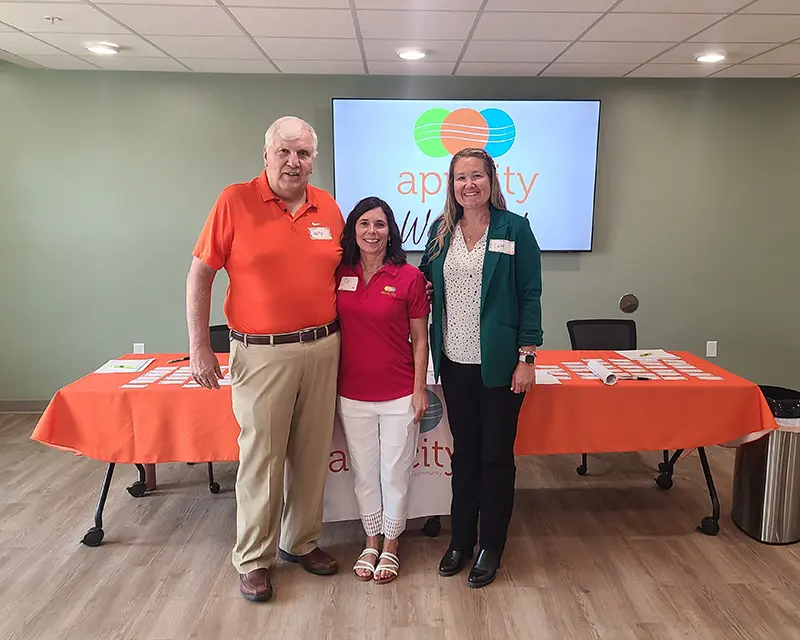
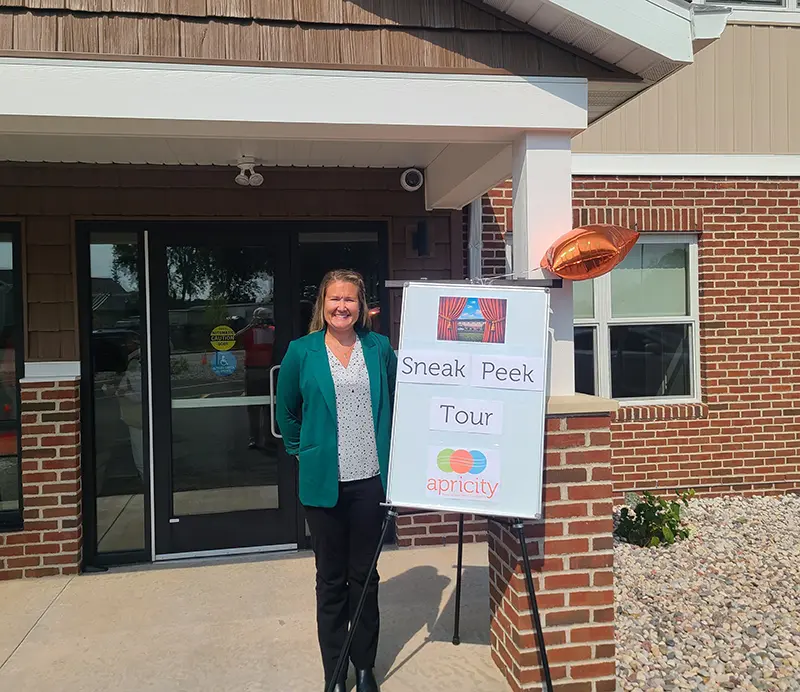
We want to thank Steve Van Dyke, Joan Koehne – Packerland Websites, Caity Wilhelm – Membership Director of GBIG, AJ Buran, Cassie Diedrick & Nicole Onesti – Women in the 5P Industries, VARC, Apricity, and ALL the other volunteers to make this an extraordinarily successful outing.

We will be donating the profits from the event to:

  • Apricity
  • Einstein Project
  • EPH
  • St. John’s Shelter/Ministries
  • Trees for Tomorrow
  • University of Wisconsin-Madison
  • VARC
  • Women in the 5P Industries

We thank Amundsen Davis for raising $525.00 at their hole with the marshmallow drive. Congratulations to the winners: Andrew Maus in the men’s division and Corey Snyder of Stora Enso in the women’s division.

Sign up for the Driven by Partnerships an appreciation reception at The Automobile Gallery event on Thursday, June 25, from 4:30 – 7:30 p.m. sponsored by Amundsen Davis.

To become a Member of the Green Bay Innovation Group, go to: www.greenbayinnovationgroup.com/join

Marty Ochs
Executive Director
Green Bay Innovation Group

GBIG NEWS | 85 Stories and Links on the Internet 6/17/2026

GBIG News

Get links to the latest news, events, stories, and interviews from our 5P news members. Our goal is to remind the decision-makers in Wisconsin of the importance of our industry both historically, and more importantly, into the future.

Read the latest 85 Stories and Links on the Internet below.

GBIG News Banner

Featured Stories

Sustainability

Packaging

Paper

Plastics

Printing

Forests

Water

Members

Green Bay Innovation Group

Bringing Green Bay Companies Together. Green Bay Innovation Group is committed to building an authentic networking experience where innovation can thrive.

Contact Information

Phone: 608-698-3333 
info@greenbayinnovationgroup.com
Subscribe to Newsletter


© 2026 Green Bay Innovation Group Foundation Inc Charity ID: 93-3456487

LinkedIn
Share