Green Bay Innovation Group
GBIG News

Quad Plus: Key Responsibilities of a Process CommissioningEngineer in Modern Commissioning Projects

Modern industrial systems are increasingly complex. Automation, controls, mechanical processes, and safety functions create tightly coupled operations. These systems require more than installation alone. They demand a structured approach to validate systems and verify performance. This is where the process commissioning engineer plays a critical role.

A process commissioning engineer ensures engineered systems function under real operating conditions. Their work bridges the gap between design, construction, and operations. They reduce startup risk while protecting equipment, personnel, and production continuity.

System Validation and Functional Verification

One key responsibility of a process commissioning engineer is to validate that each system meets design intent before full operation begins. Tasks include reviewing process documentation, control narratives, P&IDs, and interlock descriptions. This confirms alignment between engineering specifications and installed equipment.

process-commissioning-engineer-testing-control-panel

During commissioning services, the process commissioning engineer oversees each stage. The sequence moves from component checks to subsystem validation, followed by integrated system testing. This workflow ensures each element performs correctly both independently and within the larger commissioning process. Any discrepancies are identified early so corrections can be made before they escalate into failures.

Functional verification also extends to safety systems. Interlocks, alarms, and protective shutdowns must respond correctly to abnormal conditions. These behaviors must be confirmed before startup. That way, personnel are protected, and safe operations are supported.

Performance Testing and Operational Readiness

A process commissioning engineer is also responsible for performance testing under expected operating conditions. This includes verifying process stability, throughput, response times, and control-loop behavior. At each testing stage, system loads are gradually increased while performance data is monitored.

During this phase, commissioning services confirm that systems operate reliably within defined limits. Any tuning, sequencing adjustments, or process refinements are addressed before handoff to operations.

Performance testing also establishes baseline data for future troubleshooting and optimization. These reference points allow maintenance and engineering teams to detect abnormal behavior earlier in the system lifecycle.

Coordination Across Engineering and Operations

Commissioning services require close coordination across multiple disciplines. A process commissioning engineer works with controls engineers, mechanical contractors, safety teams, and plant operations staff to coordinate testing activities. Clear communication ensures testing follows the correct sequence and that handoffs between teams are properly managed.

This coordination becomes critical during integrated testing, where multiple systems interact. Misalignment between disciplines can introduce delays or safety concerns. The process commissioning engineer provides structure by sequencing activities, resolving conflicts, and maintaining accountability through each testing phase.

Ensuring a Controlled Transition to Operations

Ultimately, the goal of a process commissioning engineer is to deliver systems that are ready for sustained operation. Commissioning engineers validate design intent and verify system performance during startup. Coordination across teams supports a controlled and predictable transition to daily production.

Well-executed commissioning services reduce rework and minimize downtime. It also builds confidence in system performance. In modern industrial projects, the process commissioning engineer remains a critical contributor to achieving safe, efficient, and reliable system startups. To discuss commissioning challenges or project support needs, contact Adam Kahler at akahler@quadplus.com or (815) 210-9885.
OMNI Systems discusses partnership with Domino

Cleveland, OH – OMNI Systems, a leading provider of high-quality labels for the logistics, food, and consumer packaged goods industries, recently described its journey in digital printing through its ongoing partnership with Domino. With the acquisition of multiple Domino K600i digital UV inkjet printers over the past several years, OMNI Systems continues to drive efficiency, precision, and scalability in label production.

OMNI Systems is the largest privately owned label maker in America. Along with the corporate headquarters in Cleveland, Ohio they also have facilities in Cincinnati, St. Louis, and Kansas City, Kansas. The plant in Cleveland is their largest at 144,000 square feet with 33 production lines. With over 300 employees they continue to grow every year, and their goal is to be carbon neutral by 2030.

The company now operates three Domino K600i digital UV inkjet printers at its Cleveland, Ohio facility — two 22-inch dual-bar units and one 17-inch single-bar unit — enhancing its ability to produce high-quality variable data and sequential barcoded labels at greater speeds and volumes.

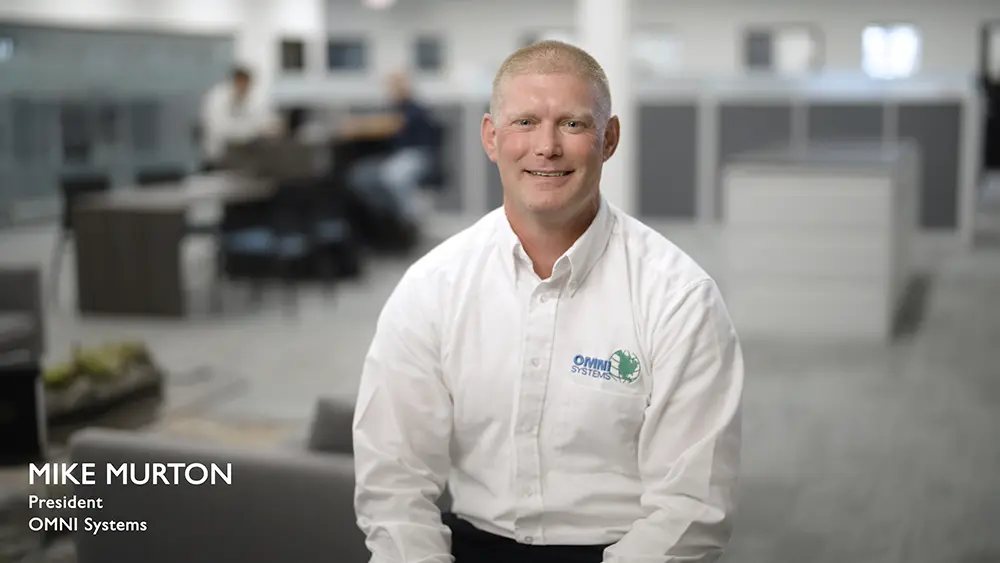
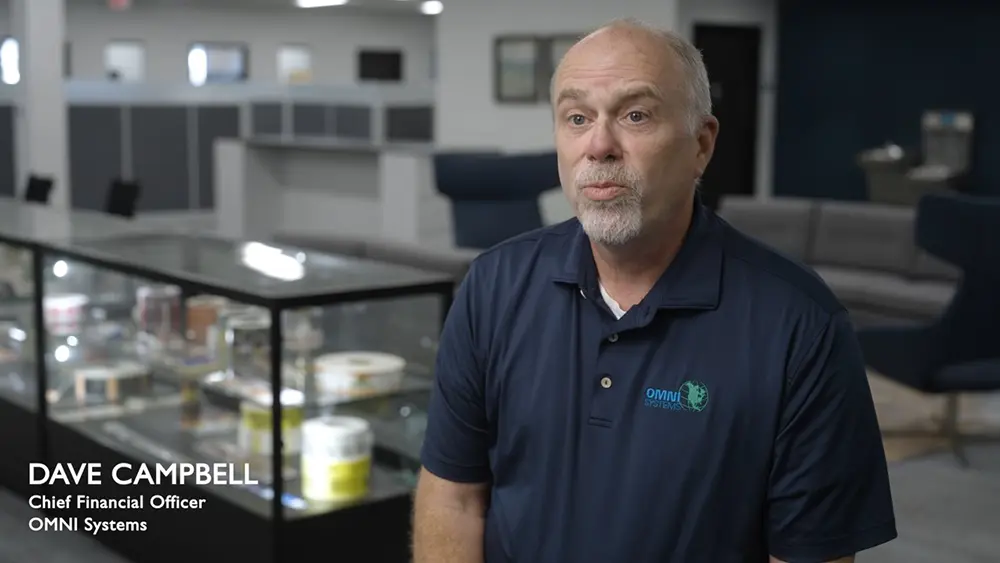
We sat down with OMNI Systems’ President Mike Murton, and Chief Financial Officer Dave Campbell, to learn more about OMNI’s business, their goals for the future, and how partnering with Domino is strategic in achieving those goals. Over visit was captured in this VIDEO: OMNI Systems & Domino

Mike Murton, President - OMNI Systems
OMNI President, Mike Murton
Dave Campbell, CFO- OMNI Systems
OMNI Chief Financial Officer, Dave Campbell

Growth Strategy

“In the fall of 2022, OMNI kicked off a growth strategy to triple the size of the organization in the next seven years. That growth is going to be a mix of both organic growth and acquisitive growth, and Domino is definitely going to be a partner that we’re going to bring along for that growth strategy,” says Murton, who joined the organization in the summer of 2019.

Murton continues, “OMNI’s culture is really driven by continuous improvement… really driving autonomy, giving people space to do their roles, really empowering our employees to go out and make decisions that drive change, and that make a daily impact for the company.”

Partnership

As OMNI Systems looks to bring in new equipment to support their operations, they rely on long-term partnerships developed with suppliers. By partnering with Domino, they’ve dedicated three production lines to Domino K600i digital UV inkjet printers which produce eight million labels a day at their Cleveland facility.

“Speed and efficiency today are more important than ever. The Domino equipment and reliability allow us to take that speed and efficiency, and give it back to our customers and drive the savings that they look for year over year,” adds Murton. “We can run 24 hours, five days a week with no downtime. And that will be important for the GS1 Sunrise initiative, which will ensure consumers are receiving the proper product information. And OMNI is confident that Domino is going to be there to support us through that change, not only supporting our current customer base, but allowing us to go out and attract new customers with the changes.”

The Domino Difference

When asked if there is a ‘Domino difference’, Murton speaks of a partnership aligned with OMNI Systems’ goals and objectives.

“OMNI feels the Domino difference in a number of different ways. If it’s a level of support that we need when something does come up and we reach out to their tech support… if it’s the level of reliability that we get from their equipment which allows us to keep the uptime and the throughput going with our presses…and it’s even with the way that they’re pushing the boundaries of technology, looking for ways to make digital print better, more efficient. It supports us in our initiative to provide the highest quality labels at the lowest prices.”

CFO Dave Campbell reinforces that key point. “As we buy equipment, we’re very keen on understanding what the return on investment is on that equipment. Domino has helped us to drive productivity, which saves money, and ultimately allows us to turn that around to the customers, helping us to provide the highest quality labels at the lowest prices. Thanks, Domino!”

And Murton concludes, “From the OMNI Systems family…Thanks, Domino.”

About OMNI Systems

OMNI Systems is a premier supplier of labeling solutions, specializing in pressure-sensitive labels, thermal transfer labels, direct thermal labels, and prime labels. With a focus on cost-effective production and exceptional quality, OMNI Systems serves industries including logistics, retail, food processing, and consumer packaged goods. For more information, please visit www.omnisystem.com

About Domino

Domino is a leading manufacturer and distributor of digital printing and product identification solutions. Celebrating its 48 th year in business, Domino is a global organization with world headquarters in the UK, and North America headquarters in Gurnee, IL. Domino has 25 subsidiaries, representation in over 120 countries, and over 3,000 employees worldwide. For more information on Domino digital printing, please visit dominodigitalprinting.com

March 4th, 2026 Expo Thank You Newsletter

GBIG logo

Read the March 4th, 2026 Green Bay Innovation Group Newsletter here.

Read newsletter
Green Bay Innovation Group

Bringing Green Bay Companies Together. Green Bay Innovation Group is committed to building an authentic networking experience where innovation can thrive.

Contact Information

Phone: 608-698-3333 
martinpochs@gmail.com
Subscribe to Newsletter


© 2021 Green Bay Innovation Group

LinkedIn
Share