Read the September 16th, 2026 Green Bay Innovation Group Newsletter here.

Read the September 16th, 2026 Green Bay Innovation Group Newsletter here.
Get links to the latest news, events, stories, and interviews from our 5P news members. Our goal is to remind the decision-makers in Wisconsin of the importance of our industry both historically, and more importantly, into the future.
Read the latest 94 Stories and Links on the Internet below.

Join us for the Sales Rewired afternoon session, a panel discussion featuring industry-leading marketing leaders. Panelists Troy Hoehne, Nicole Onesti, Chris Gromowski, and Martin Kyles will share real-world examples of how they modernized sales to match how customers buy today. Moderating the panel will be Jen Fietz, the founder and CEO of Stoke RGA, a manufacturing-focused growth agency.

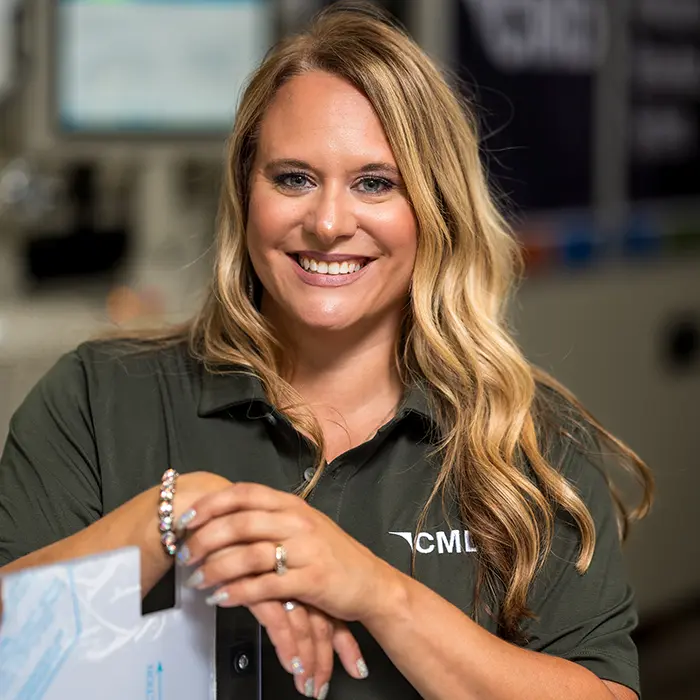
Nicole Onesti is the Corporate Marketing Manager at CMD Corporation, where she leads marketing strategy for a global capital equipment manufacturer serving the converting and alternative energy industries. With more than 20 years of experience in marketing, communications, and manufacturing, Nicole specializes in connecting marketing strategy with business growth through digital marketing, content, brand development, sales enablement, and emerging technologies.
Throughout her career, Nicole has helped manufacturing organizations evolve how they reach customers, generate demand, and support complex B2B sales cycles. She is particularly passionate about finding practical ways to use AI, automation, data, and digital tools to help marketing and sales teams work smarter, strengthen customer engagement, and create measurable business impact.
Beyond her role at CMD, Nicole serves as Co-Chair of Women in the 5P Industries (Wi5P), helping advance networking, professional development, mentorship, and leadership opportunities across the pulp, paper, printing, packaging, and plastics industries

Troy Hoehne is Vice President of Sales at Badger Plug Company, a Wisconsin-based manufacturer serving customers across the paper, film, foil, and broader industrial converting markets. With more than 25 years of experience in B2B sales leadership, customer service, pricing strategy, and business development, Troy has built a career focused on driving sustainable growth while developing strong, customer-centered sales teams.
Troy is passionate about modernizing the sales approach by aligning people, processes, and technology. He focuses on maximizing revenue opportunities through real-time analytics, customer profitability insights, and a deep understanding of customer personas. He has led initiatives focused on sales process improvement, business intelligence, market expansion, pricing strategy, and creating stronger alignment between inside and outside sales teams to better meet the evolving expectations of today’s customers.
Outside of work, Troy is a husband, father of three, and grandfather who enjoys staying active and spending time with family and friends. He believes that the same principles that build strong personal relationships, trust, communication, and accountability are also the foundation of successful business partnerships.

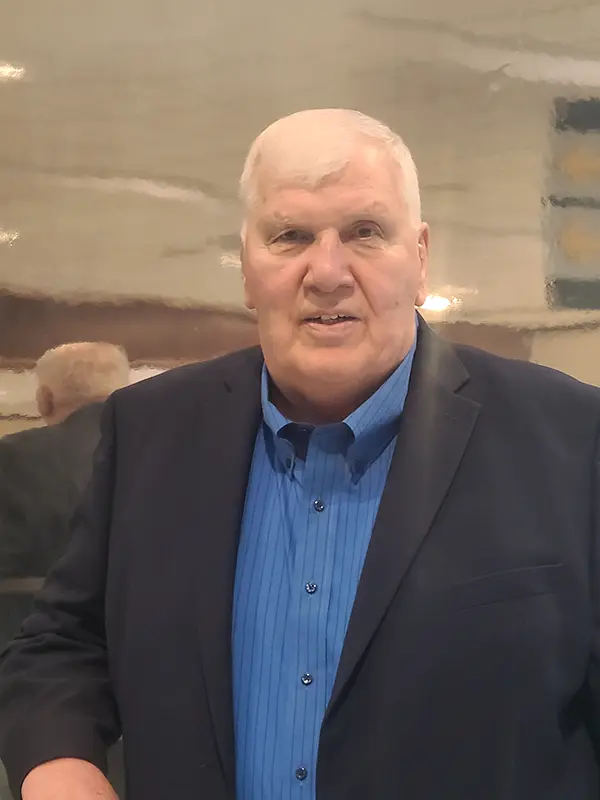
Martin Kyles is the President/CEO of Maflex America, Inc., a tissue converting machinery manufacturer and service center located in De Pere, Wisconsin. Before assuming the role of President/CEO in 2015, Martin served as North American Sales Director of Maflex America, Inc. for three years. Martin began his career as Technical Service Manager of Fabio Perini North
America, a role he held for 21 years. He is a graduate of Concordia University-Wisconsin.

Chris Gromowski is a growth and business development leader, entrepreneur, and Marine Corps veteran with more than 16 years of experience across enterprise sales, manufacturing, technology, government contracting, and early stage organizations. As Director of Growth at Inseer, he leads market expansion, strategic partnerships, enterprise development, and go-to market initiatives for an emerging workplace safety technology company.
His approach to growth is rooted in Gap Selling principles identifying the true pain points of a target audience, validating those challenges through direct customer conversations, and using feedback to continuously refine both the product and go-to-market strategy. He has built and refined outbound sales frameworks, cold-calling systems, and scalable business development processes designed to create stronger product-market alignment, deeper customer adoption, and long-term brand stickiness.
Outside of his professional work, Chris serves on the Board of Directors and as a Strategic Advisor for Dogs2DogTags and is also involved with Brown County Honor Flights, The Reboot Project, and the University of Wisconsin–Green Bay Alumni Board.
A UW–Green Bay graduate, Chris is currently pursuing his MBA and continues to combine leadership, entrepreneurship, growth, and service throughout his professional and community work.

Francesco Pece serves as Vice President of IMS Technologies Inc., the North American subsidiary of IMS TECHNOLOGIES, an international group specializing in advanced machinery and solutions for the converting, packaging and related industries.
Originally from Italy, Francesco has built much of his professional career between Asia and the United States. He joined IMS Technologies in 2018 and has since played a key role in developing the Group’s presence in the North American market. After several years leading the U.S. subsidiary, he also served as Business Development Director at the Group’s headquarters in Italy before returning to the United States to once again lead IMS Technologies Inc.
Based in New Jersey, Francesco is responsible for the company’s activities across the United States and the broader North American market, with a particular focus on customer relationships, business development and the expansion of local service capabilities.
A major part of his current strategy is strengthening the support IMS Technologies provides throughout the entire lifecycle of its installed equipment. With hundreds of machines operating across North America — including equipment that has been in production for decades — Francesco and his team are developing new programs focused on preventive maintenance, equipment modernization, rebuilding and component obsolescence management. The objective is to move beyond traditional reactive service and establish a more proactive partnership with customers: identifying potential issues before they result in downtime, extending the productive life of existing machinery and providing local access to the engineering expertise of the original equipment manufacturer.
Francesco holds an MBA from Hult International Business School in San Francisco. His international background and experience working on both sides of the Atlantic have given him a unique perspective on the differences between European and American approaches to manufacturing, customer service and business development.
Outside of work, Francesco is passionate about travel, golf, motor sports and exploring new places and cultures. He also competed in the Dakar Classic in Saudi Arabia, finishing eighth in the 2025 edition.
For Francesco, the opportunity to lead IMS Technologies in North America is ultimately about building stronger connections — between customers and manufacturers, between European engineering and American industry, and between long-standing relationships and new opportunities for growth.

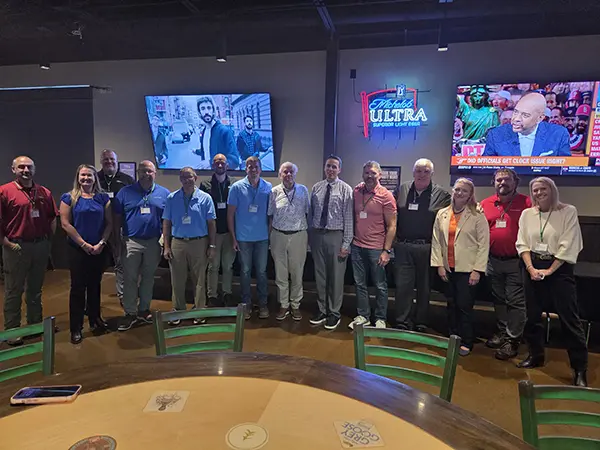
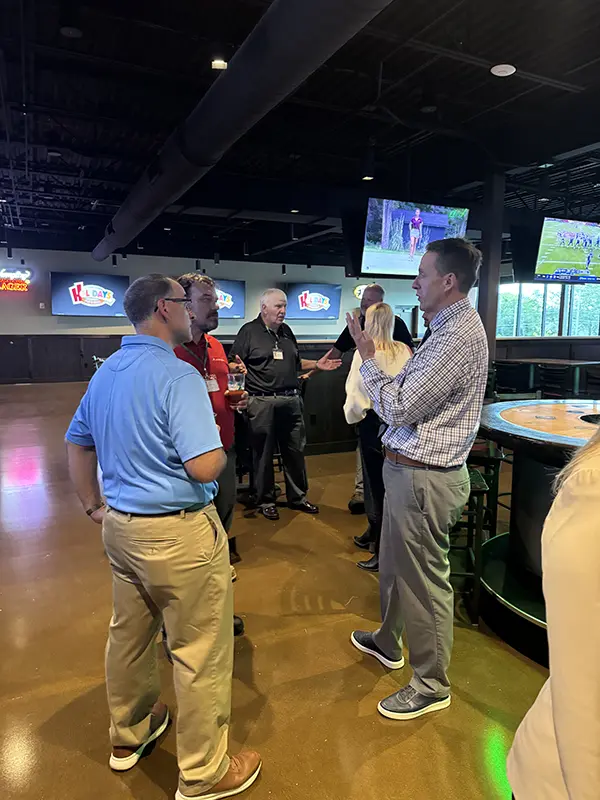
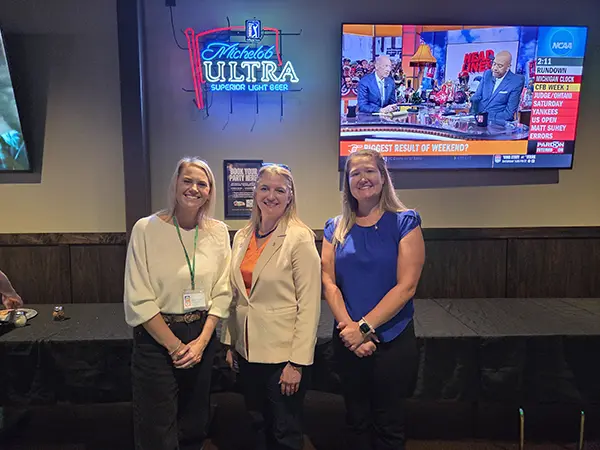
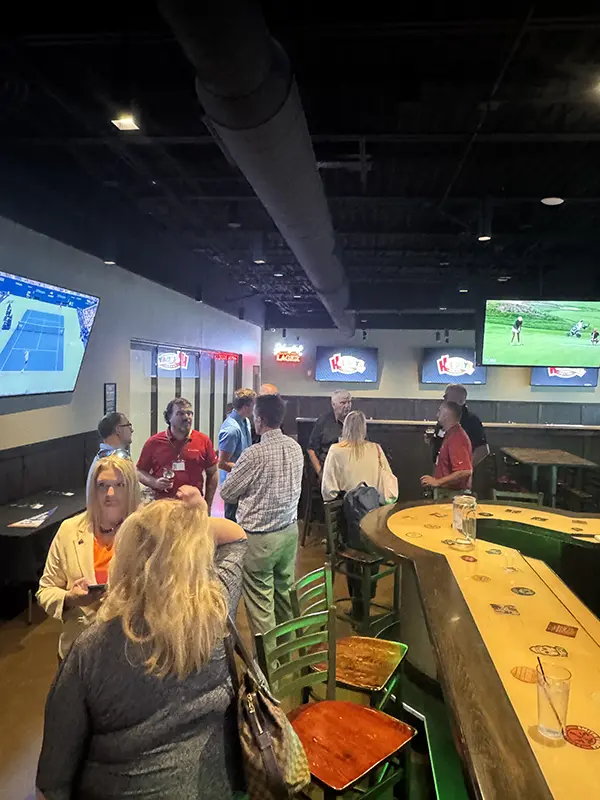
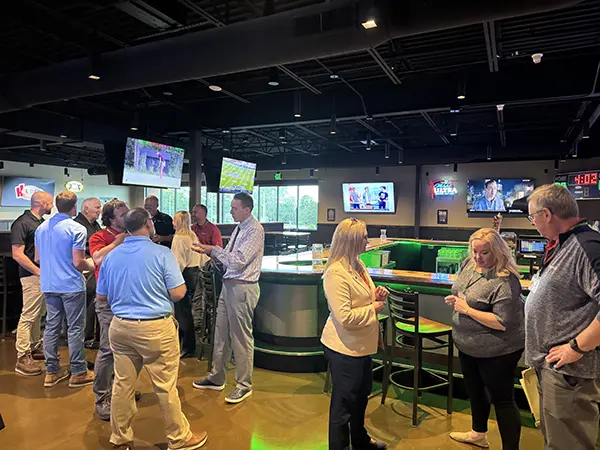
Green Bay Innovation Group hosted a meet and greet with UW Platteville Engineering Alumni on 9/8, it was a great night to share some insights on how local companies can work with the education programs to have students ready for not just the world of manufacturing, converting, packaging, printing, etc., but also some basic life skills that could be incorporated into the lesson plan for our future engineers.
We all agree engineers are extremely intelligent, so much so that it can be hard to communicate with them. One of the main discussion topics was, how can this type of communication could be incorporated into the lesson plans
Dr. Parker (UW-Platteville Dean of Engineering) expressed great interest in the initiative and is exploring ways to re-vamp curriculum paths so future engineers graduate with both top-tier technical expertise and strong real-world communication skills.
We ended the evening with some great pizza from Holidays, a group picture and a cheers to the future of youth and our ever-changing 5P Industries.

BEAVER DAM, Wis. — September 4, 2026 — Paper Dimensions LLC, a specialty paper converting company operating in Beaver Dam, Wisconsin, since 1972, today announced the launch of its newly redesigned website at www.paperdimensionsllc.com.
The new site presents the company’s core specialty in one place: high-mix, tight-tolerance paper slitting, rewinding, and converting. Paper Dimensions converts rolls from ½” to 112″ wide and 6″ to 60″ in diameter, serving manufacturers, paper mills, industrial distributors, brokers, and end users that need flexibility and precision for technical, kraft, printing, and food-grade applications.
Beyond an overview of its capabilities, the site includes an educational resource for companies weighing whether to slit and rewind in-house or partner with a specialty converter. The “True Cost of Slitting In-House” section examines the often-overlooked costs of internal converting—including capital, floor space, scrap and trim loss, supervision, and downtime risk—and offers a framework for calculating a fully loaded cost per roll.
“We’ve spent more than 50 years doing one thing and doing it well,” said Peter Emenecker, co-owner of Paper Dimensions LLC. “We’re not the biggest converter in the region, and we don’t try to be. We aim to be the most disciplined and the most trusted—the partner customers call when precision matters and mistakes aren’t an option. This new site finally tells that story the way it deserves to be told.”
The website was designed and built by Carson Emenecker during a summer internship with the company. Carson has since returned to the University of Wisconsin–Madison to pursue a degree in computer science.
Paper Dimensions serves customers primarily across Wisconsin, Michigan, Minnesota, and Illinois, along with select national partners whose needs align with the company’s specialty capabilities.
Manufacturers, paper mills, and industrial distributors seeking custom roll sizes, specialized converting, or additional slitting and rewinding capacity are invited to visit www.paperdimensionsllc.com or call (920) 885-3335 to discuss their requirements.
Founded in 1972 and based in Beaver Dam, Wisconsin, Paper Dimensions LLC provides specialty paper slitting, rewinding, and converting for high-mix, specification-sensitive applications. The company converts large paper rolls to custom widths and diameters for manufacturers, paper mills, industrial distributors, and niche markets, positioning itself as a disciplined, precision-focused converting partner.
Media Contact
Trista Rahn
Paper Dimensions LLC
(920) 885-3335
www.paperdimensionsllc.com

For Steve Marshall, Vice President II – Commercial Banking at First Business Bank, banking has always been about the people on the other side of the table. Thirty-two years into his career, that conviction has only grown stronger.
“The best client relationships come from honesty and doing right by people over the long haul,” Marshall says. “That’s how you earn trust that lasts through market cycles, leadership changes, and everything else that comes with running a business.”
Marshall works with family-owned manufacturers, service businesses, and other commercial clients across Northeast Wisconsin. Much of his work centers on the region’s 5P operations in packaging, paper, plastics, printing, and converting, where credit decisions have to respect the realities of equipment cycles, working capital swings, and customer concentration. He has spent his career in the region, giving him expertise on the industries, families, and businesses that make up Northeast Wisconsin.
That same mindset carries into his community work. Marshall serves on the Board of Directors for NWTC Educational Foundation. The NWTC Educational Foundation is a nonprofit organization that supports Northeast Wisconsin Technical College students through scholarships, emergency financial assistance, and funding for student success initiatives. Founded in 1970, its mission is to make higher education more accessible and affordable for students throughout Northeast Wisconsin. In addition, he is a long-time member of the Green Bay Preble Optimist Club which is dedicated to “bringing out the best in kids” through youth-focused programs, community service projects, and charitable giving. He chairs the Respect for Law fundraiser the club’s annual banquet honoring the men and women of law enforcement in Brown County.
Running a family-owned manufacturer or 5P operation in Northeast Wisconsin means making decisions with a legacy at stake. The banking relationship behind those decisions deserves a partner who knows the region, understands how the business runs through every cycle, and stays at the table for the long run. Connect with Steve Marshall, Vice President II – Commercial Banking at First Business Bank, to talk through what a lasting commercial banking relationship can do for your business.
Not intended as tax advice; consult a tax expert. Products and services are offered by First Business Bank®, a wholly owned subsidiary of First Business Financial Services, Inc®. (Nasdaq: FBIZ), and First Business Specialty Finance, LLC®, a wholly owned subsidiary of First Business Bank. First Business Bank specializes in Business Banking, Private Wealth, and Bank Consulting solutions. Business Banking includes Commercial Banking (Commercial Lending, Treasury Management, and Company Retirement Plans). First Business Specialty Finance, LLC focuses on Equipment Finance, Asset-Based Lending, Accounts Receivable Financing, and Floorplan Financing solutions. First Business Bank also offers Private Wealth (Financial Planning, Investment Management, Trust & Estate Administration, and Private Banking) and Bank Consulting (Investment Portfolio Services, Asset Liability Management, ALM Process Validation) solutions. Equal Housing Lender.
To help the government fight the funding of terrorism and money laundering activities, U.S. Federal law requires financial institutions to obtain, verify, and record information that identifies each person (individuals or businesses) who opens an account. What this means for you: When you open an account or add any additional service, we will ask you for your name, address, and taxpayer identification number that will allow us to identify you. We may also ask to see other identifying documents. Member FDIC

Wrightstown, Wisconsin is a charming village located halfway between Green Bay and Appleton that offers visitors a taste of small-charm and natural beauty of the Fox River. Whether you are looking for a peaceful day on the water, a delicious meal, or explore the outdoors, Wrightstown has something for everyone.
Wrightstown acts as a regional hub for flexible packaging, printing services, engineering, construction, and plastics.
The major employers are:
Caity Wilhelm and Marty Ochs would like to thank Print Pro, Inc., Retroflex, Inc., and Zeta Engineering Group for providing tours of their facilities. The companies are very impressive with outstanding facilities.


AI and database integration are transforming sales by helping teams spend less time on administrative tasks and more time on building relationships. In the paper packaging, printing, pulp, and converting industries, this integration is especially valuable because purchasing cycles are often long and expensive. The new integrated databases use AI to keep contact information and related details current.
Effective ways to use AI in sales include:
For the Wisconsin 5P and Converting Industries, AI can also identify:
For a sales organization, AI can improve productivity, speed up responses, support better decisions, strengthen customer engagement, shorten sales cycles, and uncover new growth opportunities. Integrating data management with AI is one of the most important competitive advantages a company can build. AI is only as effective as the quality of the data it can access. Accurate, well-managed, and connected data enables AI to generate reliable insights and support better business decisions.
Organizations that invest in strong data management today will be best to benefit from AI tomorrow. Clean data is the foundation for accurate insights, stronger customer service, greater sales efficiency, and long-term growth. To get the best results from AI, ask five specific questions focused on one topic at a time. The key is to make each question clear, simple, accurate, and direct.
Marty Ochs
Executive Director
Green Bay Innovation Group
By: Seth Heeter
President, Access
Chair, Wisconsin AI Infrastructure Initiative
Neenah, Wisconsin
sheeter@access-inc.com
(920) 450-7126

Ten years ago, many manufacturing leaders viewed infrastructure reliability as a cost center — something to be minimized, deferred, or pushed to the back of the budget queue. Today, that thinking is shifting. For manufacturers competing in a labor-constrained environment with higher automation dependency and tighter margins,
infrastructure reliability has become one of the clearest competitive advantages available.
Wisconsin manufacturers face four simultaneous pressures. First, the labor shortage is real. Skilled workers are harder to find and retain. The plants that survive are the ones that make existing workers more productive, not the ones asking for more headcount.
Second, automation dependency keeps rising. Machines, controls, variable frequency drives, and data systems are no longer optional — they’re core to production. And every automated system depends on reliable power, cooling, and network infrastructure.
Third, scheduling is tighter. Customers expect faster turnarounds, smaller batch sizes, and on-time delivery. An unplanned outage that once cost a day now costs a week of missed commitments.
Fourth, infrastructure is aging. Many facilities operate 30+ year-old electrical and mechanical systems. Some of that equipment is reliable, but reliability by accident is not a strategy.
In this environment, a facility with predictable uptime is a facility with real advantage.
Uptime means productivity. Downtime means waste — not just lost production, but inefficiency across the entire system. Workers idle. Orders delayed. Capacity unused. When labor is scarce and expensive, downtime becomes exponentially more painful.
Uptime means customer confidence. A manufacturer that consistently meets delivery commitments wins repeat business and higher margins. A manufacturer known for surprises and delays does not.
Uptime means the ability to invest in growth without fear. A plant with aging but well-maintained infrastructure can confidently add new production lines or automation. A plant with failing systems cannot — it’s chasing fires instead of building the future.
Uptime also means operational resilience. When labor is tight, the plants that keep running smoothly can retain people. Plants that shut down unexpectedly or run inefficiently lose workers to competitors who offer stability.
This is where AI and advanced automation change the equation.
As manufacturers invest in AI-driven production systems, machine vision, predictive maintenance platforms, and real-time analytics, they become more dependent on infrastructure. A power disturbance that once affected a few computers now impacts automation systems, production data, quality processes, and business operations simultaneously.
The plants getting the most value from AI are the ones that have clean, reliable power and cooling infrastructure to support it. Conversely, unreliable infrastructure limits how much AI a facility can actually deploy — because the infrastructure itself becomes the bottleneck.
This creates a strategic insight: Reliable infrastructure is not an obstacle to digital transformation. It’s a prerequisite.
We work with 5P manufacturers that have deliberately invested in infrastructure reliability. The results are measurable:
The shift from viewing infrastructure as a cost to viewing it as a competitive advantage requires a change in mindset. It’s not about spending more money. It’s about spending money strategically — on visibility, preventive maintenance, condition assessment, and planning.
The question manufacturers should ask is not “How do we minimize infrastructure costs?” but “What infrastructure investments unlock the most productivity, flexibility, and growth?”
For many Wisconsin facilities, that answer starts with understanding their current power, cooling, and operational
constraints. From there, the path forward becomes clear.
In a labor-constrained manufacturing environment with rising automation dependency and tighter margins, reliable infrastructure is no longer a nice-to-have. It’s a strategic business advantage. The manufacturers that recognize this
— and invest accordingly — will be the ones that compete effectively in the next decade.
If you’d like to discuss how infrastructure reliability could unlock competitive advantage at your facility, reach out.
We help manufacturers think strategically about power, cooling, monitoring, and operational continuity.
Seth Heeter
President, Access
(920) 450-7126
sheeter@access-inc.com
Access helps manufacturers, healthcare organizations, utilities, and mission-critical facilities improve reliability through power, cooling, monitoring, and infrastructure engineering solutions across Wisconsin and throughout the world.
Bringing Green Bay Companies Together. Green Bay Innovation Group is committed to building an authentic networking experience where innovation can thrive.
© 2026 Green Bay Innovation Group Foundation Inc Charity ID: 93-3456487
Site By: Packerland Websites