Green Bay Innovation Group
GBIG News

July 8th, 2026 Newsletter

GBIG logo

Read the July 8th, 2026 Green Bay Innovation Group Newsletter here.

GBIG NEWS | 92 Stories and Links on the Internet 7/8/2026

GBIG News

Get links to the latest news, events, stories, and interviews from our 5P news members. Our goal is to remind the decision-makers in Wisconsin of the importance of our industry both historically, and more importantly, into the future.

Read the latest 92 Stories and Links on the Internet below.

GBIG News Banner

Events

Featured Stories

AI

Packaging

PFAS

Plastic

Printing

Water

Members

Heat Technologies Inc. Named Technology of the Year Finalist at the ARC Annual Conference!

We are thrilled to share some exciting news – at recent International Association of Roll Converters (ARC) Annual Conference in Cleveland, Heat Technologies Inc. was officially named Technology of the Year Finalist in the field of drying and curing for the converting industry.

This award certificate recognizes HTI’s recent breakthrough advancements in the drying and curing of diverse coatings, alongside our proven track record of driving significant operational improvements for converting equipment.

A Milestone at the Industry’s Premier Event

The ARC Annual Conference is widely regarded as the most important event of the year for the global converting industry. This year’s event was a resounding success, bringing together 350 industry leaders and professionals for three days of intense learning, networking, and innovation.

What makes this conference the pinnacle of the converting calendar is its unique, dual-impact format:

  • A Wealth of Knowledge: Three full days packed with cutting-edge educational presentations covering every operational aspect of the industry.
  • The Tabletop Expo: A bustling marketplace where converters get a first-hand look at the latest technological breakthroughs and next-generation solutions across various industry segments.

Why This Recognition Matters

In an industry where production efficiency, quality, precision, and energy savings are paramount, HTI’s drying and curing solutions stood out above the rest. By helping converters optimize their coating processes and maximize equipment uptime, we are proud to push the boundaries of what’s possible in web processing.

Receiving this recognition from our peers at the most critical industry event of the year is a testament to our team’s dedication to innovation. We are incredibly grateful to the ARC and to our amazing partners and customers who inspire us to keep transforming the converting landscape.

Thank you to everyone who visited us in Cleveland, and to the ARC for an unforgettable week!

Want to learn more about how our ultrasonic drying and curing technology can optimize your operations? Push this green button below!

Make48 Regional Playoff at UW-Stout

Make48 is coming to UW-Stout from July 31-Aug. 2 for the final Regional Playoff event of Season 10. Make48 is a fast-paced invention competition where teams have just 48 hours to come up with an idea, build a working prototype, and pitch it to judges, all based on a real-world challenge from a sponsoring company.

The event will take place at the UW-Stout Fab Lab. A social will be held from 3-5 pm on Saturday, Aug. 1. Meet with the teams and network with others. Drinks and hors d-oeuvres will be served. Registration is required.

Make48 Regional Playoff
RSVP Here

M3 Releases 2026 Momentum Report Highlighting Employer Action Amid Rising Healthcare Costs

M3 Insurance

MADISON, WI – M3 Insurance has released the 2026 edition of Momentum: An M3 Employee Benefits Trend Report, offering employers a data-driven look at the forces shaping healthcare spend and the strategies gaining traction as organizations prepare for 2027 and beyond.

For more than two decades, M3’s annual employee benefits trend report has helped employers understand the changing benefits landscape. The 2026 Momentum report continues that evolution, moving beyond traditional benchmarking to examine what is driving cost increases, how employers are responding, and where the market is headed.

The report shows employers are spending an average of $17,042 per employee annually on healthcare, with year-over-year increases averaging 7.46%. While that represents moderation from the prior year, costs remain elevated and continue to place pressure on employers and their workforce.

“The employers seeing the best results today aren’t waiting for healthcare costs to improve on their own,” said Brian Meyer, Director of Analytics and Underwriting and Partner at M3. “They’re using data to understand what’s driving spend, challenging traditional assumptions, and building multi-year strategies that position them for long-term success. That’s the momentum we’re seeing in the market.”

Key themes in the 2026 report include:

  • Employer action to address rising healthcare costs through more intentional, data-backed benefits strategies
  • Growing use of predictive analytics and data-driven point solutions
  • Increased focus on high-performance networks, direct contracting, variable copay plans, and advanced care navigation
  • Continued pressure from pharmacy trend, including specialty drugs, GLP-1 medications, gene therapies, and biosimilars
  • Rising interest in alternative funding strategies, including captives, as the stop-loss market hardens

The full report is now available.

About M3

M3 is a top insurance broker and risk management firm in America. We’re leaders in the products we represent and the industries we serve. M3’s people are an extension of your team, providing world-class resources to help you manage risk, purchase insurance, and provide employee benefits. And our focus on community builds better places to live and work. For more information on M3, visit www.m3ins.com.

Meet Jeff Novak at Voorwood Precision Machine

Jeff Novak

Jeff Novak has served as a Territory Sales Manager with Voorwood since 2015, helping manufacturers identify the right converting machinery solutions to improve productivity, efficiency, and product quality. Originally from the Midwest, Jeff maintains strong family ties to the Rice Lake and Amery, Wisconsin area and is known for his consultative, customer-focused approach to building long-term relationships.

Voorwood is an employee-owned American manufacturer that has proudly served the packaging and converting industries since 1961. From its manufacturing facility in Anderson, California, Voorwood designs, builds, and supports precision converting equipment, including:

Voorwood machinery is used in a wide variety of converting applications involving paper, film, foil, tape, labels, plastic films, flexible packaging, and many other specialty materials. Every machine is engineered with precision and can be customized to meet each customer’s specific production requirements.

Beyond equipment manufacturing, Voorwood provides comprehensive customer support, including application engineering, operator training, replacement parts, technical assistance, and ongoing service to help customers maximize the performance and longevity of their equipment.

With more than 60 years of industry experience, Voorwood has earned a reputation for quality craftsmanship, engineering innovation, and exceptional customer service. The company’s commitment is to deliver reliable converting solutions that help manufacturers increase efficiency, reduce downtime, and produce superior products.

If you’re evaluating new converting equipment or looking to improve your current manufacturing process, contact Jeff Novak at Voorwood to discuss your application and discover a solution tailored to your production needs.

Quad Plus: Comparing Legacy Systems vs. Ultrasonic Thickness Measurement

Manufacturers rely on accurate weight measurement to maintain product quality, reduce waste, and improve process control. For years, many facilities used nuclear or radiometric gauging systems to monitor material weight. While these systems provided valuable data, they also created operational challenges that are becoming harder to justify.

Today, ultrasonic weight measurement offers a modern alternative. By eliminating radioactive sources and providing high-resolution measurements, ultrasonic technology helps manufacturers improve reliability while reducing long-term costs.

The Limitations of Legacy Gauging Systems

Traditional gauging systems often use radioactive sources to measure material weight. While effective, these systems come with ongoing responsibilities and expenses.

Common challenges include:

  • Regulatory compliance and licensing requirements
  • Special handling and storage procedures
  • Periodic inspections and documentation
  • Costs associated with source replacement
  • Additional safety training for personnel

As equipment ages, maintenance can become more difficult. Replacement parts may be harder to obtain, and older systems may not provide the level of measurement accuracy required by modern manufacturing processes.

For many manufacturers, these limitations have created interest in alternative non-destructive testing methods. These technologies provide the same measurement capabilities without the operational burden of radioactive materials.

Why Ultrasonic Weight Measurement Is Gaining Adoption

ultrasonic-thickness-measurement-system

Ultrasonic weight measurement uses high-frequency sound waves to determine material weight. Because the technology measures weight without damaging the product, it has become a valuable tool for industrial non-destructive testing applications.

One of the primary advantages of ultrasonic testing is its ability to provide accurate measurements without requiring radioactive sources. This simplifies compliance requirements while improving workplace safety.

Modern ultrasonic weight measurement systems also offer several performance benefits:

  • High measurement accuracy and repeatability
  • Continuous real-time monitoring
  • Greater insight into weight variation across the production line
  • Reduced maintenance requirements
  • Faster response to product variations

Faster measurement updates allow operators to identify weight variations sooner. This helps prevent excessive scrap and supports tighter process control.

Many manufacturers are also replacing aging gauges with integrated ultrasonic weight measurement tool platforms that support automated quality control and production optimization.

Operational Benefits Beyond Weight Measurement

The benefits of ultrasonic technology extend beyond measurement accuracy alone. When combined with modern process control strategies and advanced web gauging systems, ultrasonic technology can help manufacturers:

  1. Reduce material waste
  2. Improve product consistency
  3. Detect process variations earlier
  4. Lower maintenance costs
  5. Increase overall equipment reliability

These advantages make ultrasonic measurement an attractive option for facilities upgrading legacy gauging systems. Manufacturers can improve performance without adding regulatory complexity.

As manufacturers continue to reduce regulatory burden while improving process performance, ultrasonic weight measurement is becoming a preferred solution for many weight-monitoring applications.

Future-Proofing Measurement Systems

Many manufacturers are delaying major equipment upgrades due to budget constraints and production demands. However, aging measurement systems can create risks beyond maintenance costs. Obsolete components and limited vendor support can make it difficult to maintain consistent product quality. Upgrading to ultrasonic weight measurement allows facilities to modernize a critical quality control function without a complete process overhaul.

For facilities evaluating aging equipment, the decision often involves more than just replacing a measurement device. It is an opportunity to improve process visibility and support data-driven manufacturing initiatives. These improvements can also help position operations for future production demands.

To learn more about ultrasonic weight measurement and modern gauging technologies, contact Adam Kahler at akahler@quadplus.com or call (815) 210-9885.

VARC: Tossing for Inclusion

Let the bags fly!

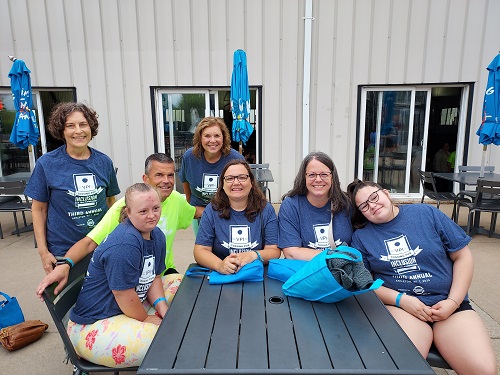
VPI Tossing for Inclusion 2025

Registration is now OPEN for the Fourth Annual Tossing for Inclusion Bag Toss Tournament and Fundraiser!

Join us on Wednesday, August 19, at GameDay Sports Bar in Appleton for an inclusive bag toss tournament and fundraiser that brings our community together in the spirit of fun, connection, and friendly competition.

Whether you’re tossing for the first time or you’re a seasoned pro, this event is all about celebrating inclusion and making an impact. Proceeds from Tossing for Inclusion directly support our community programs, empowering over 2,000 individuals with disabilities and disadvantages throughout the Fox Cities and surrounding areas.

  • Casual and competitive brackets available
  • Great for friends, coworkers, families, and teams of all abilities
  • A meaningful way to support inclusive programs while having fun

Round up your teammate and get in the game—spots are limited!

Get Tickets Here

RPF: Repurposing Closed Wood Products Facilities for Bioenergy Development

U.S. Endowment for Forestry and Communities

Proposal and Review Timeline:

  • June 15, 2026 | RFP Posted
  • July 17, 2026 | Questions Due
  • July 24, 2026 | Responses Posted
  • August 6, 2026 | Proposals Due by 5:00 PM EST
  • September 2026 | Contracting and Project Initiation

Overview/Purpose:

Across the United States, numerous wood products manufacturing facilities—including pulp and paper mills—have ceased operations, leaving behind industrial infrastructure, utility connections, transportation assets, and skilled workforce capacity. At the same time, many forest-dependent regions face increasing challenges associated with declining markets for low-value wood fiber, and the need for new economic development opportunities.

The U.S. Endowment for Forestry and Communities (“The Endowment”) seeks proposals to evaluate the technical, economic, and community feasibility of repurposing closed wood products manufacturing facilities for bioenergy. Through this project, the Endowment aims to generate high-quality feasibility data that can inform future investment decisions and determine whether industrial site reuse can serve as a scalable model for biomass utilization, renewable energy production, and rural economic revitalization.

Through this Request for Proposals (RFP), the Endowment seeks to support one or two projects that will conduct comprehensive pre-development assessments of closed wood products facilities that can lead to redevelopment as biopower generation or biofuel production facilities.

Project Goal:

The primary goal of this initiative is to determine the feasibility of reusing closed wood products manufacturing sites for biopower generation or biofuel production.

Successful projects will produce analyses that address:

  • Site-level due diligence findings
  • Engineering and technical feasibility
  • Economic and financial viability
  • Project risks and mitigation strategies
  • Community and workforce considerations
  • Infrastructure requirements and constraints
  • Financing structures and investment readiness

These outcomes will inform both project-specific investment decisions and broader understanding of whether this approach can be replicated across additional sites and regions.

Project and Funding Details:

Eligibility: Eligible applicants include U.S.-based private companies or other organizations with demonstrated experience and a strong track record in energy project development, wood products manufacturing, data center development, or closely related infrastructure projects of similar scale and complexity.

Project Expectations: Selected projects will conduct a comprehensive pre-development assessment equivalent to a Front-End Loading Level 2 (FEL-2) analysis or comparable industry-standard feasibility study.

Projects should provide sufficient technical, economic, and market information to support future investment and development decisions.

The Endowment will work collaboratively with selected projects to establish final scopes of work, milestones, and reporting requirements.

Funding Available: The Endowment is making available up to $500,000 for this initiative.

The Endowment anticipates supporting:

  • One project of up to $500,000; or
  • Two projects of approximately $250,000 each

Funding will be provided as a Program Related Investment (PRI) or grant — repayable upon
the project proceeding to construction financing or forgiven as a grant if the project does
not advance.

Evaluation Criteria: Proposals will be evaluated using the following criteria:

  • I. Site Control and Access
    • a. Applicants must demonstrate:
      • i. Ownership of the site;
      • ii. Long-term leasehold interest;
      • iii. Purchase option; or
      • iv. Written authorization to conduct the proposed analysis.
    • b. Preference may be given to projects that demonstrate a clear path toward future site redevelopment.
  • II. Team Capability and Experience
    • a. Applicants should demonstrate:
      • i. Relevant project development experience,
      • ii. Technical expertise related to biomass utilization and energy systems,
      • iii. Experience with industrial facility redevelopment,
      • iv. Qualifications of key team members and consultants.
    • b. Applicants should identify all major project partners and their roles.
  • III. Financial Readiness and Project Advancement Potential
    • a. Preference will be given to projects that demonstrate:
      • i. Existing development efforts,
      • ii. Funding commitments or matching funds,
      • iii. Offtake agreements or letters of intent,
      • iv. Utility engagement,
      • v. Strategic partnership,
      • vi. A realistic pathway toward implementation.
  • IV. Community Alignment
    • a. Applicants should demonstrate alignment with:
      • i. Local economic development priorities,
      • ii. Community redevelopment goals,
      • iii. Workforce development opportunities,
      • iv. Regional forest industry strategies,
      • v. Community willingness, and
      • vi. Proposals should describe anticipated community benefits, potential impacts to land use and stakeholder engagement plans.

Data Access and Publication Rights

Awardees will be required to:

  • Provide the Endowment with confidential access to all reports, studies, models,
    analyses, and supporting materials developed through grant funding,
  • Participate in periodic project review and site visit meetings,
  • Provide final electronic copies of all deliverables.

The Endowment reserves the right to synthesize and publish aggregated findings, lessons learned, case studies, and implementation guidance developed through this initiative. The Endowment will work with project teams to ensure that proprietary business information, trade secrets, and other confidential information are appropriately protected.

Future Investment Considerations

Participation in this initiative does not guarantee future funding. However, projects demonstrating strong technical and economic potential may receive priority consideration for future engagement with the Endowment.

Application Instructions:

Proposals must be submitted via Endowment’s online application portal at https://usendowment.my.site.com/grants. Incomplete applications will not be considered. The proposal narrative should not exceed five pages and should focus on the following elements:

Project Description

Provide a concise description of:

  • The facility and its operating history
  • Current site conditions and ownership status
  • The proposed biopower redevelopment concept
  • Why the site is a strong candidate for development

Site Control and Access

Describe the applicant’s relationship to the site and provide evidence of:

  • Ownership,
  • Leasehold interest,
  • Purchase option, or
  • Authorization to access and evaluate the facility.

Must disclose any pending or recent litigation related to the site, current or former owners, occupants or any other entity affiliated with the project.

Proposed Approach and Methodology

Describe:

  • The scope of work to be completed
  • Key technical, financial, and market questions to be addressed
  • Proposed consultants or project partners
  • Major deliverables
  • Project schedule and milestones

Supporting Information and Data Room Access

Applicants are encouraged to provide access to a secure electronic data room containing supporting information relevant to the proposed site and project.
Examples of supporting materials may include:

Site Information

  • Site maps
  • Property descriptions
  • Facility layouts
  • Existing engineering drawings
  • Equipment inventories
  • Utility information

Environmental and Regulatory Information

  • Environmental reports
  • Permitting documentation
  • Previous assessments or studies
  • Regulatory correspondence

Technical and Development Information

  • Feasibility studies
  • Engineering evaluations
  • Resource assessments
  • Interconnection studies
  • Infrastructure assessments

Commercial and Financial Information

  • Project budgets
  • Financial analyses
  • Market studies
  • Offtake agreements
  • Letters of intent
  • Partnership agreements
  • Funding commitments

Community and Economic Development Information

  • Community support letters
  • Economic development plans
  • Workforce assessments
  • Stakeholder engagement materials

Applicants may provide either:

  • A secure data room link; or
  • Individual electronic files uploaded through the application portal. If using the portal please upload these in the proposal narrative upload field.

The Endowment recognizes that some materials may contain confidential or proprietary information. All information submitted will be treated as confidential to the extent permitted by law and consistent with the terms of the application process.

Selection Process

Following proposal review, the Endowment may request additional information, interviews, or access to supplemental materials before making final award decisions.

The Endowment reserves the right to conduct follow-up due diligence with applicants and project partners as part of the evaluation process.

/

For any portal/application issues please contact subawards@usendowment.org.
For proposal technical questions please contact Matt Krumenauer at matt@usendowment.org

To view or complete the application go to the Endowment’s grantee portal and click “Log in” at the top left corner: https://usendowment.my.site.com/grants. If you already have an account on the portal from a previous Endowment project, please use those login credentials.

If you are a new user, please click on “Not a member?” and follow the instructions to create an account. Once logged in, click on the “Opportunities for Funding” tab to view this RFP and apply.

See our guide “How to Complete a Competitive (RFP) Application” for step-by-step instructions on submitting a competitive application in our grantee portal.

Please use this budget template, also available in the portal. Match is not required for this RFP.

The U.S. Endowment for Forestry and Communities is an equal opportunity employer. All applicants will be considered without regard to race, color, religion, sex (including pregnancy, gender identity, and sexual orientation), national origin, age (40 or older), disability or genetic information or any other characteristic protected by applicable federal, state, or local law.

Sun Chemical – Navigating the Ink Dilemma: Should You Bring an In-House Ink Kitchen to Your Corrugation Plant?

dragonfly box of tissue

By Andrew Brooks, Water-based Inks and Coatings Product Manager at Sun Chemical

In today’s corrugated packaging industry, plant managers are pressed to deliver faster turnaround times and higher print quality. This challenge leads to a crucial operational decision: Should a plant mix its own inks with an in-house ink kitchen (a system for dispensing and blending base ink components), or continue purchasing finished, pre-mixed inks from ink suppliers? The right answer isn’t just about cost―it impacts labor, workspace, supplier relationships, and the plant’s future growth. To make the best choice, managers need to understand both the visible and hidden factors of each approach.

The In-House Ink Kitchen (Dispensing System)

Pros

A200 machine
  1. Cost Savings: Generally, due to high production volume, buying base ink components and extenders (materials used to make the finished ink) is usually less expensive than purchasing a finished ink, especially for custom colors or small batches. However, for high-volume colors like GCMI 75 Red (a standard red ink commonly used in corrugated packaging), large ink suppliers often achieve greater efficiency and lower costs by producing these in bulk.
  2. Inventory Control: Only the ink quantity that is needed is dispensed, minimizing “dead” inventory (unused ink). Suppliers typically sell inks in minimum quantities (such as 40–45 pounds), which can result in waste if the job requires less. In house dispensing allows for “fit for use lot” sizes―in other words, only enough ink for each job is prepared, which keeps ink waste at a minimum.
  3. Operational Flexibility: If a job runs out of a color during production, or a spill happens, a new batch can quickly be dispensed―reducing costly downtime while waiting for a replacement delivery.

Cons

  1. Capital Expenditure (CAPEX): Setting up an ink kitchen requires an upfront investment and ongoing maintenance. Some plants do not take this into consideration by signing long-term contracts with ink vendors who provide the ink dispenser as part of their service. Pro-tip: Evaluate the merits of the ink and service first, only then consider including the equipment as part of the overall package.
  2. Labor & Expertise: While modern dispensers are user-friendly, the best results come from having a dedicated ink room team. Maintaining consistency in color despite changes in pH, substrate, or anilox wear, for example, requires expertise. Pro-tip: consider the headcount for the dedicated expert support needed, or a backup for when that expert is not available.
  3. Reduced Vendor Consultancy: When a plant mixes their own ink, the “hands-on” engagement with the supplier who is intimately familiar with the daily runs can be lost. This “knowledge fog” may make it harder for vendors to offer productivity advice or training.

Buying Finished Ink (Pre-Mixed)

Pros

  1. Simplicity: For smaller plants or those with low color complexity, buying pre-mixed inks is straightforward. There’s no equipment to maintain and no manufacturing guesswork―just “buy and run.” An ink kitchen can always be added later if needed. Pro-tip: Don’t invest in a dispenser unless you plan to use it.)
  2. Batch Consistency: Most ink kitchen operations are built around producing one pail of finished ink at a time. Maintaining Quality Control (QC) pail-to-pail can be difficult with small in-house batches. Outside vendors mix in larger volumes with established QC standards, generally ensuring higher consistency across a long run.
  3. Space Requirements: Purchasing finished inks frees up valuable floor space, which would otherwise be needed for dispensing equipment, storage, and QC equipment. If an in-house kitchen isn’t located near the pressroom, any productivity gain is lost due to time spent moving ink.

Cons

  1. Premium Pricing: The cost of finished inks normally includes supplier labor, overhead, and shipping costs. Single-pail production, especially when custom color matching is involved, can be inefficient, resulting in higher prices―especially for small orders.
  2. Logistical Risks: A plant production schedule is entirely dependent on the supplier’s delivery window, which can be longer for custom colors. On the other hand, a plant that has the material (bases and vehicle) in-house to mix the finished ink can meet last-minute customer orders, and avoid delays due to supply chain or weather disruptions, not impacting the ability to meet production goals

Other Factors to Consider

  • Product Mix: If a plant mostly prints jobs using a single color, such as 75% GCMI 90 Black―a standard black ink for shipping boxes, there’s generally little benefit to in-house mixing. But if a plant regularly produces full-color jobs, for example, point-of-purchase displays needing 40–50 different colors monthly, in-house capabilities can be advantageous.
  • Dispenser Types: There are three major dispenser models in the corrugated industry, each offering different features and sizes. Choosing the right hardware, and features, is essential.

Decision Framework: Practical Checklist for Plant Managers

  • How many colors do jobs require monthly? If more than 20–30, consider in-house capabilities.
  • What percentage of jobs use standard inks (like GCMI 90 Black or GCMI 75 Red)? If over 75%, finished inks are likely more efficient.
  • Is the facility equipped with staff who can manage ink mixing and quality control? If not, finished inks may be easier.
  • Is there enough floor space near the pressroom for an ink kitchen?
  • Consider cost of the initial investment and ongoing maintenance for dispensing equipment.
  • How critical is immediate color adjustment during production? If high, in-house mixing is beneficial.
  • Are there frequent supplier deliveries delays? If high, in-house mixing is beneficial.
Most jobs use standard colors

Buy finished ink

Staff expertise and space are available

In-house kitchen is feasible
Frequent color changes or custom jobs

Consider in-house kitchen

Unsure or limited resources

Start with finished inks, reassess later

The Bottom Line

There’s no universal answer to the ink kitchen dilemma. Finished inks provide simplicity, minimal overhead, and standard QC―ideal for smaller plants or those with low color diversity. For plants needing quick color changes and high specialty color turnover, an in-house ink kitchen offers cost savings and flexibility. Conduct a pressroom audit to evaluate waste, labor, and color needs before deciding. The choice made will shape the plant’s operations for years to come―so it needs to be approached thoughtfully and objectively.

For additional information, visit: www.sunchemical.com/flexible-packaging-solutions/

Green Bay Innovation Group

Bringing Green Bay Companies Together. Green Bay Innovation Group is committed to building an authentic networking experience where innovation can thrive.

Contact Information

Phone: 608-698-3333 
martinpochs@gmail.com
Subscribe to Newsletter


© 2021 Green Bay Innovation Group

LinkedIn
Share