Celebrating 15 sessions of growth, mentorship, and impact through the Packers Mentor-Protege Program.
Join us as we celebrate a powerful milestone—15 sessions of growth, partnership, and impact through the Green Bay Packers Mentor-Protege Program.
Legacy of Growth: Celebrating 15 Sessions of the Packers Mentor-Protege Program brings together mentors, proteges, alumni, and community leaders to honor the collective achievements of this year’s participating teams and the lasting influence of the program.
Over the past 15 sessions, the program has built a strong foundation for collaboration, strengthened businesses, and created meaningful opportunities for development across the community. This celebration recognizes not only the success of the current cohort, but also the enduring legacy of mentorship and leadership that continues to grow each year.
Guests will experience an afternoon of recognition, connection, and inspiration as we reflect on the program’s journey and look ahead to its future impact.
For More Info, and to Register, Click the Button Below!
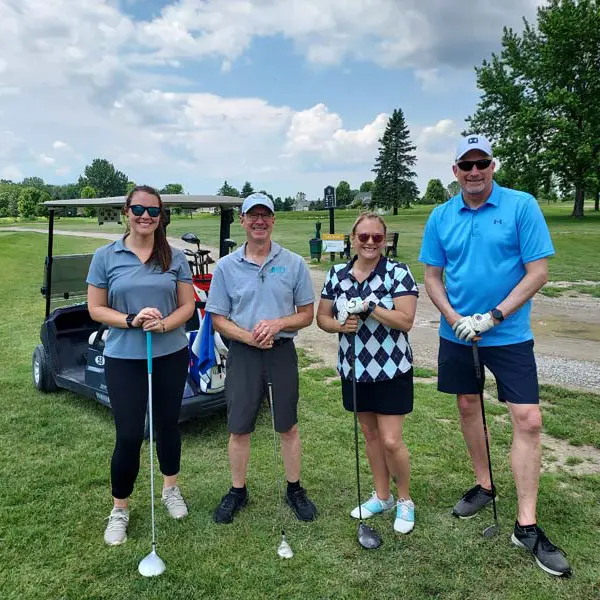
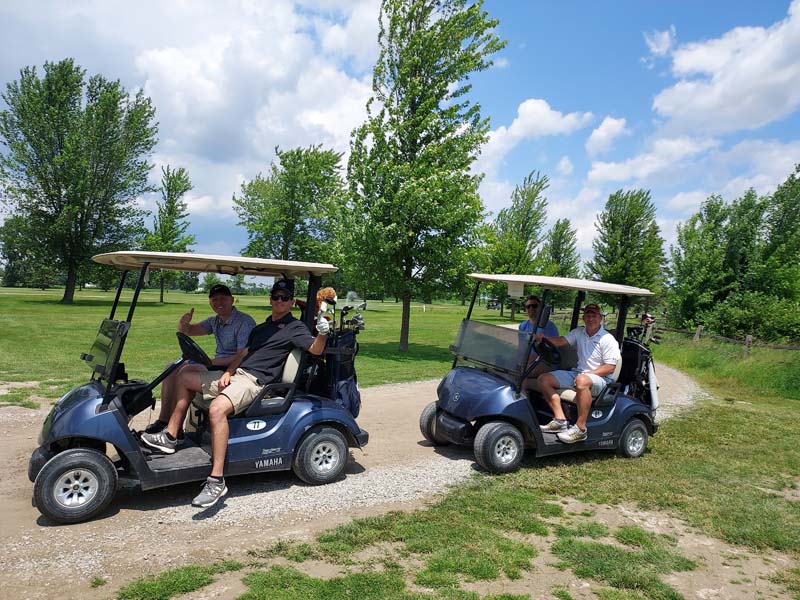
Register today for Swing Big With GBIG, a golf outing sponsored by the Green Bay Innovation Group and First Business Bank.
Swing Big with GBIG is a 4-person scramble on Thursday, June 17, at Mid Vallee Golf Course, 3850 Mid Valley Drive, De Pere, Wisconsin. The golf outing starts with registration at 8:30 a.m. and ends with a FREE NETWORKING event at 3:00 p.m. Join us for a day of golf and camaraderie for a worthy cause. The golf outing raises money to support local food pantries and nonprofit organizations.
In addition to golf, we will have raffles and contests on the course. Try your luck at sinking a hole-in-one to win $10,000 from contest sponsor Packerland Websites.
Swing Big with GBIG offers opportunities to promote your organization by sponsoring a hole ($300) or donating raffle items. Hole sponsors can register at the GBIG Events webpage. Email a high-resolution logo to Marty Ochs at martinpochs@gmail.com to make signs for you!
Golf Outing Schedule for June 17
8:30 a.m. Registration
9:15 a.m. Instructions
9:30 a.m. Shotgun Start
3 p.m. Awards starting and Socializing
Registration Information
Registration includes 18 holes of golf with cart, two drink tickets, and lunch on the course.
Single player: $150
Foursome: $600
Hole Sponsor: $300
Do not miss out! The registration deadline is June 4 for the June 17 outing. We have room for 216 golfers, and we sold out last year. Let us make this golf outing a tremendous success. GBIG is a 501(C)3 nonprofit organization, and all of the profit goes right back to the community to support local charities. Sign up today as a golfer or hole sponsor.
Get links to the latest news, events, stories, and interviews from our 5P news members. Our goal is to remind the decision-makers in Wisconsin of the importance of our industry both historically, and more importantly, into the future.
Read the latest 90 Stories and Links on the Internet below.
Safety coordinators and EHS managers are constantly balancing compliance requirements, inspections, documentation, and follow-up actions. When timelines get tight, that workload can quickly become overwhelming. EHSTracks is designed to remove that pressure by streamlining and standardizing the entire process.
Turning Inspections into a Scalable Process
Inspections are one of the most resource-intensive parts of any safety program, often relying heavily on internal knowledge of a site. EHSTracks eliminates that dependency.
With fully mapped inspection points and real-time photo documentation, inspections become structured and repeatable. Every checkpoint is predefined and clearly guided, allowing:
Additional personnel to step in when timelines are tight
Individuals with little to no site familiarity to navigate directly to the correct inspection points
Consistent, high-quality inspections regardless of who performs them
Instead of relying on internal knowledge, organizations operate from a system-driven process that scales with demand.
Real-Time Visibility and Documentation
EHSTracks captures inspection data in real time, ensuring nothing is missed and everything is documented accurately:
Photos are attached at the point of inspection
Notes and findings are logged instantly
Data is centralized and immediately accessible
This creates a reliable, defensible record—especially important when working with OSHA requirements and fire protection agencies overseeing fire extinguisher inspections.
Automated Reporting and Accountability
EHSTracks removes the administrative burden that typically follows inspections. As soon as inspections are complete:
Reports are automatically generated and formatted
Corrective actions are assigned to the appropriate individuals
Notifications keep all stakeholders informed
Progress is tracked to ensure issues are resolved
This ensures that everyone involved knows what needs to be done and is held accountable for completing it—without additional manual coordination.
Staying Audit-Ready with Confidence
Compliance with OSHA and fire safety regulations requires consistent inspections and thorough documentation. EHSTracks supports this by:
Standardizing inspection workflows
Ensuring required inspection schedules are met
Maintaining complete, time-stamped records
Providing audit-ready reports at any time
Instead of reacting to audits, organizations stay continuously prepared.
From Overwhelmed to Optimized
EHSTracks transforms safety management from a reactive, time-consuming effort into a streamlined, proactive system. By simplifying inspections, automating reporting, and reinforcing accountability, it allows safety coordinators and managers to focus on what matters most—keeping people safe while maintaining compliance.
This website conveys the story and purpose of the meeting and aligns with your idea about a one-page document. The advantage is that it can evolve, and we will add content step by step as we are nearing the summit. Your constituents can see how the tenet creation is evolving and engage at any point.
If you previously viewed an early version of the site, we recommend clearing your browser cache or opening the link in an incognito/private window to ensure you’re seeing the most current content.
The site will continue to evolve over the coming weeks, with the following sections added soon:
Lodging and hotel information
A comprehensive event FAQ
The full event agenda and more partner statements
We’ll keep you updated as these components go live.
With Assembly Bill 131 now enacted, the Wisconsin Paper Council and Wisconsin Manufacturers and Commerce are pleased to provide our respective members with a Coalition Members-Only Webinar on this important issue.
Join the WPC and WMC for:
A high-level overview of the Legislative battle leading up to a compromise
An expert analysis of the changes to Wisconsin’s Spills Law affecting manufacturers
A discussion of future implementation issues and concerns
Looking ahead – Challenges for the next Legislative Session and how industry can be prepared
A one-day, in-person conference designed for employees of companies that are members of WPC and/or NCASI. This event provides an opportunity to hear from leading experts on environmental regulatory and technical topics, gain insights into the latest industry challenges and solutions, and network with colleagues and industry professionals.
The event will bring together representatives from WPC and NCASI member companies, including scientists, engineers, attorneys, mill environmental managers, and other professionals. The program will feature updates from DNR, EPA, NCASI, and legal and industry experts, along with a panel discussion led by environmental consultants and managers from Wisconsin paper mills.
When and Where
May 12th, 2026
Miron Construction Corporate Headquarters – 1471 McMahon Drive, Neenah, WI
Sponsorship Opportunities & Questions:
Keren Vivas, PhD (WPC): vivas@wipaper.org or
Brad Barnhart, PhD, PE (NCASI): bbarnhart@ncasi.org
Wisconsin has the second-highest concentration of manufacturing employment in the nation, with 16 – 18% of its private-sector jobs in that sector. With over 9,000 manufacturers employing more than 465,000 workers, the industry contributed over $70 billion to the state’s economy in 2024. Wisconsin holds top-tier national rankings for employment concentration. We have seen substantial growth in the Plastics, Converting, Printing, Packaging, and the Food Industries. Manufacturing accounts for 96% of all Wisconsin exports.
Wisconsin will hold a number of manufacturing events! UW Madison – Manufacturing Summit WI Drives Manufacturing is the Premier Event on June 2 nd at Lambeau Field sponsored by the Green Bay Innovation Group. We will cover areas such as ai, pfas, new materials, world-leading manufacturing methods, automation, onshoring, workforce readiness, supply chain management, fusion energy, biotech, pharma, semiconductor specialties, and foster economic prosperity through the next era of Manufacturing.
UW Madison will have sixteen tracks. Join the Green Bay Innovation Group Session: PFAS-free manufacturing – approaches, challenges and solutions monitored by Marty Ochs Executive Director of the Green Bay Innovation Group.
The upcoming events:
NEWMA – The Future of Work Summit April 14th
The Freshwater Collaborative April 15th in Stevens Point
Infloflex Forum Milwaukee on 25 – 28th
The Milwaukee Tour April 16th
Wisconsin Drives Manufacturing Summit June 1st – 2nd at Lambeau Field
New North Summit June 9th at Lambeau Field
The Wisconsin Paper Council Annual meeting June 16th at Lambeau Field
For industrial facility managers, understanding what switchgear is used for is critical. Switchgear plays a central role in controlling electrical power and protecting equipment from faults. Without it, electrical systems would be far more vulnerable to outages and damage.
In simple terms, switchgear allows operators to control, isolate, and protect electrical circuits. It ensures power is distributed safely while preventing failures from spreading throughout the system.
The Purpose of Switchgear in Electrical Systems
Many facility managers ask what is switchgear used for when reviewing electrical infrastructure. The primary purpose of switchgear is to control power flow and protect electrical systems from faults. Switchgear assemblies are commonly installed in low-, medium-, and high-voltage power distribution systems.
Faults such as short circuits and overloads can occur suddenly. They must be isolated immediately to prevent equipment damage. Switchgear accomplishes this by detecting abnormal conditions and interrupting electrical flow.
Switchgear is commonly used in:
Industrial manufacturing facilities
Power generation plants
Utility substations
Commercial buildings
Large infrastructure systems
In each of these environments, switchgear helps maintain stable and protected power systems.
How Does Switchgear Work?
When asking how does switchgear work, it helps to view it as a control and protection hub for electrical circuits. Protective relays within the switchgear detect abnormal conditions such as overcurrent, ground faults, or short circuits. These relays send signals to circuit breakers that immediately interrupt the flow of electricity.
The faulted section of the system is then isolated. This prevents damage to transformers, cables, motors, and other critical equipment. It also allows operators to isolate circuits for maintenance or system upgrades. This capability is essential for maintaining infrastructure without shutting down entire facilities.
Key Switchgear Components
The function of switchgear depends on several coordinated components that work together.
Typical switchgear components include:
Circuit Breakers. Interrupt electrical flow during overloads or short circuits.
Protective Relays. Monitor system conditions and detect abnormal electrical activity.
Disconnect Switches. Provide a visible isolation point for maintenance work.
Busbars. Distribute electrical power between circuits within the switchgear assembly.
Control Panels. Allow operators to monitor and manage system operations.
These components are housed within metal-clad or metal-enclosed assemblies. They are designed to safely contain electrical arcs and isolate energized parts. Each component contributes to overall system reliability.
Why Switchgear is Critical for Electrical Reliability
For anyone asking what is switchgear used for, the answer lies in its role in electrical infrastructure. Switchgear is a critical component of modern power distribution systems. It quickly isolates faults and controls power distribution. These systems protect equipment, prevent widespread outages, and support safe system operation.
In modern facilities, electrical reliability is critical. Properly designed and maintained switchgear helps maintain continuous operations. It also reduces risk to personnel and equipment.
If you want to learn more about switchgear services or discuss your system, contact Adam Kahler at akahler@quadplus.com or (815) 210-9885.
Green Bay Innovation Group
Bringing Green Bay Companies Together. Green Bay Innovation Group is committed to building an authentic networking experience where innovation can thrive.