Green Bay Innovation Group
GBIG News

GBIG NEWS | 76 Stories and Links on the Internet 3/25/2026

GBIG News

Get links to the latest news, events, stories, and interviews from our 5P news members. Our goal is to remind the decision-makers in Wisconsin of the importance of our industry both historically, and more importantly, into the future.

Read the latest 76 Stories and Links on the Internet below.

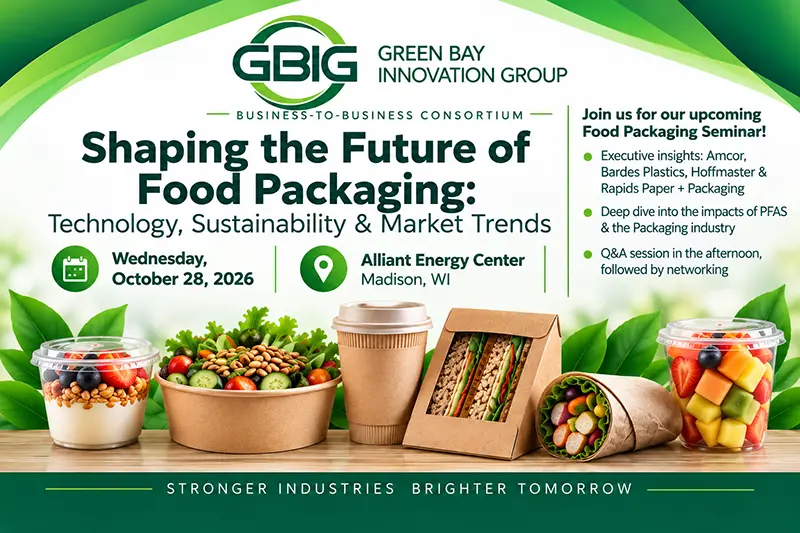
GBIG News Banner

Wi5P Presents: Unlocking the Power of Your Personal Brand

Featuring Amanda Miceli —“Camanda in Chief”

Founder & CEO of The BOLD Marketing Agency, BOLD Events, and Ask Bold Questions

Wi5P logo

Amanda Miceli is a dynamic speaker, creative, fashion designer, and entrepreneur dedicated to helping people step boldly into who they truly are. Her work centers around authentic branding, meaningful human connection, and intentional experiences that help people live and lead with purpose.

What You’ll Experience

In this interactive workshop, Amanda will guide you through a deeper exploration of your personal and professional identity. Participants will:

  • Gain clarity on who they are and how they show up
  • Learn how to express their personal brand with confidence
  • Explore practical tools and exercises to strengthen brand alignment
  • Leave with actionable next steps to build a bold, authentic presence

Whether you’re growing your career, leading others, or simply seeking greater personal alignment, this session will give you the clarity and confidence to elevate your personal brand.

Don’t miss this inspiring, high-energy session that will help you connect more authentically—with yourself and those around you.

UW-Madison College of Engineering hosts online master’s degree webinars

UW Madison College of Engineering logo

Master of Engineering in Polymer Engineering – Program Overview Webinar

Wednesday, April 8, 2026 | 12–12:30 PM CT

Curious about advancing your career in polymer engineering? Join us for a 30-minute webinar to learn how the UW–Madison online Master of Engineering in Polymer Engineering program equips working professionals with advanced skills in polymer processing, materials selection, and product development. Get an overview of the curriculum, flexible online format, and how the program supports your goals.

Register now: https://uwmadison.tfaforms.net/5183553

Master of Science in Manufacturing Systems Engineering – Program Overview Webinar

Thursday, April 2, 2026 | 12–12:30 PM CT

Learn how UW–Madison’s online Master of Science in Manufacturing Systems Engineering helps engineers build the technical and leadership skills needed to improve modern manufacturing systems and take their careers to the next level. In this 30-minute session, we’ll cover program structure, key focus areas, and how the flexible format allows working professionals to advance their careers while continuing to work.

Register now: https://uwmadison.tfaforms.net/5183551

Green Bay Converting Fire

A major fire caused severe damage at the Green Bay Converting facility at 2200 Larson Road. It was shortly before 8:00 a.m. on Monday March 16 th when the blaze first broke out and heavy winds and heavy snow hampered the fighting efforts at the 320,000 square-foot warehouse. The cause of the fire has not yet been determined. The investigation is expected to take several days to weeks to complete because of the extensive size of the building and the damage caused by the water and fire.

Green Bay Converting front of building with fire trucks
Green Bay Converting building with fire trucks out front

Founded in 1999, Green Bay Converting has become a leading contract manufacturer of tissues, towels, and wipers for clients across the USA. They convert massive rolls into finished products.

We want to express our deepest condolences for the devastating impact on Green Bay Converting. Our hearts go out to all those affected by this tragic event and offer our full support during this tough time.

Sincerely,
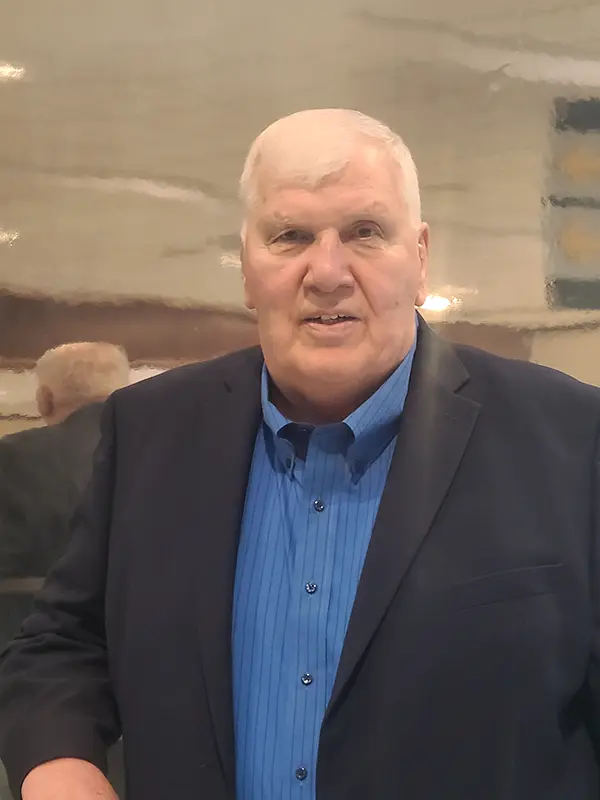
Marty Ochs
Executive Director
Green Bay Innovation Group

PFAS Impact on Our Planet and Our Health

Marty Ochs

PFAS are a group of thousands of synthetic chemicals developed in the 1940’s that do not break down easily in the environment or in the human body. These chemicals are used to make items resistant to water, grease, and stains, and are often present in non-stick cookware, fast food packaging, and firefighting foams. They are accumulating in the environment, water resources, and the human blood. They are primary exposed to drinking contaminated water, eating food packaged in PFAS, eating fish/crops grown in contaminated areas, etc. The studies have linked exposure to increased cholesterol, immune system suppression, liver enzyme changes, reduced, reproductive issues, development delays in children, and increased risks of kidney and testicular cancer.

We have seen regulatory agencies like the EPA setting limits on drinking water due to their health risks. Recently, the State of Wisconsin passed new regulations aligning state drinking water standards with strict federal limits for PFAS. Wisconsin has faced problems in multiple cities because of firefighting foam!

The Green Bay Innovation Group is heading up events with the University of Wisconsin-Madison and the University of Wisconsin-Milwaukee – Fresh Water Collaborative to address the issues of PFAS to educate industries and the people of Wisconsin to look for solutions impacting all of us.

Join us for a PFAS conference on April 15, 2026, in Stevens Point. The conference will foster innovative conversations among experts in industry, academia, government, and nonprofits about research and development of alternative materials as well as PFAS remediation and filtration methods.

The Green Bay Innovation Group, in collaboration with UW-Madison, will host a distinguished featured speaker and a panel of industry experts on PFAS at Lambeau Field on June 2, 2026. The speakers include:

  • Graham Peaslee, Professor at the University of Notre Dame, discusses packaging and PFAS.
  • Dave Garlie of Cross Plains Solution mission is to help eliminate PFAS in firefighting foam.
  • Christy Remucal of UW Madison College of Engineering Aquatic Chemistry
  • Lane Ruhland Lobbyist representing the Wisconsin Paper Council on PFAS regulations.

Coex 3D: A Green Bay Company Focused on 3DPrinting

COEX, 3D

Is your manufacturing company looking for ways to reduce costs, speed up production, and stay competitive? 3D printing might be the solution you’ve been searching for and Coex 3D is a Green Bay business that can help educate you and provide you with 3D filaments produced right here in Green Bay.

Once reserved for large corporations with massive R&D budgets, 3D printing technology is now accessible and practical for small to midsize manufacturers. Here’s how it can transform your operations:

  • Faster Product Development
    Print functional prototypes in hours instead of waiting weeks for tooling. Test multiple design iterations quickly, identify flaws early, and bring products to market faster—while reducing development costs by 40-60%.
  • Profitable Low-Volume Production
    No expensive tooling required. Produce custom parts, replacement components, or limited runs economically. Test market demand before committing to large production runs.
  • Strengthen Your Supply Chain
    Produce parts on-demand, locally. Reduce dependence on overseas suppliers, eliminate long lead times, and maintain digital inventories instead of costly physical stock.
  • Design Without Limits
    Create complex geometries and consolidated assemblies that traditional manufacturing can’t achieve. Produce lighter, stronger parts and add innovative features that differentiate your products.
  • Custom Tooling Made Easy
    Print jigs, fixtures, and tooling designed specifically for your processes at a fraction of machined costs. Many manufacturers see ROI from tooling applications alone within the first year.
  • Sustainable Manufacturing
    Minimize material waste and reduce transportation emissions through on-demand local production.

Ready to explore what 3D printing can do for your business?

Coex 3D in Green Bay, WI is a manufacturer of a complete line of 3D filaments. In addition to making materials crucial to 3D printing, Coex 3D also offers 3D design services and has an extensive 3D Print Center which can take on just about any size print job. Coex 3D is proud to offer free consultation services to discuss the benefits of various materials and printing technologies for your specific applications.

Coex 3D specializes in FDM materials including everything from PLA to engineering-grade nylon, ASA, PETG, and carbon fiber-reinforced filaments suitable for functional parts and end-use applications.

Put 3D printing to the test. Let Coex 3D prove how it can save your business time and money.

Call Coex 3D at 920-757-1055 or email us at sales@coex3d.com to set up a time to discuss.

Cover Label Differentiates with Domino

Los Angeles, CA – When Pat Wafer and Ryder Fyrwald purchased the company in 2018, it was known as Alros Label, a trusted name serving customers for over 35 years. They made the decision to keep every single employee on the team, honoring the decades of craftsmanship, experience, and customer relationships they had built. While two of those original team members have since retired, their legacy still shapes their culture today. Five years ago, they changed the name to Cover Label – a name that better reflects what they do and what they stand for: covering products, and bringing labels & packaging into the 21 st century.

Pat Wafer and Ryder Fyrwald

In transitioning the company to that next chapter, Cover Label added digital printing as a key component to grow the business and selected Domino. It began in 2019. First, with the installation of the Domino N610i digital UV inkjet press at the end of that year, and then transitioning in 2025 to the Domino N730i.

We caught up with Co-CEOs Pat Wafer and Ryder Fyrwald to learn more about their business…from the past to the present, and their journey with Domino along the way.

Our visit was captured in this VIDEO: Cover Label & Domino.

Pat begins, “In this business, you’re selling somewhat of a commodity, and so you have to stand out somewhere, and one of the ways we do that with customers is a mix of lead time and customer service.”

Ryder adds, “By offering this really good customer service and lead time, they give us that next order and that next order, and that’s something that’s really been a differentiator for us in this space.”

From Tech Backgrounds to Label Innovation

“Back in 2018, both of us had come from working in grueling VC-backed tech companies, and we knew we wanted to go and do something on our own,” says Ryder. “And we ended up finding this business called Alros Label. When we got in there, we realized we didn’t have the right technology to really be able to grow the business the way that we wanted it.”

That realization led to a pivotal investment decision. “So, we actually debated…do we go get a big flexo press, or do we go get a digital press?” Pat explains. “And we ended up landing on the Domino, and it allowed us to comfortably step into the digital world. Immediately, we started closing multiple deals that were in our pipeline.”

Scaling Capacity, Quality, & Productivity with Domino

“A year and a half ago or so, we still had the same Domino that we originally bought, and we were getting a little bit constrained by capacity,” says Ryder. “And Domino came in and basically offered an option for us to trade-in our original machine for the new machine. And it’s been off to the races ever since.”

For Jose Casian, General Manager at Cover Label, upgrading to the Domino N730i was a significant milestone. “I can tell you, I was very excited with going to the N730i, because I really wanted that 1200 DPI. Everybody understands… before productivity, there’s got to be quality. And this press has been able to give us both. It has been able to give us good quality and the productivity that we’re looking for. The N610i was great, and it ran really well. But moving to the N730i, it actually changed everything.”

Pat notes that coming from a technology background made the transition to digital even more compelling.

“Coming from a tech background, when we bought the first Domino, we learned that these digital presses are much easier to learn. As we’re getting busier, the more jobs we can move from flexo to digital, the easier it is for us to hire and keep up with demand. And so, we see that as a huge advantage.”

On the production floor, the benefits of the new press are immediately visible to Michael Trinidad, a press operator at Cover Label. He describes the new Domino N730i. “It has some cool features, including a priming station, the ability to print in seven colors, a varnish station, and a camera for inspecting the labels. The benefit of using this press is the 1200 DPI. It’s great for labels on small products.”

Expanding Markets and Capabilities

With enhanced digital capabilities, Cover Label continues expanding into new markets. “We still do a lot of cosmetics labels,” Ryder says. “We’ve really tried to expand our offering and try to get into a lot of consumer-packaged goods. We do a lot of food and beverage. And then we’re really starting to grow more in the pharmaceutical space. We are ISO compliant, working to be ISO certified, which is a really compelling thing for pharmaceutical companies that need that type of certification.”

The company is also investing in emerging smart label technology. “We have a customer right now that wants to do smart labels, and we’re investing in RFID and NFC chips,” says Pat. “So, customers see that we’re willing to invest, and I think that goes a long way.”

At the same time, flexibility remains a core strength. “Because we have digital and flexographic technology, we can do short run stuff,” Ryder explains. “So, if you’re just starting out and you need 500 labels, we can do that. As you grow, you need 1,000, 5,000, 100,000, even up to a million, 10 million. We can satisfy all of those requirements, and we can really be a partner with you as you grow.”

Strong ROI and Production Gains

The investment in Domino technology has delivered measurable returns. “From an ROI perspective, there’s a lot of different areas where it helps,” Pat says. “Right away, you’re doubling your capabilities and your production speed. We’re getting twice as many labels out in one shift. I think that goes a long way.”

The Domino Difference: Partnership and Reliability

For Cover Label, the relationship with Domino extends beyond equipment. “The Domino difference to us is having a partner in one of our suppliers.” Ryder says. “There was a level of familiarity and comfort in working with Domino. We’ve had several years of experience with them. I cannot state enough how good their service is. Without that service, I don’t really know where we’d be.”

Pat reinforces the importance of that support. “Yeah, just to stress what Ryder said, being comfortable with the customer service is huge. Knowing that if something goes wrong, we have the Domino team behind us that we already have worked with for several years, it’s a big deal.”

And in a highly competitive environment, uptime is critical. “We can’t be down for three weeks. Our customers will go elsewhere,” Ryder says. “There are 100 other, 200 other label companies in L.A alone. They can go to other places. So having a reliable machine that runs, that spits out the same quality label that we can rely on… we wouldn’t be where we are today, our company would not be the size that it is, without having a Domino press in place for the last five years.”

By combining service, speed, quality and trusted partnership, Cover Label continues to differentiate itself … earning that “next order and that next order” while building long-term customer relationships.

About Cover Label

At Cover Label, we believe great labels do more than stick — they speak. For over a decade, we’ve partnered with businesses that value quality, precision, and a hands-on experience that feels more like a collaboration than a transaction. What began as a print shop has grown into a premium, service-driven label partner trusted by brands across the West Coast and beyond. Now united under one name, Cover Label brings together the best of both our legacy locations to better serve our clients — with smarter solutions, faster turnarounds, and unwavering attention to detail.

Whether you’re launching a new product or scaling up production, we’re here to make sure your labels look exceptional and arrive on time — every time. coverlabel.com

About Domino

Domino is a leading manufacturer and distributor of digital printing and product identification solutions. Celebrating its 48 th year in business, Domino is a global organization with world headquarters in the UK, and North America headquarters in Gurnee, IL. Domino has 25 subsidiaries, representation in over 120 countries, and over 3,000 employees worldwide. For more information on Domino digital printing, please visit dominodigitalprinting.com.

Keller, Inc. to Build for Simplicity Credit Union

Simplicity Credit Union has once again selected Keller, Inc. as its Design-Build partner for a 2,937 sq. ft. interior and exterior renovation at their Neenah location at 219 W Cecil Street.

The project will be completed in three phases, allowing the credit union to remain open and fully operational throughout construction.

Simplicity Rendering

The renovation of the Simplicity Credit Union Neenah facility will introduce new technology to enhance the member experience and align the facility with Simplicity’s updated branding standards.

Due to the site’s limited space, careful coordination will be essential. Keller’s team will work closely with the team at Simplicity Credit Union, subcontractors, and project partners to maintain efficient communication and ensure a smooth construction process from start to finish.

For more information on Keller, Inc., Top Metal Builder in the Nation as reported by “Metal Construction News”, visit www.kellerbuilds.com.

Natural Resource Careers Exploration Week

JUNE 7–12, 2026
Applications due May 1, 2026*

Designed for high school sophomores, juniors and graduating seniors (at time of application) who are interested in exploring a career in all aspects of natural resource management. Throughout this week-long program in beautiful Eagle River, Wisconsin, students are immersed in real-life field activities and development of outdoor skills while learning from industry professionals. They’ll have the opportunity to explore our 40-acre forested campus in their free time too!

$210/Student
includes instruction, materials, 5 nights lodging & 15 meals.

Spots for NRCEW are first-come, first-served—apply ASAP before it fills up!

YOUR FUTURE STARTS HERE

60th Natural Resource Careers Exploration Week
(NRCEW)

Download application or apply online at:
www.TreesForTomorrow.com

Questions? Contact Program
Coordinator Casey Sprotte at
Casey@treesfortomorrow.com

Trees for Tomorrow Environmental Education Center

519 E. Sheridan St., PO Box 609 • Eagle River, Wisconsin • 54521 • (715) 479-6456

Trees For Tomorrow’s campus, located in Eagle River, Wisconsin, includes National Forest property under permit from the USDA Forest Service. Private property owned by Trees For Tomorrow (TFT), the Wisconsin Newspaper Association and Tara Lila LLC are also utilized for education and outreach purposes.

Mistakes Employers Make During the ADA Accommodation Process and How to Avoid Them

Labor & Employment Law Update

By Laurie Meyer on March 11, 2026

Former Amundsen Davis Logo

Ensuring compliance with the Americans with Disabilities Act (ADA) and state-level disability laws, which require covered employers to provide reasonable accommodations to qualified employees with disabilities unless doing so imposes undue hardship, remains a critical employer obligation. Despite decades of established guidance, ADA accommodation issues continue to drive a significant volume of claims and enforcement actions from the Equal Employment Opportunity Commission (EEOC) and state agencies. These disputes often arise not because employers refuse or are unable to provide accommodation, but because they mismanage the process or overlook key compliance steps.

Below are some of the most common—and costly—mistakes employers make when navigating ADA accommodation requests.

  1. 1. Failing to Recognize an Informal ADA Accommodation Request
    Employees do not need to use terms like “reasonable accommodation” or “ADA” to trigger employer obligations. Even vague comments about difficulty performing job duties due to a medical condition should prompt an interactive process.
    An accommodation request can be informal and may come from statements such as:
    ● “I’m having trouble getting to work on time because of my medical condition.”
    ● “My injury makes it hard to stand for long periods.”
    ● “I need some flexibility because of my treatment schedule.”
    Once an employer is on notice that a medical condition may be affecting an employee’s ability to perform their job, the duty to engage in the interactive process is triggered.


Best practice: Train supervisors to escalate any mention of a medical condition affecting work to HR promptly. While not every condition constitutes a “disability” under federal or state law, it is imperative that HR is aware of medical issues that impact attendance and/or work performance.

  • 2. Delaying or Ignoring the Interactive Process
    Employers often expose themselves to liability not by denying accommodation, but by doing nothing. Delays, silence, or informal “we’ll get back to you” responses can be interpreted as a failure to engage in the interactive process in good faith. The ADA requires a timely, ongoing dialogue between the employer and employee to explore possible reasonable accommodations.

Best practice: Acknowledge requests quickly, document communications, and keep the process moving—even if additional medical information is needed.

  • 3. Requiring Excessive or Improper Medical Documentation
    Overly broad medical inquiries can violate ADA confidentiality rules. Employers may request medical documentation when the disability or need for accommodation is not obvious. However, asking for diagnoses, complete medical records, or information unrelated to job functions frequently leads to legal disputes.

Best practice: Request only information necessary to confirm the existence of a covered disability and understand functional limitations relevant to essential job functions.

  • 4. Treating All Job Description Tasks as Essential
    Employers sometimes assume that if a task appears in a job description, it must be essential and cannot be modified. Courts and the EEOC look to the actual duties performed and whether marginal tasks can be reassigned.

Best practice: Ensure job descriptions accurately reflect essential functions and revisit them during the accommodation analysis.

  • 5. Rejecting an Accommodation Without Exploring Alternatives
    Denying a request without exploring alternatives is a common error. Employers are not required to provide the employee’s preferred accommodation; rather, they must meaningfully consider other reasonable options.

Best practice: If a requested accommodation is not feasible, explain why and propose other options. Document the discussion

  • 6. Defaulting to Leave as the Only Solution
    Some employers default to unpaid leave when confronted with an accommodation request, even when the employee could continue working with adjustments. Others improperly deny additional leave once FMLA is exhausted, assuming the ADA no longer applies. Leave can be a reasonable accommodation, but it should not be the automatic or exclusive response.

Best practice: Analyze whether workplace accommodations would allow continued work before placing an employee on leave, and evaluate post-FMLA leave requests individually.

  • 7. Failing to Document the Process
    Lack of documentation is a silent liability driver. The EEOC and courts often cite poor documentation as evidence of bad faith or discriminatory intent. Common employer gaps include failing to document the interactive dialogue, alternative accommodations considered, and/or the rationale for a denied accommodation request.

Best practice: Maintain clear, confidential documentation of each step of the accommodation process.

  • 8. Inconsistent Treatment of Similar Requests
    Applying different standards to similar accommodation requests without a clear, documented reason can lead to discrimination or retaliation claims.

Best practice: Apply consistent standards, while recognizing that ADA determinations are individualized and fact-specific.

Key ADA Compliance Takeaways for Employers

To comply with the law and reduce litigation exposure, the following core principles can keep the ADA accommodation process on track.

  • Process matters as much as outcome. The EEOC scrutinizes not only whether an accommodation was granted, but how the employer engaged with the employee.
  • Documentation and timeliness are essential. Poor documentation and delays are central drivers of EEOC complaints and litigation.
  • Train HR and managers. Given the frequency and prominence of accommodation-related disputes, proactive training is critical.
Green Bay Innovation Group

Bringing Green Bay Companies Together. Green Bay Innovation Group is committed to building an authentic networking experience where innovation can thrive.

Contact Information

Phone: 608-698-3333 
martinpochs@gmail.com
Subscribe to Newsletter


© 2021 Green Bay Innovation Group

LinkedIn
Share