
Sales Rewired: Turn AI into a Competitive Advantage

Find Out More Here
Green Bay Innovation Group
GBIG News

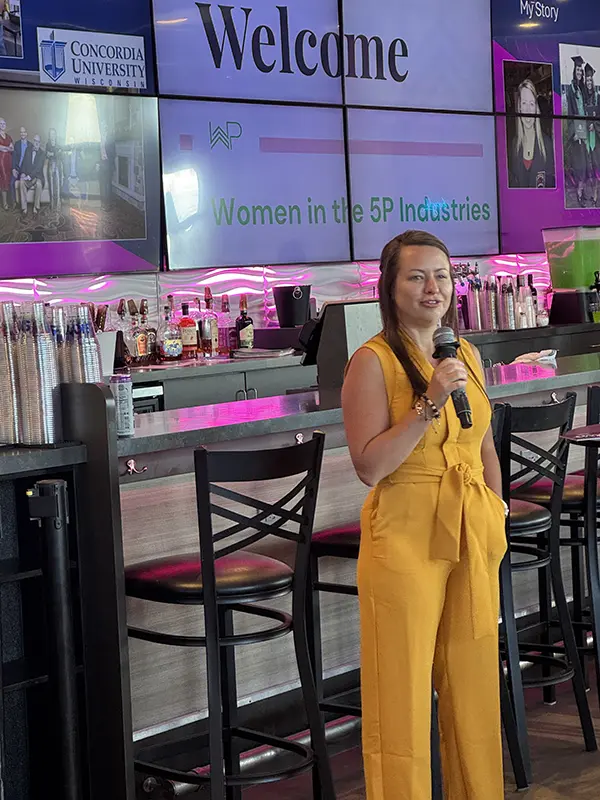
Asia Pulp and Paper Event

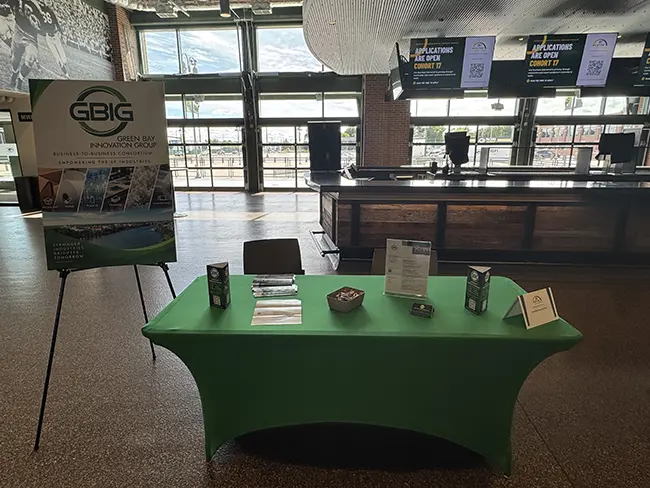
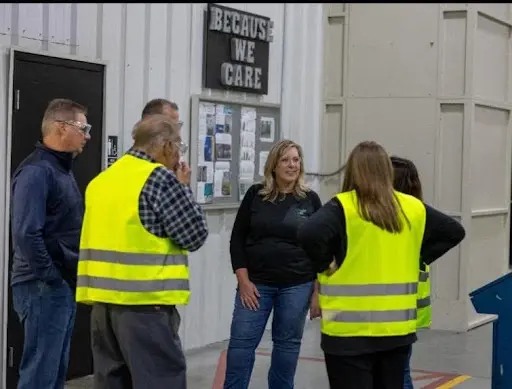
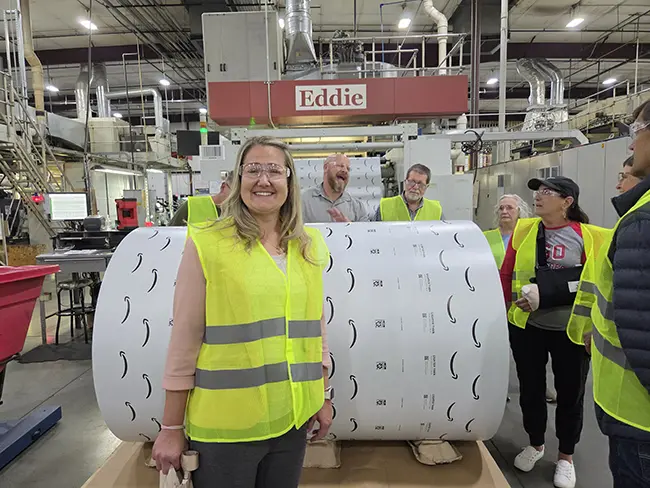
We want to thank Jeff Lindsay of Planet Lindsay, Pat Chen, and Brit Swisher of Midland Paper Company for an outstanding presentation on Asia Pulp and Paper.

Brit Swisher’s presentation was an overview of the US and Asian Paper Market

Speakers for the Asia Pulp and Paper event
  • The advantage is shifting from tons to knowledge.
  • What executives should be watching?
  • Operational Impact on Production
  • US Paper Manufacturing is focusing on Profitability not Tons.
  • The impact of EPR – Extended Producers Responsibility
  • Current Challenges and Opportunities
  • Process Improvement
  • Sustainability
  • R & D Trends shaping the next product generation of paper products
  • Strategies for the Market – What is Happening
  • Offshore imports on All Printing Grades and current updates on the US Producers
  • Tarriff & Duties, the current and future policies
  • Paper and Pulp Mill closures in the USA and China
  • How Global manufacturers shape the US Market
  • The U.S. Paper Industry at an Inflection Point

Jeff Lindsay focused on the history of China and its evolution moving from agriculture to an industrial manufacturing powerhouse. Pat Chen focused on the technology and investments that have and will continue to being made by China’s Paper and Pulp Manufacturers!

China’s paper industry is one of the clearest examples of a shift from a rural, agricultural economy to a highly industrialized manufacturing powerhouse. This story is especially relevant to Wisconsin and the broader U.S. paper and pulp industries. China did more than increase paper production; it rebuilt the entire industrial ecosystem around paper, pulp, packaging, machinery, planning, recycling, chemicals, energy, and technology. Before economic reforms began in 1978, China’s paper industry was small, fragmented, and technologically outdated, with companies relying on non-wood fibers. Those reforms dramatically changed the business environment by encouraging rural enterprises, private businesses, foreign investment, industrial development, and export-oriented manufacturing. The critical shift from small mills to large, modern mills transformed the structure of the industry.

A 2007 national paper-industry policy called for China to move from being a minor paper-producing country toward becoming a paper-manufacturing powerhouse, emphasizing larger-scale companies, better technology, improved environment performance, resource efficiency and the integration of forestry and paper making.

The Government policy + private capital + foreign technology + enormous domestic demand + export opportunities lead to rapid industrial modernization. We see Asian Pulp and Paper establishing plantations in China to support the production of pulp with less dependence on foreign pulp suppliers.

China produced approximately:

  • 136.25 million tons of paper and paperboard
  • 94.54 million tons of pulp
  • 65.14 million tons of paper products

The broader pulp, paper, and paper-products sector produced 296 million tons and generated approximately 1.46 trillion yuan in revenue.

CMD Welcomes Jeff Moore as Regional Sales Manager

Jeff Moore
Regional Sales Manager, Jeff Moore

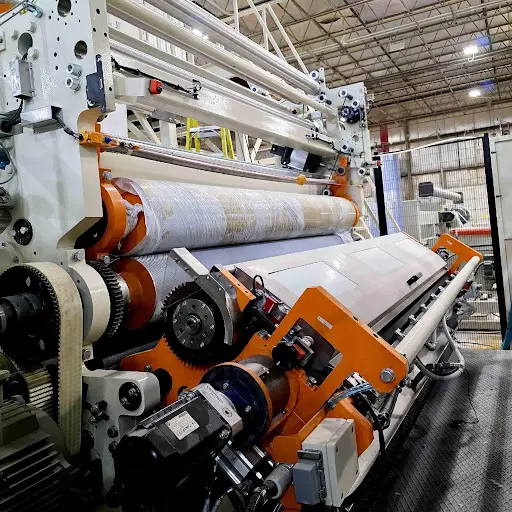
August 4, 2026 – APPLETON, Wis. – CMD is pleased to announce that Jeff Moore has joined the company as Regional Sales Manager. He will partner with customers throughout the western United States to identify opportunities and deliver tailored converting solutions that improve productivity, quality, and operational performance. In addition, Moore will play a key role in expanding CMD’s DAC web inspection and Hagihara slitting and rewinding solutions across North America.

Moore brings more than 15 years of experience spanning technical sales, territory management, manufacturing operations, and business leadership. Most recently, he served in a technical sales role with Precision Roll Solutions, partnering with manufacturers to deliver engineered solutions and build long-term customer relationships. Prior to that, he served as Western Territory Manager for AXI International, driving sales growth and customer success across the western United States.

With a diverse background in technical sales, manufacturing leadership, and business management, Moore brings extensive experience helping manufacturers improve performance and achieve their business objectives. He has led cross-functional teams, strengthened customer relationships, and implemented initiatives that enhance safety, quality, operational efficiency, and profitability. He earned a Master of Business Administration from North Carolina State University with a concentration in Finance and Innovation.

“We’re excited to welcome Jeff to the CMD team,” said Tim Lewis, Global Vice President of Sales and Marketing. “Jeff brings a unique combination of technical expertise, manufacturing leadership, and a customer-first mindset that aligns well with our approach. His experience helping manufacturers solve complex challenges will be a tremendous asset to our customers and our organization. We’re confident he’ll play an important role in strengthening our presence in the western region while accelerating the growth of the DAC and Hagihara product lines.”

ABOUT CMD

CMD Corporation is a global provider of advanced manufacturing solutions serving the converting, packaging, automation, alternative energy, and industrial manufacturing markets. For more than 45 years, CMD has helped manufacturers improve productivity, quality, and profitability through innovative equipment, integrated technologies, and world-class customer support.

Today, CMD’s portfolio brings together industry-leading technologies and specialized expertise across multiple businesses. Through CMD, FAS Converting, and strategic partnerships with DAC for web inspection and Hagihara for slitting and rewinding solutions, the company delivers comprehensive solutions for flexible packaging and film converting—including bag and pouch making, web inspection, slitting and rewinding, automation, aftermarket support, and engineering services.

Beyond converting, CMD Alternative Energy Solutions designs and supports advanced CNG and RNG fueling systems with 24/7 remote monitoring and technical service, while CMD Manufacturing Solutions provides engineering, fabrication, machining, assembly, finishing, and contract manufacturing services for OEMs and industrial manufacturers.

Headquartered in Appleton, Wisconsin, USA, CMD serves customers worldwide with engineering, installation, training, field service, replacement parts, upgrades, and lifecycle support. By combining innovative technologies, trusted partnerships, and decades of manufacturing expertise, CMD helps customers optimize performance, improve quality, and build more competitive operations. Learn more at www.cmd-corp.com.

Keller, Inc. to Remodel for McKinley Paper & Packaging Company

Keller Inc

Combined Locks, WI — Keller, Inc., a trusted Wisconsin-based design-build partner, has been selected to complete a series of interior remodels for McKinley Paper & Packaging Company at their Combined Locks facility.

The remodel includes updates to three important spaces within the facility:

  • The McKinley Paper History Wall, a signature storytelling feature that highlights the company’s legacy and evolution.
  • The Onboarding Conference Room, designed to welcome new employees with a modern, engaging environment.
  • The Operations Conference Room, refreshed to support collaboration, daily coordination, and strategic planning.

These improvements focus on cosmetic upgrades that reinforce McKinley Paper & Packaging Company’s commitment to investing in their facilities and enhancing the employee experience. Updated finishes, improved lighting, and modern design elements will bring a cohesive, refreshed look to each space.

Construction is underway, with project completion anticipated in Fall 2027.

For more information on Keller, Inc., Top Metal Builder in the Nation as reported by “Metal Construction News”,
visit www.kellerbuilds.com .

Quad Plus: How to Avoid High Demand Charges During Peak Energy Times

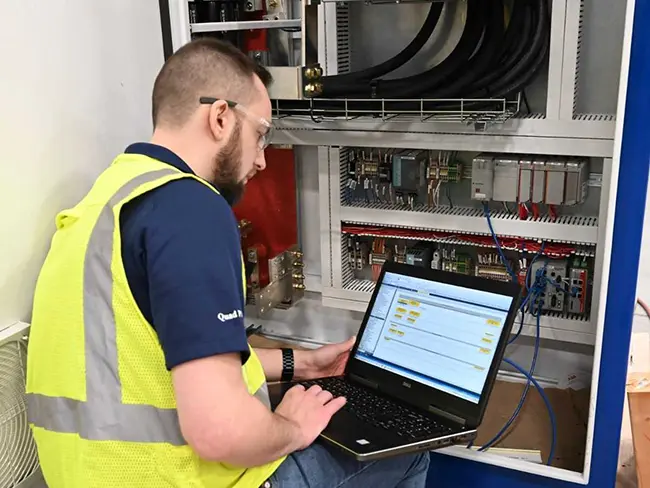
demand-charge-power-system-testing

For many commercial and industrial facilities, electricity costs depend on more than how much energy is consumed. Utilities may also assess a demand charge based on the facility’s highest level of electricity use during a specific billing period.

That means even a relatively short spike in demand can have an outsized effect on the monthly electric bill. Effective demand charge management focuses on identifying when those peaks occur and finding practical ways to keep them under control.

Understand When and Why Peak Demand Occurs

Peak demand often happens when multiple energy-intensive systems operate at the same time. Motors, HVAC equipment, production machinery, compressors, and other large electrical loads can combine to create a significant demand spike.

Understanding the facility’s load profile is an important first step toward peak demand reduction. Reviewing interval data, production schedules, and equipment operating patterns can help identify when peaks occur and which loads contribute to them.

Once those patterns are understood, businesses can consider energy management strategies such as:

  • Staggering the startup of large motors and equipment
  • Scheduling energy-intensive processes during off-peak periods
  • Adjusting HVAC schedules where operations allow
  • Avoiding unnecessary simultaneous loads
  • Monitoring demand in real time to identify developing peaks

These changes can help reduce energy costs by changing when electricity is used rather than simply limiting production.

Take a More Active Approach to Demand Charge Management

Operational changes are useful, but facilities do not always have the flexibility to manually coordinate electrical loads throughout the day. Automated controls and energy-efficient technologies can help facilities manage these peaks more effectively.

Demand charge limiters can monitor facility demand and automatically control selected loads before electricity use exceeds a predetermined threshold. This gives businesses a way to respond to changing conditions in real time instead of discovering a costly demand spike after it has already occurred.

Facilities may also benefit from utility demand response programs. These programs encourage participating customers to decrease or shift electrical consumption during periods when demand on the grid is especially high. Program structures vary by utility, so businesses should evaluate the requirements and determine whether participation makes sense for their operations.

Build a Strategy Around Your Facility’s Actual Energy Use

There is no single approach to managing electricity demand charges. The right strategy depends on the facility’s equipment, production requirements, utility rate structure, and ability to shift or control loads.

Combining better energy-use data with operational changes and automated demand management can help businesses limit costly peaks while maintaining the power needed for production. A well-planned approach also makes it easier to identify where future efficiency improvements could provide the greatest value.

For help evaluating demand management solutions for your facility, contact Adam Kahler at akahler@quadplus.com or call (815) 210-9885.

Sales Contact
Adam Kahler
(815) 210-9885
akahler@quadplus.com

Quad Plus
555 St. Croix Ave
New Richmond, WI 54017
www.quadplus.com

Menasha Corporation Commits $1 Million to Support Fox Valley Tornado Recovery

For Immediate Release

Menasha Corporation

NEENAH, Wis. — August 21, 2026 — Menasha Corporation today announced a commitment of $1 million over the next two years to support recovery efforts following the devastating tornado that impacted communities across the Fox Valley region.

As an initial step, Menasha Corporation will contribute $250,000 to the Community Response Fund, a collaborative effort supporting both immediate assistance and long-term recovery for individuals, families, businesses, and nonprofit organizations affected by the storm. The Community Response Fund is administered through a partnership of local philanthropic organizations dedicated to coordinating community recovery efforts.

The remaining commitment will be distributed over the next two years to support ongoing recovery, rebuilding, and community resilience initiatives across the region.

“Menasha Corporation has called the Fox Valley home for nearly 180 years, and our connection to this community runs deep,” said Chris Drees, President and Chief Executive Officer of Menasha Corporation. “The recent tornado left a lasting impact on many of our neighbors, friends, employees, and local businesses. While the immediate response has been inspiring, we recognize that recovery will take time. We are committed to standing alongside our community, helping address urgent needs today while supporting the long-term rebuilding efforts that will be required in the months and years ahead.”

Drees added, “Throughout our history, Menasha Corporation has been strengthened by the communities we serve. This commitment reflects our belief that when our community faces challenges, we have a responsibility to come together, support one another, and help build a stronger future.”

Menasha Corporation’s contribution is part of the company’s broader commitment to supporting the wellbeing and resilience of the communities where its employees live and work.

About Menasha Corporation

Menasha Corporation is one of America’s oldest privately held manufacturing companies. Founded in 1849, the company is a leading provider of packaging and supply chain solutions through its businesses, Menasha Packaging Company and ORBIS Corporation. Headquartered in Neenah, Wisconsin, Menasha Corporation serves leading global consumer packaged goods companies and industrial customers throughout North America and beyond. For more information, visit menashacorporation.com.

Wisconsin Paper Council: 2026 Golf Tournament

Tuesday, October 6, 2026

Wisconsin Paper Council logo

Registration: 8:30 – 10:00 am
Shotgun starts: 10:00am

$200 – Per Player
$800 – 4 Players

AT BULLSEYE GOLF CLUB 2800 RIDGEWOOD TRAIL
WISCONSIN RAPIDS, WI

Attend WPC’s Golf Outing to network with industry leaders while enjoying a day golfing riverside with fast greens and lush fairways. Don’t miss this opportunity to connect with key players in the paper industry.

For more info – https://www.wipaper.org/event-calendar/2026/10/6/2026-wpc-golf-outing

Register Here

Asian Pulp Paper and China’s Paper Industry Overview

Marty Ochs

The U.S. paper and pulp industry is not disappearing, but it has declined over the past two decades compared with China and other global competitors. The industry has consolidated, and mills have closed. Wisconsin was once a global center of innovation and production, but today its paper and pulp industries face major challenges that must be addressed at the state and national levels to support this once-dominant manufacturing sector in northern Wisconsin. The forestry industry is severely distressed affected by the closure of more than twenty-five facilities. Still, Wisconsin’s specialty paper, tissue, towel, label, and packaging sectors remain bright spots in paper manufacturing. Today, paper and pulp manufacturing employs about 7,800 people in Wisconsin, down from more than 40,000 in the early 1970s. Wisconsin can learn from China’s support for its paper and pulp industries, which helped China become a world leader.

Why China Grew So Fast, and the Key Reasons include:

  1. The Chinese government identified paper and packaging as strategic industries and supported
    growth.
  2. Massive government support and domestic demand with reduced corporate tax rates,
    accelerated depreciation, export-related tax benefits, and industrial parks infrastructure:
  3. Lower manufacturing costs
    Low-cost financing for the mills
    Industrial development policies
    Infrastructure Investments in ports, transportation, and logistics
  4. Explosive Manufacturing Growth
    China’s export economy created strong domestic and international demand for corrugated
    boxes, packaging papers, tissue and household products, and specialty papers, driven by e-
    commerce.
  5. The focus is on Large-Scale Modern Paper Mills with closing down small mills.
    China built new, highly efficient mills with lower production costs.
    New facilities operate as scales much larger than the older North American mills.
  6. Chinese companies invested in pulp capacity and fiber supply chains in countries such as Brazil,
    Indonesia, Canada, plus inside of China planting billions of trees
  7. Investments in Engineering Education, Technical Training, Manufacturing Skills Development,
    and University Industry Partnerships.

Why U.S. Industry Declines

  • The decline is primarily in printing and writing paper grades. U.S. Paperboard has fallen 30% since 2000’s.
  • Aging mill infrastructure especially in Wisconsin Higher labor costs compared with international competitors.
  • The demand and requirements from the DNR and environmental compliance will prevent any additional investments in the State of Wisconsin
  • Competition from lower-cost global producers with limited environmental restrictions and not complying with verifying their source for pulp.
  • The US Pulp Manufacturing Companies are required to comply!

If Wisconsin is to survive, we will need to focus on the following.

  • Advanced Packaging Technologies
  • Sustainable fiber products
  • Molded fiber replacing plastics.
  • The development of new coating technologies
  • Specialty Paper Products
  • Established Tissue, Towels, and Hygiene Products manufacturers
  • Automating and upgrading existing facilities
  • Abundant forest resource
  • Education with Universities and Technical Colleges
  • A skilled and experienced workforce
  • Manufacturing supporting industries experience in the paper and pulp industries
  • A large Packaging Industry
  • A large Converting Industry
  • A large Printing Industry including Flexible Packaging, Label, and the Board Industry
  • A large Food Manufacturing Industry

Rather than trying to compete directly with China, Asia, and Europe, Wisconsin’s current advantage is
high-value packaging, converting, printing, and specialty paper products.

Domino: E Labels transformed its business with two Domino presses

PICO RIVERA, Calif. – E Labels has transformed its business by embracing Domino digital printing
technology… not once, but twice… enabling the California-based label converter to expand into new
markets, increase production efficiency, and better serve customers demanding shorter runs and faster
turnaround times.

Jacky and Carlos Rivera

We caught up with Carlos Rivera (owner) and his daughter Jacky Rivera (CFO), to learn more about the
business and their journey with Domino… from installing their first Domino N610i digital UV inkjet label
press in 2019, to then adding a second N610i in 2024… and the exceptional changes and growth that their
business has experienced because of it. Their story is highlighted in this VIDEO: E Labels & Domino

Serving customers across food and beverage, cosmetics, pharmaceutical, oil, and other industrial markets, E
Labels has built its reputation on delivering high-quality labels while providing outstanding customer service.
Today, the company produces millions of labels annually.

According to Carlos Rivera, investing in Domino digital printing technology has been one of the company’s
most significant business decisions.

Game Changer

“Customers are looking for commitment on us being able to meet their requirements and deliver on time, and
technology is the key,” said Carlos. “As soon as our first Domino press was installed, we started producing labels much faster than we could with flexographic printing. About 50 percent of our business moved to digital, and what really surprised me was seeing medium-sized runs transition to digital as well. It was a game changer.”

For E Labels, the shift to digital printing has opened new opportunities while allowing the company to offer greater flexibility and respond to customer demand in a highly efficient manner.

Jacky said the addition of Domino technology fundamentally changed the company’s capabilities.

“When I started here, we had two flexographic presses and we weren’t getting many short-run jobs,” she explained.”After adding Domino, we were able to produce smaller runs and multiple SKUs without charging customers more. That’s really where E Labels blossomed.”

Today, the family-owned company continues to maximize every square foot of its Pico Rivera facility while preparing for its next phase of growth.

“We’re a small company, but we’ve built a great team and invested in great machinery,” said Jacky. “That allows us to be better partners to our customers, and that’s why they keep coming back.”

Success Breeds Success

The company’s success with its first Domino press ultimately led to the installation of a second system to support increasing customer demand.

“Our first Domino helped us bring in more business,” Jacky said. “We needed the second one to help us continue growing.”

The benefits have extended beyond increased productivity. Employees quickly adapted to the technology, enabling faster onboarding and greater operational flexibility.

“It’s great equipment,” said Carlos. “Our employees learned it very quickly and can operate it independently. It’s simple.”

Press Operator Elvira Pacheco echoed that sentiment, noting that operating two Domino presses allows the production team to maximize efficiency by running multiple jobs simultaneously.

“The machine is easy to operate,” said Elvira. “Having two machines makes it easy to keep production moving because we can be working on one while setting up another. That’s why I’m always happy working here with Domino.”

Beyond the equipment itself, E Labels credits Domino’s service and support as an important part of its continued success.

The Domino Difference

“The Domino difference is that both the machine and the service speak for themselves,” said Jacky. “I’m proud to tell people we have two Domino presses. We’re a team, me and Domino.”

Looking ahead, Carlos said Domino will remain E Labels’ digital printing technology of choice as the company continues to expand.

“If I needed another digital press based on the demand we have today, I can almost guarantee it would be another Domino,” he said. “On a scale of one to ten, my satisfaction is a ten-plus. Investing in Domino has been the best technology upgrade we’ve made, and we’ve been extremely successful with it.”

As customer demand continues to evolve toward shorter runs, more SKUs, and faster delivery, E Labels believes its partnership with Domino positions the company for continued growth and success while maintaining the high level of quality and service its customers have come to expect.

About E Labels

E Labels is a family-owned label printing company based in Pico Rivera, CA. Established 26 years ago by Carlos Rivera, the company combines traditional values with cutting-edge technology to serve clients in various industries. With a focus on quality, reliability, and customer satisfaction, E Labels continues to evolve to meet the demands of today’s market. For more information on E Labels, please visit elabelsinc.com

About Domino

Domino is a leading manufacturer & distributor of digital printing and product identification solutions. Celebrating its 48th year in business, Domino is a global organization with world headquarters in the UK, and North America headquarters in Gurnee, IL. Domino has 25 subsidiaries, representation in over 120 countries, and over 3,000 employees worldwide. For more information on Domino digital printing, please visit dominodigitalprinting.com

August 5th, 2026 Newsletter

GBIG logo

Read the August 5th, 2026 Green Bay Innovation Group Newsletter here.

Read newsletter

GBIG NEWS | 93 Stories and Links on the Internet 08/05/2026

GBIG News

Get links to the latest news, events, stories, and interviews from our 5P news members. Our goal is to remind the decision-makers in Wisconsin of the importance of our industry both historically, and more importantly, into the future.

Read the latest 93 Stories and Links on the Internet below.

GBIG News Banner

Events

Featured Stories

Paper

Packaging

PFAS

AI

Forestry

Water

Members

Green Bay Innovation Group

Bringing Green Bay Companies Together. Green Bay Innovation Group is committed to building an authentic networking experience where innovation can thrive.

Contact Information

Phone: 608-698-3333 
info@greenbayinnovationgroup.com
Subscribe to Newsletter


© 2026 Green Bay Innovation Group Foundation Inc Charity ID: 93-3456487

LinkedIn
Share