Asian Paper and Pulp Seminar – Tuesday, August 11

Find Out More Here
Green Bay Innovation Group
GBIG News

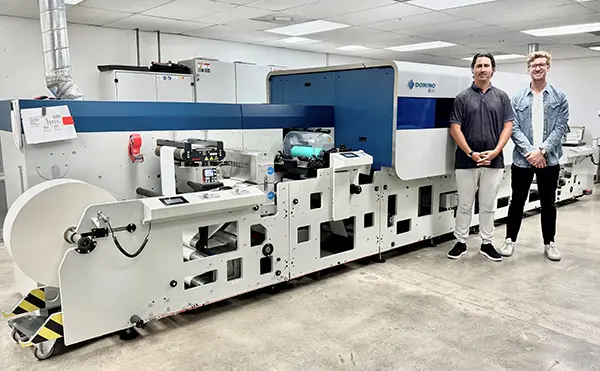
Domino: The Right Press for the Job

The Right Press for the Job: Harnessing Digital, Hybrid, and Flexo Technologies for Label Printing Success

Domino logo

Digital printing in the label market is coming of age. Today, a significant proportion of label converters are running digital or digital hybrid label printing presses alongside their established flexo equipment, with digital accounting for 21.6% of the market value of labels produced globally in 2024.

While digital printing technology’s versatility and efficiency for short print runs have been a key driver for growth for many printing businesses, feedback from many converters underscores the importance of retaining access to both digital and flexo technologies.

Balancing customer demand for sophisticated label design and finish with workload, capacity, and productivity means that converters now need to be able to evaluate and respond to a variety of operational scenarios; the choice of digital, hybrid, and flexo technology is no longer down to print run length alone.

Mike Barry, Commercial Manager – Digital Printing, Domino Printing Sciences, explores the considerations and challenges for converters looking to maximize the return on their label printing assets while meeting their brand customers’ needs.

Beyond run length: a practical approach

Mike Barry

The choice of whether to use flexo, digital, or hybrid print technology has, until now, primarily come down to application and run length, with long, low-variation print runs typically the
domain of flexo, and shorter, higher-variation print runs allocated to digital.

However, the common conception that once the print volume of a label has grown to a certain level (with the figure varying depending on who you ask), it will be more efficient and profitable to move from digital to hybrid and hybrid to flexo is no longer holding true. For most converters, the crossover point between technologies is not fixed; rather, it is continuously shifting to reflect changing customer demands and press availability from day to day and job to job. Indeed, sticking to a rigid limit based on print volume alone can adversely impact overall operational efficiency and resource utilization. Moreover, failure to embrace flexibility in print technology allocation – e.g. running a job on whichever press is available at the time – may even necessitate declining a project, to the detriment of client relationships and brand reputation.

This drive for operational efficiency is, at least in part, driving the increase in hybrid printing
sales – which, according to market research reports, is projected to grow at a compound annual growth rate (CAGR) of around 12%, surpassing a valuation of around USD 16.53 billion by 2034. In practice, many converters are now taking advantage of the flexibility of their hybrid lines to help balance their overall workload, pushing hybrid volumes as high or as low as their business requires.

Balancing press availability and demand

So, how can converters achieve the optimal balance between flexo, digital, and hybrid printing?

Maximizing press run time remains a key consideration for converters: the simple maths is that any downtime reduces ROI. However, in a print production facility with multiple technologies, considering individual press run time in isolation may be missing the bigger picture.

For example, let’s consider the idle time of the digital asset on a hybrid press during flexo station set-up. A short-run job encompassing digital printing, embellishments, and finishing could be produced in a single pass on a hybrid press – but it may be worthwhile using a separate digital label printing press for some elements of the job, with the finishing aspects covered offline in a second step. Deploying a solution like this will maximize the return on the digital press with near continuous running, compared to introducing periods of downtime on the digital print module in a hybrid line during flexo station set-up.

Similarly, being able to move shorter runs from flexo or hybrid presses to digital-only solutions can provide converters with an instant productivity increase, freeing up hybrid or flexo press capability for longer, more profitable runs, with less time and consumable waste incurred during set-up and changeovers.

Then, let’s consider multi-SKU jobs. At first glance, digital technology should be the best way to manage such variations. However, if the labels share the same die and varnish with only minor artwork variations or variable data elements – such as language versions of a standard label – hybrid could be a more efficient choice. In this scenario, if large areas of the label are ‘standard’, a converter using a hybrid solution will only incur the set-up time of the analogue part of the press once, spreading it across multiple jobs, increasing productivity, and lowering job cost. Flexo stations on a hybrid line can also offer more effective application of bold, solid colors, enabling potential cost reductions compared to digital printing alone, as well as enhancing appearance.

Ultimately, it is up to the converter to decide which option will deliver the best overall ROI, considering all the variations, other jobs being processed, and the availability of labor to oversee each step.

Managing practical challenges in print job transition

While transitioning between digital, hybrid, and flexo technology to meet business demands may make operational and commercial sense in some scenarios, converters also need to consider their ability to manage these transitions smoothly, both in the moment and over the time span of a particular client’s job.

For example, ensuring image quality and brand color consistency across platforms can be a
challenge when brand customers request a low-volume run to re-stock an existing SKU, as moving artwork from a flexo to a digital label printing process typically does not deliver the same result.

Flexo spot colors in a hybrid label printing process may seem an obvious choice for color sensitive jobs, as the brand elements of color are rarely – if ever – changed between product variant runs, with little flexibility lost when running a set of similar but not identical labels on a hybrid press.

However, even spot colors can be subject to color matching challenges as heat and mechanical factors such as pressure can cause subtle color variations, with some converters reporting 10 to 15 percent of a run being rejected due to color inconsistencies.

Aware of this issue, more and more converters are turning to digital inkjet printing technology to help ensure color consistency and image quality, selecting a digital label printing press even for jobs with ‘flexo’ run lengths because the color consistency and image quality are overall better and more consistent.

Until packaging designers can anticipate potential variability in the label printing process and technology used so that results are consistent across both flexo and digital print, the onus lies on the converter to decide whether brand, cost, or maximizing operational capacity is the more important factor.

Conclusion

Clearly, there is no one-size-fits-all approach, nor is there a universal cut-off print run volume between technologies. Indeed, flexo, hybrid, and digital solutions all have an equal part to play in a converter’s optimal operating efficiency – and long-term competitiveness will likely depend upon having the right combination of presses to meet current and evolving business demands.

A strong solutions partner at the forefront of printing innovation will be able to help converters evaluate how to allocate print jobs to maximize uptime and productivity across their operations, as well as supporting in the long term through genuine appraisal of current workload and future opportunities to determine the best solution for their business.

Disclaimers

Inks
The information contained in this document is not intended as a substitute for undertaking appropriate testing for your specific use and circumstances. Neither Domino UK Limited nor any of Domino’s group of companies is in any way liable for any reliance that you may put on this document with regards to the suitability of any ink for your particular application. This document does not form part of any terms and conditions between you and Domino, Legal

Disclaimers v.1.0 February 2018 and Domino’s Terms and Conditions of sale, and in particular the warranties and liabilities contained within them, shall apply to any purchase of products by you.

General
Information contained within this press release is considered to be true and correct at the date of publication by Domino, changes in circumstances after the time of publication may impact the accuracy of the information. All performance related figures and claims quoted in this document were obtained under specific conditions and may only be replicated under similar conditions. For specific product details, you should contact your Domino Sales Advisor. This document does not form part of any terms and conditions between you and Domino.

Imagery
Images may include optional extras or upgrades. Print quality may differ depending on consumables, printer, substrates, and other factors. Images and photographs do not form any part of any terms and conditions between you and Domino.

Videos
This video is illustrative only and may include optional extras. Performance figures obtained under specific conditions; individual performance may vary. Errors and downtime on production lines may be unavoidable. Nothing in this video forms part of any contract between you and Domino.

Notes to Editors:

About Domino

Digital Printing Solutions is a division within Domino Printing Sciences. The company, founded in 1978, has established a global reputation for the development and manufacture of digital inkjet printing technologies, as well as its worldwide aftermarket products and customer services. Its services for the commercial print sector include digital inkjet printers and control systems designed to deliver solutions for a complete range of labelling, corrugated, and variable printing applications.

All of Domino’s printers are designed to meet the high-speed, high-quality demands of commercial printing environments, bringing new capabilities to numerous sectors, including labelling, corrugated, publications and security printing, transactional, packaging converting, plastic cards, tickets, game cards and forms, as well as the direct mail and postal sectors.

Domino employs over 3,000 people worldwide and sells to more than 120 countries through a global network of 29 subsidiary offices and more than 200 distributors. Domino’s manufacturing facilities are located in China, Germany, India, Sweden, Switzerland, UK, and the USA.

Domino became an autonomous division within Brother Industries Ltd. on 11th June 2015.

For further information on Domino, please visit www.domino-printing.com

For more information, please contact:

Kathrin Farr
Content Executive and Copywriter
Domino Printing Sciences
Tel: +44 (0) 1954 782551
Kathrin.Farr@domino-uk.com

Alex Challinor
PR and Content Manager
Domino Printing Sciences
Tel. : +44 (0) 1954 782 551
Alex.Challinor@domino-uk.com

Wisconsin Paper Council Will Hold Its 2025 Annual Meeting at Lambeau Field

Wisconsin Paper Council logo

Green Bay, WI — The Wisconsin Paper Council (WPC) will hold its 2025 Annual Meeting on Tuesday, June 24, at Lambeau Field in Green Bay. This is the WPC’s largest networking event of the year and will feature expert panel discussions on industry innovation and safety best practices. In addition, the meeting will include a Paper Hall of Fame induction ceremony and unveiling of the Women in Forest Products Industry Scholarship recipients.

“Our Annual Meeting is the perfect opportunity for everyone in the forest products industry to get together to network, exchange new information & ideas and have a little fun in the process,” stated WPC Director of Operations Shawn Brantmeier. “Our event is open to both WPC member and non-members and will also feature numerous vendor expo displays. ”

WPC Annual Meeting Details:

  • Date: Tuesday, June 24, 2025
  • Location: Lambeau Field, 1265 Lombardi Avenue, Green Bay, WI 54304
  • Time: 9:00 a.m. – 3:00 p.m.

Event Highlights Include:

  • Interaction with WPC Board of Directors members
  • Two exciting expert panel discussions
  • A vendor expo and networking breaks
  • A Paper Hall of Fame Induction Ceremony
  • A Women in Forest Products Industry Scholarship award program
  • And a Lambeau Field tour to wrap up the day

How To Register or Sponsor:

Register to attend: Click Here
Registration includes breakfast, lunch, beverages, and a walking networking tour of Lambeau Field.

Become a sponsor: Click Here
Apply to be a vendor: Click Here

The WPC Annual Meeting is a great opportunity to stay connected, learn about current issues, and support Wisconsin’s paper industry – – all in one legendary location.

About The Wisconsin Paper Council

The Wisconsin Paper Council (WPC) is the member-driven statewide trade association representing Wisconsin’s paper, pulp, packaging and forestry industries. The WPC strategically advocates on behalf of these industries to state and federal policymakers, achieving positive policy outcomes.

The WPC provides world class educational forums and networking opportunities for our membership. The WPC also promotes the positive economic, environmental, and social contributions of our industries throughout our state and nation.

GBIG News Special: Swing Big June 19th, 2025

Swing Big golf outing with GBIG

The SWING BIG with GBIG GOLF OUTING IS ON JUNE 19th at the Mid Vallee Golf Course 3850 Mid Valley Drive, De Pere, WI. We have room for 216 golfers and 54 Hole Sponsors! We already have 170 Golfers signed up and 42 Hole Sponsors confirmed! We ask you to sign up as soon as you can for this outstanding golf outing. We do have a FREE NETWORKING EVENT starting at 4:00 p.m. open to all of you with room for one hundred additional people! We expect to have over 375 people at the event!

Golf Outing Schedule for June 19

  • 8:30 a.m. Registration
  • 9:15 a.m. Instructions
  • 9:30 a.m. Shotgun Start
  • 4 p.m. Awards and socializing

Registration Information

Registration includes 18 holes of golf with cart, two drink tickets, and lunch on the course.

  • Single player: $150
  • Foursome: $600
  • Hole Sponsor: $300

Go to: www.greenbayinnovationgroup.com/events – Swing Big with GBIG to sign up. The cost for individual golfers is $150.00 and a Foursome for $600.00. The hole sponsorship is $300.00. The proceeds from this event will be donated to six outstanding non-profits in Wisconsin! If you have any questions, please contact:

Marty Ochs
Executive Director
Green Bay Innovation Group
698-698-3333
martinpochs@gmail.com

GBIG NEWS | 99 Stories and Links on the Internet 05/07/2025

GBIG News

Get links to the latest news, events, stories, and interviews from our 5P news members. Our goal is to remind the decision-makers in Wisconsin of the importance of our industry both historically, and more importantly, into the future.

Read the latest 99 Stories and Links on the Internet below.

GBIG News Banner

Events

Featured Stories

Plastic

Packaging

PFAS

China

Paper

De Pere Companies

Members

Wi5P Presents: Navigating Your Journey with Vicki Updike!

Webinar event!

Webinar Navigating Your Journey - Vicki Updike

GBIG NEWS: Swing Big Marty Article

Swing Big golf outing with GBIG

The Green Bay Innovation Group Swing Big with GBIG is on June 19th at the Mid-Vallee Golf Course in De Pere, WI with check-in and registration starting at 8:30 a.m., shotgun to start at 9:30 a.m. with lunch provided on the course. We have a FREE NETWORKING event starting at 4:00 p.m. We have room for 216 golfers, 54-hole sponsors plus expect from 50 – 75 people attending the networking event. If you want to participate as a hole sponsor, it includes Signage with company identification on the golf course plus recognition in our promotional materials and at the event. The cost is: $300.00.

The proceeds from the event will be donated to six outstanding non-profits. The Green Bay Innovation Group Foundation is a Business-to-Business consortium working together for the 5P and Converting Industries and supporting our communities!
Go to: www.greenbayinnovationgroup.com/events – Swing Big with GBIG to register.

Thank You,

Marty Ochs
Executive Director
Green Bay Innovation Group
608-698-3333 cell and text
martinpochs@gmail.com

Quad Plus: The Importance of Protective Relay Testing for Electrical System Reliability

In industrial and commercial environments, a reliable electrical system is critical. Protective relays are the first line of defense against faults that could lead to safety hazards, production loss, and equipment failure. To ensure these devices work when you need them most, they must be tested on a regular basis.

Why Protective Relay Testing Matters

Protective relay testing ensures that your system responds correctly to abnormal conditions. Protective relays continuously monitor key system variables, such as voltage, current, frequency, and phase angle, to detect anomalies that indicate a developing fault. When a fault is detected, relays signal breakers to isolate the affected area.

Faults can include overcurrents, phase imbalances, or undervoltages. If a relay fails to operate during a fault, you may experience equipment damage, widespread outages, or even fire. Routine testing verifies that relays will operate within expected parameters. It confirms that logic settings, time delays, and communication functions perform correctly under simulated fault conditions.

Supporting Electrical System Reliability

Small issues in your electrical system can cascade into major failures. Protective relays help preserve system stability by isolating faults before they affect critical operations. That way, you can avoid unplanned downtime and maintain productivity levels.

Protective relays can be misconfigured or degrade over time. Routine testing catches these problems before they impact your operations. Testing becomes an important risk management strategy in facilities with critical power continuity. For example, data centers, manufacturing plants, and hospitals often have round-the-clock power needs.

Complying with Protective Relay Testing Standards

Following a routine testing schedule will ensure a systematic approach to maintaining your electrical protection systems. NETA standards for Acceptance Testing Specifications (ATS) and Maintenance Testing Specifications (MTS) recommend testing protective relays at commissioning and every 2-6 years, depending on the application and system criticality.

Guidelines from NETA, IEEE, and other bodies also provide testing procedures and documentation practices. Standards specify acceptance criteria such as pickup levels and timing tolerances to verify during each test cycle.

Protective relay testing standards ensure that your testing program is consistent, regardless of changes to personnel or system upgrades. These standards also support compliance with safety codes and reduce the likelihood of legal issues.

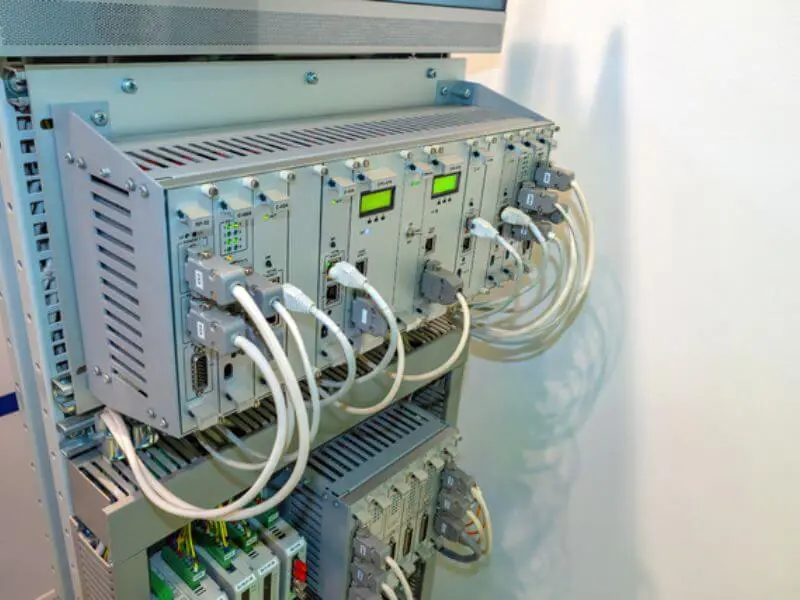
Quad Plus - protective relay testing control room
Long-Term Benefits of Preventive Maintenance

Regular testing of protective relays supports the long-term health of your electrical system. Relays that respond too slowly or trip unnecessarily can stress equipment and reduce operation efficiency. Testing fine-tunes your system to react only when necessary and avoid nuisance trips to prolong the working life of your equipment.

Regular testing is also far less expensive and disruptive than unplanned downtime. A single protective system failure during a fault could result in transformer damage or switchgear destruction. Repairs could cost tens or hundreds of thousands of dollars and lead to weeks of downtime. Investing in preventive maintenance today will help avoid costly repairs and potential safety incidents in the future.

A Smart Investment in Electrical Protection

Protective relay testing is an essential part of your operation’s preventive maintenance routine. By ensuring that relays function as intended, the risk of failure is reduced, and overall operational resilience is improved.

To learn more about protective relay testing and how it protects your electrical infrastructure, contact Adam Kahler at akahler@quadplus.com or call (815) 210-9885.

Quad Plus
1379 Unit C Carlson Ave
New Richmond, WI 54017
www.quadplus.com

Eagle Performance Plastics Announcement: Lori Sealock has been named President

Eagle Performance Plastics Announcement: April 16, 2025

Lori Sealock

We are pleased to announce that Lori Sealock has been named President of Eagle Performance Plastics, Inc, Appleton, Wisconsin. Lori has been with Eagle for 24 years serving in a variety of roles, most recently as Vice President, Operations & Finance. As President, Lori is responsible for managing all operations of the business and leading the entire Eagle team.

Jared Bailin, previously President & CEO will remain in the role of Chief Executive Officer. Eagle Performance Plastics, founded in 1971, is a leading supplier of custom machined plastic components to original equipment manufacturers throughout North America.

Amundsen Davis Event: Navigating IP Rights in the AI Boom

Amundsen Davis logo

Amundsen Davis is having a complimentary webcast, and we thought this may be something you or your members would be interested in. You can find the details below as well as a link to register:

GBIG NEWS | 96 Stories and Links on the Internet 04/16/2025

GBIG News

Get links to the latest news, events, stories, and interviews from our 5P news members. Our goal is to remind the decision-makers in Wisconsin of the importance of our industry both historically, and more importantly, into the future.

Read the latest 96 Stories and Links on the Internet below.

GBIG News banner

Events

Featured Stories

Wisconsin

Packaging

Label

Forests

Education

De Pere Tour

Members

Green Bay Innovation Group

Bringing Green Bay Companies Together. Green Bay Innovation Group is committed to building an authentic networking experience where innovation can thrive.

Contact Information

Phone: 608-698-3333 
martinpochs@gmail.com
Subscribe to Newsletter


© 2021 Green Bay Innovation Group

LinkedIn
Share